A new study reveals that older energy workers suffer a propensity of occupational illnesses. Historically occupational diseases of energy workers were primarily associated with limited radioactive substances.
"The age-standardized prevalence ratio of COPD among DOE workers compared to all NHANES III data was 1.3. Internal analyses found the odds ratio of COPD to range from 1.6 to 3.1 by trade after adjustment for age, race, sex, smoking, and duration of DOE employment. Statistically significant associations were observed for COPD and exposures to asbestos, silica, welding, cement dusts, and some tasks associated with exposures to paints, solvents, and removal of paints."
Click here to read more about energy workers and workers' compensation.

Friday, January 1, 2010
Thursday, December 24, 2009
NJ Aims to Speed up Uninsured Penalties
The NJ Legislature is considering speeding up the processing of penalties and assessments against uninsured employers. Bills are pending before both houses of the legislature.
"This bill amends the workers’ compensation law to require that the Director of Workers’ Compensation shall, in any case in which an award of compensation payable by an uninsured employer or an assessment has been ordered by the director, file with the Clerk of the Superior Court a statement of the findings and judgment of the workers’ compensation judge or a certified copy of the director's order. Upon that filing, the statement or order, as the case may be, shall have the same effect and may be collected and docketed in the same manner as judgments rendered in causes tried in the Superior Court.
"Under current law, the director is not permitted to make the filing until 45 days after payment is due and 10 days after the uninsured employer fails to comply with any demand to deposit with the director the estimated value of the compensation, and 20 days after orders by the director to pay any assessments for failure to pay. The bill requires, rather than permits, the director to make the filing, and requires that the filing be made without the delays currently imposed.
.........
Click here to read more about uninsured employers and workers' compensation.
"This bill amends the workers’ compensation law to require that the Director of Workers’ Compensation shall, in any case in which an award of compensation payable by an uninsured employer or an assessment has been ordered by the director, file with the Clerk of the Superior Court a statement of the findings and judgment of the workers’ compensation judge or a certified copy of the director's order. Upon that filing, the statement or order, as the case may be, shall have the same effect and may be collected and docketed in the same manner as judgments rendered in causes tried in the Superior Court.
"Under current law, the director is not permitted to make the filing until 45 days after payment is due and 10 days after the uninsured employer fails to comply with any demand to deposit with the director the estimated value of the compensation, and 20 days after orders by the director to pay any assessments for failure to pay. The bill requires, rather than permits, the director to make the filing, and requires that the filing be made without the delays currently imposed.
Identical Bill Number: S2495 Quijano, Annette as Primary Sponsor Barnes, Peter J., III as Primary Sponsor Moriarty, Paul D. as Primary Sponsor Egan, Joseph V. as Co-Sponsor Diegnan, Patrick J., Jr. as Co-Sponsor Vas, Joseph as Co-Sponsor | ||||
| | ||||
| 1/15/2009 Introduced, Referred to Assembly Labor Committee 1/26/2009 Reported out of Assembly Committee, 2nd Reading 5/21/2009 Passed by the Assembly (76-0-0) 5/21/2009 Received in the Senate without Reference, 2nd Reading Statement - ALA 1/26/09 - 1 pages PDF Format HTML Format Introduced - 3 pages PDF Format HTML Format Committee Voting: ALA 1/26/2009 - r/favorably - Yes {9} No {0} Not Voting {0} Abstains {0} - Roll Call Session Voting: Asm. 5/21/2009 - 3RDG FINAL PASSAGE - Yes {76} No {0} Not Voting {4} Abstains {0} - Roll Call | ||||
Click here to read more about uninsured employers and workers' compensation.

Monday, December 21, 2009
Good Medicine for an Ailing Compensation System

The stage was set last June 17th, when the US Environmental Protection Agency (EPA) declared Libby, Montana, a Public Health Emergency, because of asbestos present at the site. The geographical location was the site of a W.R. Grace vermiculite mine.
The legislative provision was "buried" deep in the legislation at the last moment, reported Robert Pear of the NY Times. The amendment was made Senator Max Baucus of Montana, who lead the Senate legislative committee crafting the legislation. The convoluted political bartering over the last few days reflects a sentinel change in how injured workers may be receiving medical care in the years ahead. It is anticipated that major changes will be offered over the years ahead to modify and expand the coverage.
Occupational diseases have always been problematic to the State workers' compensation systems. They have been subject to serious and costly proof issues. They were "tag along" claims for a compensation system that initially was enacted in 1911 to cover only traumatic claims. The proposed legislation is a first major step to move occupationally induced illnesses into a universal health medical care system and will provide a pilot project for addressing the long awaited need to furnish medical care without serious and costly delays.
By allowing Medicare to become the primary payor and furnish medical care, those without a collateral safety net of insurance will be able to obtain medical care effectively and expeditiously. While cost shifting from workers' compensation to Medicare has been an historically systemic problem in the compensation arena, this legislation maybe a first major step to legitimatize the process. The legislation may allow for great accountability and expansion of the Medicare Secondary Payment Act (MSP) to end cost shifting that has become epidemic in proportion. It is good medicine for an ailing workers' compensation system.
Click here to read more about workers' compensation and universal health care.
Sunday, December 20, 2009
Join Us on Facebook: Injured Workers Law & Advocacy Group

 The Injured Workers Law & Advocacy Group is an open and free Facebook group that provides news and open discussions concerning national workers' compensation trends.
 The group is maintained for academic purposes to facilitate national policy discussions. Multiple news feeds and discussion postings are available free of charge.
Click here to join now.
BP Workers in Texas Awarded $100 Million By Jury

The workers were exposed while repairing equipment at the refinery which is the 3rd largest in the US. Pre-trial negotiations were stalled before trial when the workers demanded $5,000 each in damages and BP had offered $500.

To read more about BP click here.
Friday, December 18, 2009
Chemical Exposure in Iraq Claims Soldier
The death of an Indian National Guard member has been alleged to have been caused by a chemical exposure at an Iraq worksite.
The terminal cancer of Lt. Colonel Jim Gentry, age 52, has been attributed to an exposure to sodium dichloride. His unit was assigned to guard American contractors who were restoring the oil fields. The contractor, KBR, has been blamed for the negligent release of the chemical and exposures in the Qarmat Ali Water Treatment plant. Litigation is ongoing.
The US military is presently reviewing the extent of the chemical release and the consequences. The US Senate recently held hearings concerning the safety and health of soldiers deployed to Iraq who may have been exposed to hazardous chemicals at contractor worksites.
The Cost of Work Related Deaths
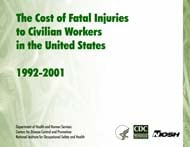
"The burden that fatal occupational injury imposes upon society is severe and multidimensional. In addition to the human costs associated with the loss of a family member, an employee, and a coworker, there are costs that are economic in nature. No single metric can capture all the dimensions of loss, either personal or economic; it is extraordinarily difficult to measure the contribution of a family member or that of an active member of a community or group. To understand the dimensions of loss more fully, it is necessary to measure the aspects of fatal occupational injury that can be captured. Demographic data on fatal workplace injury was captured in the National Traumatic Occupational Fatality Surveillance system, maintained by the National Institute for Occupational Safety and Health (NIOSH).
"The current document is an attempt to build upon the surveillance data by adding an economic component; the data in this monograph provide a measure of the economic loss to society from the premature deaths of workers in various economic sectors, by states, to society as a whole, over time, by cause of death, and by demographic characteristics. The findings are compelling: over the period studied, 1992–2001, the estimated costs from these premature deaths exceeded $43 billion. "
Subscribe to:
Posts (Atom)