Copyright

(c) 2010-2026 Jon L Gelman, All Rights Reserved.

Friday, February 5, 2010

CMS Sues Lawyers Over MSP Reimbursement

The Secretary of Health and Human Services (HHS) [The Centers for Medicare and Medicaid Services (CMS)] has filed a recovery action in the US District Court in Alabama for recovery of Medicare Secondary Payments (MSP). 

The recovery action is based upon an alleged failure of the attorneys to honor a claim that CMS had filed in an underlying bankruptcy claim filed in 2003. The settlement provided for distributions to be paid from 2004 through 2013 by the defendants.

The complaint alleges that the US may initiate a claim for recovery of Medicare conditional payments when it "learns that payment 'has been or could have be made' under a liability insurance policy of plan. 42 C.F.R. Sec 411,24(b)."

Click here to read more about Medicare Secondary Payer Act and workers' compensation.

Ethnic Disparities in Workers' Compensation

Researchers from the National Institute for Occupational Safety and Health (NIOSH) have partnered up with researches from other agencies and organizations address the needs, challenges, and opportunities for improving workplace safety and health for underserved worker populations in a special February 2010 issue of the American Journal of Industrial Medicine, “Occupational Health Disparities.” 


NIOSH reports, " Low-wage, low-skilled, and immigrant workers face disproportionately high risks for work-related injuries and illnesses in comparison with the U.S. workforce in general.  They also encounter significant barriers in accessing training and education programs, health care systems, and legal protections that are critical for mitigating those risks."


“This special issue of the American Journal of Industrial Medicine adds to our knowledge by examining occupational health disparities and inequities immigrant and other workers face, and measuring the extent of the problem,” U.S. Secretary of Labor Hilda Solis states in a Foreword to the issue. “In addition to helping address the need for better data, this research promises to create new knowledge that can be used to improve the lives of our nation’s workers."


  • Occupational health surveillance must be enhanced and improved to describe the nature and extent of disparities in occupational illnesses and injuries (including fatalities), identify priorities for research and intervention, and evaluate trends. This is a priority of NIOSH and its partners under the National Occupational Research Agenda (NORA). Serious shortcomings in current surveillance systems include an undercounting of what research suggests to be the true incidence of work-related injuries, illnesses, and deaths, and a lack of information in key datasets that would allow users to identify incidence and trends in cases by race, ethnicity, and place of birth.
  • A case study under NIOSH’s state-based Sentinel Event Notification System for Occupational Risk (SENSOR) demonstrated the value of occupational health surveillance for protecting migrant farmworkers from risk of job-related illness. SENSOR’s pesticide-poisoning surveillance staff identified a birth-defects cluster among migrant farmworkers exposed to pesticides. Subsequent state legislation in North Carolina provided funding to strengthen surveillance, improve the quality of state inspections for compliance with pesticide regulations, increase and improve worker pesticide safety training, and broaden the coverage of state anti-retaliation rules to include agricultural workers.
  • Questionnaires for worker health studies that ask questions in different languages are essential for identifying work-related injuries and illnesses, and trends in those cases, among the ethnically diverse U.S. workforce. Developing such questionnaires is complex, and literal translation often is not appropriate or accurate. More research should be focused on development of useful bilingual and multilingual research tools.

Thursday, February 4, 2010

Requesting a CMS Overpayment Waiver For Hardship

In conjunction with the enhancement of Section 111 mandatory reporting,  The Medicare Secondary Payment Contractor (MSPRC) has defined a 13 step process to collect overpayment from beneficiaries. Once post demand correspondence is issued, interest accrues on the overpayment if a full refund is not received within 60 days. If the full refund is not received after 120 days a case is referred to the US Treasury for collection.

In certain situations the beneficiary may have a financial hardship which could reduce or entirely eliminate the repayment request. In such circumstances a waiver request may be made by the beneficiary. The Social Security Administration (SSA) form number SSA-632 must be completed and submitted in a timely fashion. The beneficiary must advise SSA of the factors concerning the alleged hardship and then make a complete financial disclosure to SSA.

To read more about the Medicare Secondary Payer Act and workers' compensation  click here.

Tuesday, February 2, 2010

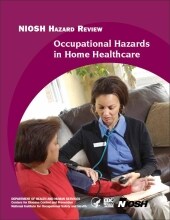
Occupational Hazards in the Home Healthcare Industry

NIOSH has focussed on the dangers of working in the home healthcare industry. Home healthcare works face unique risks on the job to their own health. During 2007 alone 27,400 recorded injuries occurred among the more than 890,800 home healthcare workers. 


The US agency reported, "Home healthcare workers are frequently exposed to a variety of potentially serious or even life-threatening hazards. These dangers include overexertion; stress; guns and other weapons; illegal drugs; verbal abuse and other forms of violence in the home or community; bloodborne pathogens; needlesticks; latex sensitivity; temperature extremes; unhygienic conditions, including lack of water, unclean or hostile animals, and animal waste. Long commutes from worksite to worksite also expose the home healthcare worker to trans- portation-related risks."


The report concludes, "The Bureau of Labor Statistics has projected home healthcare work to be the fastest growing occupation through 2016. Home healthcare workers, including home healthcare aides, nurses, physical therapists, occu- pational therapists, speech therapists, therapy aides, social workers, and hospice care workers, face unique hazards delivering services in patients’ homes and in various di- verse communities. Persons other than the patient who are residing or visiting in the patient’s home may be a risk to the worker. Home healthcare workers are susceptible to injuries. These may result from overexertion due to transferring patients into and out of bed or to assisting with patient walking or standing. Home healthcare workers may be exposed to bloodborne pathogens, needlesticks, infectious agents, latex, stress, violence occurring in the home or street, verbal abuse, weapons, illegal drugs, and they may encounter animals, temperature extremes, unsanitary conditions in the homes, lack of water, severe weather, or a response to a chemical spill or act of terrorism. The large amount of driving from home to home ex- poses the home healthcare worker to risks of vehicular injury or fatality."


Click here to read the complete NIOSH report.


Click here to read more bout NIOSH and workers' compensation.

Monday, February 1, 2010

Senate Votes to End Debate on Smith Nomination

In an historic action, the US Senate this evening voted 60 to 32 to end debate on the nomination of Patricia Smith for US Labor Solicitor. The favorable Role Call vote on Motion to Invoke Cloture on the Nomination of M. Patricia Smith, to be Solicitor for the Department of Labor successfully ended the Republican filibuster  on the nomination of Ms. Smith. The nomination had the support of the AFL-CIO.  It has been almost a year since she was nominated by President Obama for the position.

Sunday, January 31, 2010

Patricia Smith for US Solicitor of Labor


On Monday the US Senate will have the opportunity to end debate and confirm the nomination of Patricia  Smith as US Solicitor of Labor. Senator Reid will be calling for a closure vote on debate by the Senate and move her nomination.

Pat Garofalo writes at the Wonk Room about Smith’s successes:

"The New York Times has called Smith “one of the nation’s foremost labor commissioners because of her vigorous efforts to crack down on minimum wage and overtime violations at businesses including restaurants, supermarkets, car washes and racetracks.” During her time with the New York State Labor Department, where she is labor commissioner, Smith helped win more than $20 million in back pay for thousands of low-wage workers, including a record $2.3 million settlement with the owner of Ollie’s Noodle Shop and Grill chain in Manhattan.

As David Madland and Karla Walter pointed out, 'too often penalties [for labor law violations] are easily reduced or levied for low amounts, and the solicitor’s office has minimized civil and criminal liability for the worst violators.' Smith can change that, if only her nomination could come to a vote."

This is a unique opportunity for the Republicans to demonstrate their partisan support in the spirt that President Obama called for in his State of Union speech last week and confirm an eminently qualified individual, Patricia Smith, as US Solicitor-Department of Labor.

Saturday, January 30, 2010

OSHA releases workplace injury and illness information


Data represents administration's "Open Government" policy

 Every year since 1996 the Occupational Safety and Health Administration (OSHA) has collected work-related injury and illness data from more than 80,000 employers. For the first time, the Agency has made the data from 1996 to 2007 available in a searchable online database, allowing the public to look at establishment or industry-specific injury and illness data. The workplace injury and illness data is available at http://www.osha.gov/pls/odi/establishment_search.html as well as Data.gov.

OSHA uses the data to calculate injury and illness incidence rates to guide its strategic management plan and to focus its Site Specific Targeting (SST) Program, which the agency uses to target its inspections.

"Making injury and illness information available to the public is part of OSHA's response to the administration's commitment to make government more transparent to the American people," said David Michaels, Assistant Secretary of Labor for OSHA. "This effort will improve the public's accessibility to workplace safety and health data and ensure the Agency can function more effectively for American workers."

Information available at the 
Data.gov and www.osha.gov Websites includes an establishment's name, address, industry, associated Total Case Rate (TCR), Days Away, Restricted, Transfer (DART) case rate, and the Days Away From Work (DAFWII) case rate. The data is specific to the establishments that provided OSHA with valid data through the 2008 data collection (collection of CY 2007 data). This database does not contain rates calculated by OSHA for establishments that submitted suspect or unreliable data.

Data.gov provides expanded public access to valuable workforce-related data generated by the Executive Branch of the federal government. Although the initial launch of Data.gov provides a limited portion of the rich variety of Federal datasets presently available, the public is invited to 
participate in shaping the future of Data.gov by suggesting additional datasets and site enhancements to provide seamless public access and use of federal data.

More information about the Department of Labor's Open Government Web site is available at
http://www.dol.gov/open/ where there are links to the latest data sets, ways to connect with Department staff, and information about providing public input that will make the Department's site and its work more useful and engaging.

Under the Occupational Safety and Health Act of 1970, employers are responsible for providing safe and healthful workplaces for their employees. OSHA's role is to assure these conditions for America's working men and women by setting and enforcing standards, and providing training, education and assistance. For more information, visit 
http://www.osha.gov