Copyright
(c) 2010-2026 Jon L Gelman, All Rights Reserved.
Monday, June 28, 2010
OSHA Issues an Interim Guidance to Protect Health of Oil Spill Workers & Volunteers
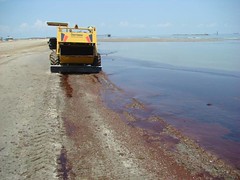
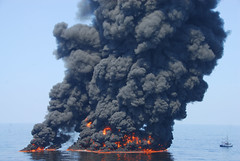
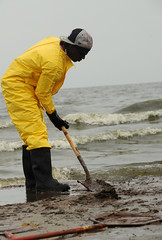
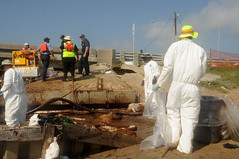
OSHA has issued 7 recommendations to protect the health and safety of Deepwater Horizon workers and volunteers. Exposures to toxic chemicals and physical agents, heat, fatigue and psychological stress remain a focal point of concern. The document discusses the serious health effects of crude oil and il dispersant exposure.
To read more about petroleum exposure and workers' compensation click here.
Click here for more information on how Jon L Gelman can assist you in a claim for workers' Compensation claim benefits. You may e-mail Jon Gelman or call 1-973-696-7900.
Friday, June 25, 2010
How to File a Gulf of Mexico Incident Claim
The Deepwater Horizon Unified Command has established the following process for submission of Deepwater Horizon incident claims.
BP has established an Online Claim Form as well as a Claims Line for oil spill-related claims.
Online Claim forms are available in three languages:
The toll-free number for the claims line is 1-800-440-0858. The line is available 24 hours a day, 7 days a week.
- Personnel at the Claims Line will provide each caller with information on how to submit a claim.
- Each claim will be assigned to an adjuster and the claim will promptly be investigated and evaluated.
- Larger and more complex claims may require additional investigation and documentation prior to evaluation and resolution.
- BP will pay resolved claims promptly.
BP takes responsibility for responding to the Deepwater Horizon oil spill. We will clean it up. BP has established a robust process to manage claims resulting from the Deepwater Horizon Incident.
BP will pay all necessary and appropriate clean-up costs.
BP is committed to pay legitimate and objectively verifiable claims for other loss and damage caused by the spill – this may include claims for assessment, mitigation and clean up of spilled oil, real and property damage caused by the oil, personal injury caused by the spill, commercial losses, including lost of earnings, profit and other losses as contemplated by applicable laws and regulations.
Additionally, BP has established several claims offices along the Gulf Coast. The office hours are from 8 a.m. to 7 p.m. each day. BP has posted a video about the claim center on their Web site: click here to watch the video.
For more detailed information regarding BP claims process, click here.
Federal disaster assistance information:
Individuals and businesses looking for information on how to obtain Federal assistance for dealing with the impacts of the current oil spill should visit www.DisasterAssistance.gov. Before applying for Federal assistance, individuals should first make a claim with the responsible parties. See information on this page above for that process.
DisasterAssistance.gov includes information on the types of Federal assistance that individuals and businesses can apply for such as nutrition programs, business disaster loans, temporary assistance for needy families and unemployment insurance.
Click on the oil spill box at the top of the DisasterAssistance.gov homepage to take you to a page with oil spill specific information. Individuals seeking oil spill related assistance should not use the registration function at this site, but should follow the instructions laid out on the oil spill specific page instead.
Claims Office Locations
FLORIDA
New Orleans, La.4375 Michoud Blvd.New Orleans, LA 70129
Tuesday, June 22, 2010
Oil Spill Workers Hazards May Cause Health Hazards The National Institute of Medicine held a hearing yesterday, continuing today, in New Orleans.
Heat, exposure to chemicals and changes caused by the disaster, yield a recipe for serious medical conditions, so reported a group of presenters at the National Institutes of Medicine conference in New Orleans. Those conditions include lung, kidney and liver function.
8:30 a.m. Welcome Harvey V. Fineberg, President, IOM
8:40 a.m. Charge to the IOM
Nicole Lurie, Assistant Secretary for Preparedness and Response, Department of Health and Human Services
8:50 a.m. Introductory Remarks
Planning Committee Chair: Nancy E. Adler, University of California, San Francisco
9:00 a.m. The Compelling Need to Understand the Effects of Oil Spills on Human Health
SESSION I. AT-RISK POPULATIONS AND ROUTES OF EXPOSURE
10:00 a.m. Panel Discussion. Taking Stock: Who Is at Risk and How Are They Exposed?
Moderator: Linda Rosenstock, University of California, Los Angeles
11:10 a.m. Panel Discussion. The Here and Now: What are the Short-term Effects on Human Health?
Moderator: Linda A. McCauley, Emory University
1:30 p.m. Panel Discussion. The Need to Know: What Are the Potential Delayed and Long-term Effects on Human Health?
Moderator: Kenneth Olden, Hunter College of the City University of New York
3:00 p.m. Engaging the Public, Protecting Health
Presenter: David Abramson, Columbia University
3:20 p.m. Dialogue with Workshop Participants
Moderator: Mike Magee, Healthy-Waters.org
Nancy E. Adler, University of California, San Francisco
4:30 p.m. ADJOURN
9:00 a.m. Recap of Day 1 Discussions and Overview of Day 2Nancy E. Adler, University of California, San Francisco
9:10 a.m. Remarks from the Surgeon General of the United States Public Health ServiceVice Admiral Regina M. Benjamin
SESSION IV. OVERVIEW OF HEALTH MONITORING ACTIVITIES
9:20 a.m. Panel Discussion. How are State Governments Currently Monitoring the Effects of the Gulf of Mexico Oil Spill on Human Health?
Moderator: LuAnn E. White, Tulane University
10:30 a.m. Panel Discussion. Critical Thinking: What Research Methodologies and Data Sources Could Be Used in Surveillance and Monitoring Activities?
Moderator: John C. Bailar III, University of Chicago
12:20 p.m. LUNCH (on your own)
SESSION VI. FUTURE DIRECTIONS AND RESOURCE NEEDS
1:30 p.m. Panel Discussion. Looking Ahead: How Do We Develop Effective Surveillance and Monitoring Systems?
Moderator: David A. Savitz, Mount Sinai School of Medicine
3:30 p.m. ADJOURN
June 22, 2010
8:00 a.m. Registration8:30 a.m. Welcome Harvey V. Fineberg, President, IOM
8:40 a.m. Charge to the IOM
Nicole Lurie, Assistant Secretary for Preparedness and Response, Department of Health and Human Services
8:50 a.m. Introductory Remarks
Planning Committee Chair: Nancy E. Adler, University of California, San Francisco
9:00 a.m. The Compelling Need to Understand the Effects of Oil Spills on Human Health
- Bernard D. Goldstein, University of Pittsburgh
- Blanca Laffon, University A Coruna
- Edward B. Overton, Louisiana State University
SESSION I. AT-RISK POPULATIONS AND ROUTES OF EXPOSURE
10:00 a.m. Panel Discussion. Taking Stock: Who Is at Risk and How Are They Exposed?
Moderator: Linda Rosenstock, University of California, Los Angeles
- Routes of Exposure and At-Risk Populations - Paul J. Lioy, Rutgers University
- Residents of Affected Regions: General and Special Populations - Maureen Y. Lichtveld, Tulane University
- Occupational Risks and Health Hazards: Workers and Volunteers - Scott Barnhart, University of Washington
11:10 a.m. Panel Discussion. The Here and Now: What are the Short-term Effects on Human Health?
Moderator: Linda A. McCauley, Emory University
- Short-term Physical Effects - Nalini Sathiakumar, University of Alabama at Birmingham
- Short-term Psychological Stress - Howard Osofsky, Louisiana State University
- Heat Stress and Fatigue - Thomas E. Bernard, University of South Florida
1:30 p.m. Panel Discussion. The Need to Know: What Are the Potential Delayed and Long-term Effects on Human Health?
Moderator: Kenneth Olden, Hunter College of the City University of New York
- Neurological, Cancer, and Other Chronic Conditions - Peter Spencer, Oregon Health & Science University
- Human Reproduction - Brenda Eskenazi, University of California at Berkeley
- Impact on Health and Vulnerabilities of Children - Irwin Redlener, National Commission on Children and Disasters
- Stress - Sheldon Cohen, Carnegie Mellon University
- Lessons Learned from Previous Oil Spills - Lawrence A. Palinkas, University of Southern California
3:00 p.m. Engaging the Public, Protecting Health
Presenter: David Abramson, Columbia University
3:20 p.m. Dialogue with Workshop Participants
Moderator: Mike Magee, Healthy-Waters.org
- Brief Invited Remarks - Community Perspectives:
- Myra Lewis
- Diem Nyugen- Wilma Subra
- John Hosey (invited) - Open Dialogue with Audience
Nancy E. Adler, University of California, San Francisco
4:30 p.m. ADJOURN
June 23, 2010
8:30 a.m. Registration9:00 a.m. Recap of Day 1 Discussions and Overview of Day 2Nancy E. Adler, University of California, San Francisco
9:10 a.m. Remarks from the Surgeon General of the United States Public Health ServiceVice Admiral Regina M. Benjamin
SESSION IV. OVERVIEW OF HEALTH MONITORING ACTIVITIES
9:20 a.m. Panel Discussion. How are State Governments Currently Monitoring the Effects of the Gulf of Mexico Oil Spill on Human Health?
Moderator: LuAnn E. White, Tulane University
- Jimmy Guidry, Louisiana State Health Officer
- Mary Currier, Mississippi State Health Officer
- Ana M. Viamonte Ros, Florida State Surgeon General
- Donald E. Williamson, Alabama State Health Officer
- Bruce Clements, Director of the Community Preparedness Section, Texas Department of State Health Services
10:30 a.m. Panel Discussion. Critical Thinking: What Research Methodologies and Data Sources Could Be Used in Surveillance and Monitoring Activities?
Moderator: John C. Bailar III, University of Chicago
- Overview of Research Methodologies and Data Collection - Lynn R. Goldman, Johns Hopkins Bloomberg School of Public Health
- Surveillance and Monitoring - Thomas D. Matte, Hunter College, City University of New York
- Environmental Assessment, Risk, & Health - William H. Farland, Colorado State University
- Mental Health - Howard Osofsky, Louisiana State University
- Biomedical Informatics and Registries - Daniel R. Masys, Vanderbilt University School of Medicine
12:20 p.m. LUNCH (on your own)
SESSION VI. FUTURE DIRECTIONS AND RESOURCE NEEDS
1:30 p.m. Panel Discussion. Looking Ahead: How Do We Develop Effective Surveillance and Monitoring Systems?
Moderator: David A. Savitz, Mount Sinai School of Medicine
- Nancy E. Adler, University of California, San Francisco
- John C. Bailar III, University of Chicago
- Lynn R. Goldman, Johns Hopkins Bloomberg School of Public Health
- Maureen Y. Lichtveld, Tulane University
- Linda A. McCauley, Emory University
- Kenneth Olden, Hunter College of the City University of New York
- Linda Rosenstock, University of California, Los Angeles
3:30 p.m. ADJOURN
Monday, June 21, 2010
Compensating Injured Oil Spill Workers-Making the Right Choices is Critical
Workers' Compensation is national in scope and benefits for injured and exposed oil spill workers should be no exception according to the President Obama's oil spill paymaster, Kenneth Feinberg. Feinberg remarked on national television today that he will interpret benefits based on local State law and that the existing limit of $20 Billion for the Fund may be inadequate to pay all claims.
Two specific scenarios apply in workers' compensation actions that will allow the oils spill compensation fund to make benefits. First is the US Supreme Court's interpretation that workers' compensation claims may be allocated among several jurisdictions. In other words, the three basic benefits: temporary, medical and permanent disability may be divided in accordance with three separate jurisdictions to provide the highest possible benefit to the injured worker. Industrial Commission of Wisconsin v. McCartin, 330 U.S. 622, 67 S.Ct. 886, 91 L.Ed. 1140 (1947), U.S.C.A. Const. art. IV, Sec. 1.
Secondly, the oil spill compensation fund will look to the law of the individual State that governs to determine validity. If the claim is valid in that jurisdiction then it will be allowed. Feinberg said, "One thing we learned from the 9/11 fund, you'll recall, Congress passed that law and said that when it comes to whether or not a financial injury was caused by the terrorist attack, look to the local law of the state where you leave." "So if a Boston restaurant says, 'We're losing business in our restaurant because we can't get shrimp from the Gulf,' let's take a look at Massachusetts law. Would Massachusetts law recognize that claim? If it would, I will. If it wouldn't, I won't. That's what Congress suggested and that might work here."
Workers employed and hired through national corporations may have multiple legal options available in choosing the right state law to apply. Those selections will need to be chosen wisely.
To read more about petroleum exposure and workers' compensation click here.
Click here for more information on how Jon L Gelman can assist you in a claim for workers' Compensation claim benefits. You may e-mail Jon Gelman or call 1-973-696-7900.
Two specific scenarios apply in workers' compensation actions that will allow the oils spill compensation fund to make benefits. First is the US Supreme Court's interpretation that workers' compensation claims may be allocated among several jurisdictions. In other words, the three basic benefits: temporary, medical and permanent disability may be divided in accordance with three separate jurisdictions to provide the highest possible benefit to the injured worker. Industrial Commission of Wisconsin v. McCartin, 330 U.S. 622, 67 S.Ct. 886, 91 L.Ed. 1140 (1947), U.S.C.A. Const. art. IV, Sec. 1.
Secondly, the oil spill compensation fund will look to the law of the individual State that governs to determine validity. If the claim is valid in that jurisdiction then it will be allowed. Feinberg said, "One thing we learned from the 9/11 fund, you'll recall, Congress passed that law and said that when it comes to whether or not a financial injury was caused by the terrorist attack, look to the local law of the state where you leave." "So if a Boston restaurant says, 'We're losing business in our restaurant because we can't get shrimp from the Gulf,' let's take a look at Massachusetts law. Would Massachusetts law recognize that claim? If it would, I will. If it wouldn't, I won't. That's what Congress suggested and that might work here."
Workers employed and hired through national corporations may have multiple legal options available in choosing the right state law to apply. Those selections will need to be chosen wisely.
To read more about petroleum exposure and workers' compensation click here.
Click here for more information on how Jon L Gelman can assist you in a claim for workers' Compensation claim benefits. You may e-mail Jon Gelman or call 1-973-696-7900.
Saturday, June 19, 2010
Campaign for Centennial Workers Compensation Postage Stamp
A national campaign to petition the US Postal Service to issue a Workers' Compensation commemorative postage stamp. The stamp images above was issued in 1961 to commemorate the 50th anniversary of the national patchwork of systems comprising US workers' compensation.
Click here for more information on how Jon L Gelman can assist you in a claim for workers' Compensation claim benefits. You may e-mail Jon Gelman or call 1-973-696-7900.
Friday, June 18, 2010
Air Quality Hazards of the Gulf Oil Spill
This video highlights the serious and extensive potential health hazards of the gulf oil spill.
To read more about petroleum exposure and workers' compensation.
Click here for more information on how Jon L Gelman can assist you in a claim for workers' Compensation claim benefits. You may e-mail Jon Gelman or call 1-973-696-7900.
EC Publishes Criteria to Diagnose Occupational Illness
The European Commission has published a listing of the criteria for diagnosis occupational disease. The 272 page report is available on-line. It reviews hundreds of established occupational medical conditions.
a) The clinical features must fit in with what is known about the health effects following exposure to the specified agent. The symptoms and signs should fit, and this may be supported in some cases by suitable diagnostic tests.
b) There must be indication of sufficient occupational exposure. Evidence on exposure may be obtained through taking the occupational history, results of occupational hygiene measurements taken at the workplace, biological monitoring results, and/or records of incidents of over-exposure.
c) The time interval between exposure and effect must be consistent with what is known about the natural history and progress of the disease. Exposure must precede health effects. However, in some conditions such as occupational asthma, a past history of childhood asthma and/or asthmatic attacks occurring before occupational exposure, does notautomatically rule out the possibility of a workplace agent causing subsequent asthmatic attacks.
d) The differential diagnosis must be considered. There are non-occupational conditions that have similar clinical features as occupational diseases, and a physician will have to take this into account before diagnosing or excluding an occupational disease.
To read more about occupational exposures and workers' compensation.
Click here for more information on how Jon L Gelman can assist you in a claim for workers' Compensation claim benefits. You may e-mail Jon Gelman or call 1-973-696-7900.
Subscribe to:
Comments (Atom)