The Occupational Safety and Health Administration (OSHA) has published a booklet describing the industry requirements for safe handling of Hexavalent Chromium. Know hazards to workers handling
this substance include lung cancer and damage to the nose, throat and
respiratory system.
"Hexavalent chromium is a powerful lung carcinogen and exposure to this chemical must be minimized," said Assistant Secretary of Labor for OSHA David Michaels. "OSHA provides guidance on its standards to ensure that employers and workers know the best ways to prevent workplace injuries and illnesses."
Click here to read more about Hexavalent Chromium and workers' compensation.
Click here to read about Hexavalent Chromium and potential litigation for benefits.
Copyright
(c) 2010-2026 Jon L Gelman, All Rights Reserved.
Thursday, January 14, 2010
Wednesday, January 13, 2010
No Free Lunch For Salty Foods
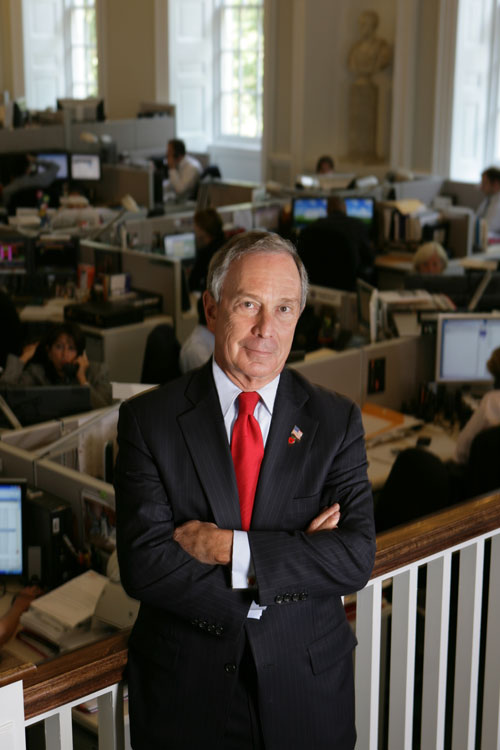
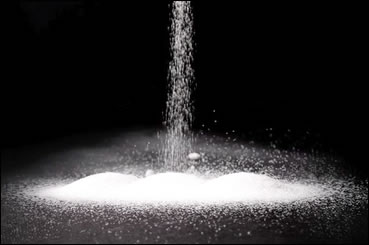
Mayor Michael Bloomberg of New York City may have put a a focus a new compensable event. A long proponent of a healthier living environment, Bloomberg has proposed reducing salt content in food in the Big Apple by 25%.
While emphasizing the seriousness of the health hazards of salt intake, he compared the consumption of salt to asbestos and smoking, "Salt and asbestos, clearly both are bad for you," Bloomberg continued. "Modern medicine thinks you shouldn't be smoking if you want to live longer. Modern medicine thinks you shouldn't be eating salt, or sodium."
There is no free lunch in the adoption of this scenario. If an employee is exposed to salty foods in the course of the employment and suffers a medical event associated with the intake of salt, then compensability may follow.
"The New York City Health Department is coordinating a nationwide effort to prevent heart attacks and strokes by reducing the amount of salt in packaged and restaurant foods.Americans consume roughly twice the recommended limit of salt each day – causing widespread high blood pressure and placing millions at risk of heart attack and stroke. This is not a matter of choice. Only 11% of the sodium in our diets comes from our own saltshakers; nearly 80% is added to foods before they are sold. The National Salt Reduction Initiative is a coalition of cities, states and health organizations working to help food manufacturers and restaurants voluntarily reduce the amount of salt in their products. The goal is to reduce Americans’ salt intake by 20% over five years. This will save tens of thousands of lives each year and billions of dollars in health care costs."
More than 40 cities, states and national health organizations have joined the National Salt Reduction Initiative. The goal is to reduce the salt intake of Americans by 20% over the next five years.
Click here to read more about asbestos and workers' compensation.
While emphasizing the seriousness of the health hazards of salt intake, he compared the consumption of salt to asbestos and smoking, "Salt and asbestos, clearly both are bad for you," Bloomberg continued. "Modern medicine thinks you shouldn't be smoking if you want to live longer. Modern medicine thinks you shouldn't be eating salt, or sodium."
There is no free lunch in the adoption of this scenario. If an employee is exposed to salty foods in the course of the employment and suffers a medical event associated with the intake of salt, then compensability may follow.
"The New York City Health Department is coordinating a nationwide effort to prevent heart attacks and strokes by reducing the amount of salt in packaged and restaurant foods.Americans consume roughly twice the recommended limit of salt each day – causing widespread high blood pressure and placing millions at risk of heart attack and stroke. This is not a matter of choice. Only 11% of the sodium in our diets comes from our own saltshakers; nearly 80% is added to foods before they are sold. The National Salt Reduction Initiative is a coalition of cities, states and health organizations working to help food manufacturers and restaurants voluntarily reduce the amount of salt in their products. The goal is to reduce Americans’ salt intake by 20% over five years. This will save tens of thousands of lives each year and billions of dollars in health care costs."
More than 40 cities, states and national health organizations have joined the National Salt Reduction Initiative. The goal is to reduce the salt intake of Americans by 20% over the next five years.
Tuesday, January 12, 2010
The Grey Area of the CMS Statute of Limitations for a Recovery Action
CMS (Centers of Medicare and Medicaid Services) has expressed an opinion that there is no specific time limit in its ability to seek recovery. At a recent town hall tele-conference concerning the implementation of mandatory insurance company reporting under Section 111 of the Medicare, Medicaid & SCHIP Extension Act of 2007, 42 U.S.C. 139y(b)(8) a spokesperson for CMS indicated that the traditional 6 year limitations statute was not the applicable time limitation for its recovery actions efforts.
CMS has been increasing its effort to recover money paid erroneously to injured workers’ whose medical benefits should have been paid by their employers or workers’ compensation insurance carriers. In an effort to reduce the CMS “pay and chase” activity, Congress enacted mandatory reporting by insurance carriers so that CMS could enforce the MSP {Medicare Secondary Payer Act] and reduce cost shifting at earlier stages of the claim while enhancing its recovery activity.
“(Tracy) Meador: Okay. And is there any - do you have any type of statute of limitations? I was told in a seminar that there’s a six year statute of limitations. Is that correct? I hadn’t heard that before.
[CMS[ Barbara Wright: This could be another one of those instances where the answer is maybe yes, maybe no depending on what you want to tie to it. Generally, there is a statute of limitations in terms of how long you have to bring a litigation action. But there’s different rules in terms of when it runs from.
And generally, anything we have doesn’t start to run until we have knowledge of the claim. And certainly in a liability situation it’s not the date of accident that controls. What we’re looking at is when there was any settlement, judgment, award or other payment.
So we would have at least six years from that date.
(Tracy) Meador: And after six years then you would no longer pursue recovery?
[CMS] Barbara Wright: That’s not necessarily true. What I said is the six year statute of limitations is generally tied to when we can pursue action in court. But there are other recovery actions that we have that we can take as well.”
Monday, January 11, 2010
Revised NJ TDB Application Published
The NJ Department of Labor and Industry has released a revised application for temporary disability benefits that is both HIPPA (Federal Health Information Portability & Accountability Act) compliant and computer friendly. The application can now be downloaded in PDF format and the completed form may be submitted via fax. The medical certification has been expanded to obtain additional information concerning the claimant's medical condition.
An application for NJ TDB must be filed within 30 days of the beginning of disability. Claimants are now advised that Social Security Disability benefits may be available should the disabling medical condition last more than 1 year.
Click here to read more about temporary disability benefits.
An application for NJ TDB must be filed within 30 days of the beginning of disability. Claimants are now advised that Social Security Disability benefits may be available should the disabling medical condition last more than 1 year.
Click here to read more about temporary disability benefits.
Sunday, January 10, 2010
Insurance Carrier Successful in Seeking Medical Reimbursement
An agreement to equally share the responsibility of medical expenses was held enforceable between insurance carriers after an eight year delay in seeking reimbursement.
A 1999 settlement of a workers' compensation contained a stipulation that two insurance carriers would share in the cost of medical expenses. One insurance company would manage the claimant's medical care and would seek reimbursement from the other insurance carrier. Eight years after the settlement the managing insurance carriers, New Jersey Manufacturers Insurance Company (NJM) sent a letter to the other carrier, Scibal, requesting reimbursement of 50% of the costs. By then, the costs had amounted to $570,629.03.
The Court rejected the application of the Doctrine of Equitable Estoppel as a defense because Scibal did not met the burden of proof. "Scibal must show that NJM had "engaged in conduct, either intentionally or under circumstances that induced reliance, and that [Scibal] acted or changed [its] position to [its] detriment." The Court also rejected the application of the Doctrine of Laches because the offending party, Scibal, was not prejudiced by the mere passage of time.
A 1999 settlement of a workers' compensation contained a stipulation that two insurance carriers would share in the cost of medical expenses. One insurance company would manage the claimant's medical care and would seek reimbursement from the other insurance carrier. Eight years after the settlement the managing insurance carriers, New Jersey Manufacturers Insurance Company (NJM) sent a letter to the other carrier, Scibal, requesting reimbursement of 50% of the costs. By then, the costs had amounted to $570,629.03.
The Court rejected the application of the Doctrine of Equitable Estoppel as a defense because Scibal did not met the burden of proof. "Scibal must show that NJM had "engaged in conduct, either intentionally or under circumstances that induced reliance, and that [Scibal] acted or changed [its] position to [its] detriment." The Court also rejected the application of the Doctrine of Laches because the offending party, Scibal, was not prejudiced by the mere passage of time.
Friday, January 8, 2010
Workplace Violence Kills 4 in St. Louis
The terrible consequences of workplace violence left 4 people dead and 5 hurt at a St. Louis transformer plant yesterday. A disgruntled employee took a gun to work and opened fired killing his co-workers.
The suspected shooter was identified as plaintiff in a lawsuit filed in 2006 against the administrators of the company retirement plan. The law suit alleged that unreasonable fee were charged in administrating the plan.
While workers' compensation may provide a remedy for some victims and their families, the basic question remains on what can be done to make the workplace safer. What signals existed that this was going to occur and what actions could be taken by an employer to assist disgruntled workers from "going postal."
All would agree that certain circumstances are difficult to predict. On the other hand, employers and their insurance carriers should be preemptive in their efforts to create a safer workplace. When Congress looks at work place safety it should broaden its vision to include regulatory preventive tactics so that this situation will not occur.
The suspected shooter was identified as plaintiff in a lawsuit filed in 2006 against the administrators of the company retirement plan. The law suit alleged that unreasonable fee were charged in administrating the plan.
While workers' compensation may provide a remedy for some victims and their families, the basic question remains on what can be done to make the workplace safer. What signals existed that this was going to occur and what actions could be taken by an employer to assist disgruntled workers from "going postal."
All would agree that certain circumstances are difficult to predict. On the other hand, employers and their insurance carriers should be preemptive in their efforts to create a safer workplace. When Congress looks at work place safety it should broaden its vision to include regulatory preventive tactics so that this situation will not occur.
Monday, January 4, 2010
Gelman to Speak on Employment Discrimination Claims
Jon L. Gelman will join a distinguished to panel of attorneys to discuss employment discrimination claims. The seminar to be presented by the NJ Institute for Continuing Education will be moderated by David H. Ben-Asher.
Tuesday, March 16, 2010
4:00 PM to 7:30 PM
As the practice of employment law in New Jersey becomes increasingly complex, other legal fields sometimes intersect with that practice in significant ways. In order to effectively represent clients in discrimination, whistleblower retaliation, contract and similar matters, employment lawyers must have a basic understanding as to the potential influence of legal principles and remedies in fields such as criminal, tax, insurance, labor-management, workers’ compensation, bankruptcy and disability benefits law. A panel of practitioners experienced in those areas will limit their discussion to substantive and practical ways in which their fields affect the handling of employment matters
Labor-Management - Peter L. Frattarelli, Esq.
How unionized employees’ collective bargaining agreement grievances and arbitration, N.L.R.B. charges and duty of fair representation suits bear upon their discrimination, whistleblower and other employment law claims.
Workers’ Compensation - Jon L. Gelman, Esq.
When and how compensation claims should be pursued. The synergy between workers’ compensation claims and employment civil actions and their relation to liens and setoffs. Provisions regarding workers’ compensation in settlement and release agreements
Criminal Law - Bruce I. Goldstein, Esq.
Issues of potential criminal exposure of employees and employers in whistleblower retaliation and other employment matters. Addressing the criminal legal questions which may arise during the conduct of corporate internal investigations. How the rights of the corporation and its employees are vindicated during governmental investigations.
Bankruptcy - Gerald H. Gline, Esq.
The treatment in bankruptcy of employment contracts and benefits, non-competition agreements and settlements. Handling employment claims against employers which are in bankruptcy or claims by employees who have filed for bankruptcy. When and how employment claims need to be proven in Bankruptcy Court. Collecting employment damage awards when the employer has been discharged in bankruptcy.
Insurance - Barbara A. O’Connell, Esq.
Types of insurance policies that can provide coverage in an employment case. Coverage and bad faith litigation. Workers’ compensation policies and situations which give rise to the obligation thereunder to pay for the defense and pain and suffering damages in employment cases. Employment Practices Liability Insurance: dealing with deductibles, punitive damage claims, settlements and the selection of defense counsel.
Tax - Sean M. Aylward, Esq.
Tax considerations in the handling of employment cases and in the negotiation, structuring and tax reporting of settlements. How Internal Revenue Code Section 409A applies to deferred payments.
Disability Benefits - Bonny G. Rafel, Esq.
Availability and pursuit of short term and long term disability insurance benefits. Definitions of residual disability, pre-disability income and occupation. Provisions related to disability buyout and overhead expense coverage. Pitfalls resulting from severance agreements. The interaction between employees’ claims for disability benefits and their employment law claims and damages, including issues of liens, setoffs and judicial estoppel.
Driving While Distracted Compared to a DUI
A growing momentum is now taking hold that is comparing driving while distracted (DWD) to driving under the influence (DUI). Over 200 pieces of legislation have now been offered nation wide to prohibit such activities.
Sunday, January 3, 2010
OSHA Moving to Finalize Crystalline Silica Exposure Standard
The Occupational Safety and Health Administration (OSHA) is moving forward on implementing the standard for occupational exposure to silica. Silica has long been considered an occupational hazard.
Silicosis was one of the enumerated occupational diseases that were universally included into workers' compensation statutes about 40 years after the enactment of the initial model acts were adopted, at the behest of Industry, to avoid civil liability actions. Occupational disease claims continue to be problematic for State compensation systems.
"Crystalline silica is a significant component of the earth's crust, and many workers in a wide range of industries are exposed to it, usually in the form of respirable quartz or, less frequently, cristobalite. Chronic silicosis is a uniquely occupational disease resulting from exposure of employees over long periods of time (10 years or more). Exposure to high levels of respirable crystalline silica causes acute or accelerated forms of silicosis that are ultimately fatal. The current OSHA permissible exposure limit (PEL) for general industry is based on a formula recommended by the American Conference of Governmental Industrial Hygienists (ACGIH) in 1971 (PEL=10mg/cubic meter/(% silica + 2), as respirable dust). The current PEL for construction and maritime (derived from ACGIH's 1962 Threshold Limit Value) is based on particle counting technology, which is considered obsolete. NIOSH and ACGIH recommend 50µg/m3 and 25µg/m3 exposure limits, respectively, for respirable crystalline silica. Both industry and worker groups have recognized that a comprehensive standard for crystalline silica is needed to provide for exposure monitoring, medical surveillance, and worker training. The American Society for Testing and Materials (ASTM) has published a recommended standard for addressing the hazards of crystalline silica. The Building Construction Trades Department of the AFL-CIO has also developed a recommended comprehensive program standard. These standards include provisions for methods of compliance, exposure monitoring, training, and medical surveillance. "
It is anticipated that the Peer Review phase will be completed in January 2010 and that NPRM (Notice of Proposed Rulemaking ) will be completed in July 2010.
The proposed Rules, 29 CFR 1915; 29 CFR 1917; 29 CFR 1918; 29 CFR 1926 (To search for a specific CFR, visit the Code of Federal Regulations.)
Silicosis was one of the enumerated occupational diseases that were universally included into workers' compensation statutes about 40 years after the enactment of the initial model acts were adopted, at the behest of Industry, to avoid civil liability actions. Occupational disease claims continue to be problematic for State compensation systems.
"Crystalline silica is a significant component of the earth's crust, and many workers in a wide range of industries are exposed to it, usually in the form of respirable quartz or, less frequently, cristobalite. Chronic silicosis is a uniquely occupational disease resulting from exposure of employees over long periods of time (10 years or more). Exposure to high levels of respirable crystalline silica causes acute or accelerated forms of silicosis that are ultimately fatal. The current OSHA permissible exposure limit (PEL) for general industry is based on a formula recommended by the American Conference of Governmental Industrial Hygienists (ACGIH) in 1971 (PEL=10mg/cubic meter/(% silica + 2), as respirable dust). The current PEL for construction and maritime (derived from ACGIH's 1962 Threshold Limit Value) is based on particle counting technology, which is considered obsolete. NIOSH and ACGIH recommend 50µg/m3 and 25µg/m3 exposure limits, respectively, for respirable crystalline silica. Both industry and worker groups have recognized that a comprehensive standard for crystalline silica is needed to provide for exposure monitoring, medical surveillance, and worker training. The American Society for Testing and Materials (ASTM) has published a recommended standard for addressing the hazards of crystalline silica. The Building Construction Trades Department of the AFL-CIO has also developed a recommended comprehensive program standard. These standards include provisions for methods of compliance, exposure monitoring, training, and medical surveillance. "
It is anticipated that the Peer Review phase will be completed in January 2010 and that NPRM (Notice of Proposed Rulemaking ) will be completed in July 2010.
The proposed Rules, 29 CFR 1915; 29 CFR 1917; 29 CFR 1918; 29 CFR 1926 (To search for a specific CFR, visit the Code of Federal Regulations.)
Friday, January 1, 2010
Older Energy Workers Occupationally Ill
A new study reveals that older energy workers suffer a propensity of occupational illnesses. Historically occupational diseases of energy workers were primarily associated with limited radioactive substances.
"The age-standardized prevalence ratio of COPD among DOE workers compared to all NHANES III data was 1.3. Internal analyses found the odds ratio of COPD to range from 1.6 to 3.1 by trade after adjustment for age, race, sex, smoking, and duration of DOE employment. Statistically significant associations were observed for COPD and exposures to asbestos, silica, welding, cement dusts, and some tasks associated with exposures to paints, solvents, and removal of paints."
Click here to read more about energy workers and workers' compensation.
"The age-standardized prevalence ratio of COPD among DOE workers compared to all NHANES III data was 1.3. Internal analyses found the odds ratio of COPD to range from 1.6 to 3.1 by trade after adjustment for age, race, sex, smoking, and duration of DOE employment. Statistically significant associations were observed for COPD and exposures to asbestos, silica, welding, cement dusts, and some tasks associated with exposures to paints, solvents, and removal of paints."
Click here to read more about energy workers and workers' compensation.
Thursday, December 24, 2009
NJ Aims to Speed up Uninsured Penalties
The NJ Legislature is considering speeding up the processing of penalties and assessments against uninsured employers. Bills are pending before both houses of the legislature.
"This bill amends the workers’ compensation law to require that the Director of Workers’ Compensation shall, in any case in which an award of compensation payable by an uninsured employer or an assessment has been ordered by the director, file with the Clerk of the Superior Court a statement of the findings and judgment of the workers’ compensation judge or a certified copy of the director's order. Upon that filing, the statement or order, as the case may be, shall have the same effect and may be collected and docketed in the same manner as judgments rendered in causes tried in the Superior Court.
"Under current law, the director is not permitted to make the filing until 45 days after payment is due and 10 days after the uninsured employer fails to comply with any demand to deposit with the director the estimated value of the compensation, and 20 days after orders by the director to pay any assessments for failure to pay. The bill requires, rather than permits, the director to make the filing, and requires that the filing be made without the delays currently imposed.
.........
Click here to read more about uninsured employers and workers' compensation.
"This bill amends the workers’ compensation law to require that the Director of Workers’ Compensation shall, in any case in which an award of compensation payable by an uninsured employer or an assessment has been ordered by the director, file with the Clerk of the Superior Court a statement of the findings and judgment of the workers’ compensation judge or a certified copy of the director's order. Upon that filing, the statement or order, as the case may be, shall have the same effect and may be collected and docketed in the same manner as judgments rendered in causes tried in the Superior Court.
"Under current law, the director is not permitted to make the filing until 45 days after payment is due and 10 days after the uninsured employer fails to comply with any demand to deposit with the director the estimated value of the compensation, and 20 days after orders by the director to pay any assessments for failure to pay. The bill requires, rather than permits, the director to make the filing, and requires that the filing be made without the delays currently imposed.
Identical Bill Number: S2495 Quijano, Annette as Primary Sponsor Barnes, Peter J., III as Primary Sponsor Moriarty, Paul D. as Primary Sponsor Egan, Joseph V. as Co-Sponsor Diegnan, Patrick J., Jr. as Co-Sponsor Vas, Joseph as Co-Sponsor | |||||||||||||||||||||||||||||||||||||||||||||||||||||||||||||||||||||||||||||||||||||||||||||||||||||||||||||||||||||||||||
| | |||||||||||||||||||||||||||||||||||||||||||||||||||||||||||||||||||||||||||||||||||||||||||||||||||||||||||||||||||||||||||
| 1/15/2009 Introduced, Referred to Assembly Labor Committee 1/26/2009 Reported out of Assembly Committee, 2nd Reading 5/21/2009 Passed by the Assembly (76-0-0) 5/21/2009 Received in the Senate without Reference, 2nd Reading Statement - ALA 1/26/09 - 1 pages PDF Format HTML Format Introduced - 3 pages PDF Format HTML Format Committee Voting: ALA 1/26/2009 - r/favorably - Yes {9} No {0} Not Voting {0} Abstains {0} - Roll Call
Session Voting: Asm. 5/21/2009 - 3RDG FINAL PASSAGE - Yes {76} No {0} Not Voting {4} Abstains {0} - Roll Call
| |||||||||||||||||||||||||||||||||||||||||||||||||||||||||||||||||||||||||||||||||||||||||||||||||||||||||||||||||||||||||||
Click here to read more about uninsured employers and workers' compensation.
Monday, December 21, 2009
Good Medicine for an Ailing Compensation System
The stage was set last June 17th, when the US Environmental Protection Agency (EPA) declared Libby, Montana, a Public Health Emergency, because of asbestos present at the site. The geographical location was the site of a W.R. Grace vermiculite mine.
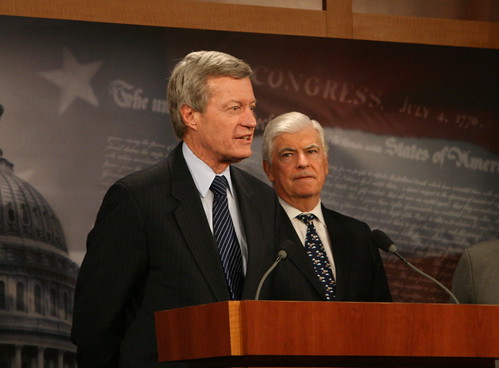
The legislative provision was "buried" deep in the legislation at the last moment, reported Robert Pear of the NY Times. The amendment was made Senator Max Baucus of Montana, who lead the Senate legislative committee crafting the legislation. The convoluted political bartering over the last few days reflects a sentinel change in how injured workers may be receiving medical care in the years ahead. It is anticipated that major changes will be offered over the years ahead to modify and expand the coverage.
Occupational diseases have always been problematic to the State workers' compensation systems. They have been subject to serious and costly proof issues. They were "tag along" claims for a compensation system that initially was enacted in 1911 to cover only traumatic claims. The proposed legislation is a first major step to move occupationally induced illnesses into a universal health medical care system and will provide a pilot project for addressing the long awaited need to furnish medical care without serious and costly delays.
By allowing Medicare to become the primary payor and furnish medical care, those without a collateral safety net of insurance will be able to obtain medical care effectively and expeditiously. While cost shifting from workers' compensation to Medicare has been an historically systemic problem in the compensation arena, this legislation maybe a first major step to legitimatize the process. The legislation may allow for great accountability and expansion of the Medicare Secondary Payment Act (MSP) to end cost shifting that has become epidemic in proportion. It is good medicine for an ailing workers' compensation system.
Click here to read more about workers' compensation and universal health care.
Sunday, December 20, 2009
Join Us on Facebook: Injured Workers Law & Advocacy Group
The group is maintained for academic purposes to facilitate national policy discussions. Multiple news feeds and discussion postings are available free of charge.
Click here to join now.
BP Workers in Texas Awarded $100 Million By Jury
Ten workers who were exposed to chemicals at a BP plant in Texas have been awarded $100 Million by a jury. The workers were exposed to a toxic substance at the chemical factory in 2007. At least 133 more cases are pending.
The workers were exposed while repairing equipment at the refinery which is the 3rd largest in the US. Pre-trial negotiations were stalled before trial when the workers demanded $5,000 each in damages and BP had offered $500.
Earlier this year The Occupational Safety and Health Administration (OSHA) fined BO $21.4 Million for 2005 safety violation. The company was also charged with $87,4 million in fines for failing to comply with the 2005 agreement to clean up safety violations at the plant. For that incident BP had paid more than $2 Billion to settle hundreds of pending law suits and a fine of $50 Million.
To read more about BP click here.
The workers were exposed while repairing equipment at the refinery which is the 3rd largest in the US. Pre-trial negotiations were stalled before trial when the workers demanded $5,000 each in damages and BP had offered $500.
Earlier this year The Occupational Safety and Health Administration (OSHA) fined BO $21.4 Million for 2005 safety violation. The company was also charged with $87,4 million in fines for failing to comply with the 2005 agreement to clean up safety violations at the plant. For that incident BP had paid more than $2 Billion to settle hundreds of pending law suits and a fine of $50 Million.
To read more about BP click here.
Friday, December 18, 2009
Chemical Exposure in Iraq Claims Soldier
The death of an Indian National Guard member has been alleged to have been caused by a chemical exposure at an Iraq worksite.
The terminal cancer of Lt. Colonel Jim Gentry, age 52, has been attributed to an exposure to sodium dichloride. His unit was assigned to guard American contractors who were restoring the oil fields. The contractor, KBR, has been blamed for the negligent release of the chemical and exposures in the Qarmat Ali Water Treatment plant. Litigation is ongoing.
The US military is presently reviewing the extent of the chemical release and the consequences. The US Senate recently held hearings concerning the safety and health of soldiers deployed to Iraq who may have been exposed to hazardous chemicals at contractor worksites.
The Cost of Work Related Deaths
The National Institute for Occupational Safety and Health (NIOSH) has transposed the gloomy statistics of the fatalities of work related accident into a grim economic figure of a "societal cost" of $43 Billion. The data reviewed was from 1992 through 2001 and consisted of 51,864 fatalities. Costs were expressed in 2001 dollars.
"The burden that fatal occupational injury imposes upon society is severe and multidimensional. In addition to the human costs associated with the loss of a family member, an employee, and a coworker, there are costs that are economic in nature. No single metric can capture all the dimensions of loss, either personal or economic; it is extraordinarily difficult to measure the contribution of a family member or that of an active member of a community or group. To understand the dimensions of loss more fully, it is necessary to measure the aspects of fatal occupational injury that can be captured. Demographic data on fatal workplace injury was captured in the National Traumatic Occupational Fatality Surveillance system, maintained by the National Institute for Occupational Safety and Health (NIOSH).
"The current document is an attempt to build upon the surveillance data by adding an economic component; the data in this monograph provide a measure of the economic loss to society from the premature deaths of workers in various economic sectors, by states, to society as a whole, over time, by cause of death, and by demographic characteristics. The findings are compelling: over the period studied, 1992–2001, the estimated costs from these premature deaths exceeded $43 billion. "
"The burden that fatal occupational injury imposes upon society is severe and multidimensional. In addition to the human costs associated with the loss of a family member, an employee, and a coworker, there are costs that are economic in nature. No single metric can capture all the dimensions of loss, either personal or economic; it is extraordinarily difficult to measure the contribution of a family member or that of an active member of a community or group. To understand the dimensions of loss more fully, it is necessary to measure the aspects of fatal occupational injury that can be captured. Demographic data on fatal workplace injury was captured in the National Traumatic Occupational Fatality Surveillance system, maintained by the National Institute for Occupational Safety and Health (NIOSH).
"The current document is an attempt to build upon the surveillance data by adding an economic component; the data in this monograph provide a measure of the economic loss to society from the premature deaths of workers in various economic sectors, by states, to society as a whole, over time, by cause of death, and by demographic characteristics. The findings are compelling: over the period studied, 1992–2001, the estimated costs from these premature deaths exceeded $43 billion. "
Counting Failure is No Longer an Option
Yearly the US Bureau of Labor Statistics publishes an annual report on workplace accidents, injuries and fatalities. The media has reported that the statical analysis is flawed due to worker hesitation to report events.
Many injured workers report that they fear that they will be threatened or humiliated by their employers if they report events at work. Worker safety is critical and when it is lacking the injured worker, the employer and the Nation suffers.
David Michaels, The Assistant Secretary of Labor for the Occupational Safety and Health Administration (OSHA) has set the tone and vision of the New OSHA at a recent speech at a National Institute for Occupational Safety and Health Program, "Going Green.'"Michael's said:
"As you may be aware, numerous studies and Congressional hearings have cast serious doubt on the accuracy of workplace injury and illness reporting.
"A recent Government Accountability Office study confirmed those problems, but also noted serious concerns about incentive and disciplinary programs that discourage workers from reporting injuries and illnesses.
"Most upsetting was a GAO finding that a high percentage of health care providers reported being pressured by employers to under-diagnose and under-treat workers and otherwise manipulate information to avoid reporting injuries and illnesses on the OSHA log. This is irresponsible and unacceptable.
"To ensure the accuracy of injury and illness numbers, OSHA has launched a focused National Emphasis Program. We'll also take a hard look at incentive and disciplinary programs to ensure that they do not discourage workers from reporting.
"Ultimately, of course, counting injuries, illnesses and fatalities is counting failure. The more we design safety into the workplace the less we'll have to worry about injury and illness statistics."
Click here to read more about OSHA and workers' compensation.
Many injured workers report that they fear that they will be threatened or humiliated by their employers if they report events at work. Worker safety is critical and when it is lacking the injured worker, the employer and the Nation suffers.
David Michaels, The Assistant Secretary of Labor for the Occupational Safety and Health Administration (OSHA) has set the tone and vision of the New OSHA at a recent speech at a National Institute for Occupational Safety and Health Program, "Going Green.'"Michael's said:
"As you may be aware, numerous studies and Congressional hearings have cast serious doubt on the accuracy of workplace injury and illness reporting.
"A recent Government Accountability Office study confirmed those problems, but also noted serious concerns about incentive and disciplinary programs that discourage workers from reporting injuries and illnesses.
"Most upsetting was a GAO finding that a high percentage of health care providers reported being pressured by employers to under-diagnose and under-treat workers and otherwise manipulate information to avoid reporting injuries and illnesses on the OSHA log. This is irresponsible and unacceptable.
"To ensure the accuracy of injury and illness numbers, OSHA has launched a focused National Emphasis Program. We'll also take a hard look at incentive and disciplinary programs to ensure that they do not discourage workers from reporting.
"Ultimately, of course, counting injuries, illnesses and fatalities is counting failure. The more we design safety into the workplace the less we'll have to worry about injury and illness statistics."
Click here to read more about OSHA and workers' compensation.
Wednesday, December 16, 2009
Social Security at a Critical Crossroads
The last safety net for injured workers, Social Security, is now facing severe economic challenges ahead. At a recent hearing before the US House Ways and Means Committee testimony was presented that the system is now at a critical crossroad because of a surge in disability applications complicated by an increasing administrative backlog.
Beth Bates, testified on behalf of the Consortium for Citizens with Disabilities, “...The wave of new claims is having a very significant impact at the state Disability Determination Services (DDSs) that will eventually affect the hearing level. At the DDS levels (initial and reconsideration), the number of new applications, applications waiting for a decision, and processing times are all on the rise. In fiscal year (FY) 2009, SSA received 385,000 new claims, an increase of nearly 15% since the end of FY 2008. Even more worrisome is the growing backlog of pending initial claims at the DDSs, i.e., those waiting for a decision, up nearly 40% since the end of FY 2008.”
Tuesday, December 15, 2009
California Comp is OK, But Just Don't Get Sick
The RAND Corporation published yet another report evaluating the troubled California workers' compensation system. The report, in its esoteric evaluation, reflects on the poor financial judgment of the industry to meet the needs of the injured workers.
The study misses the focus and humanization of what workers' compensation is all about. The concept of providing a remedial and expeditious remedy to injured workers seems to have been left outside in the company parking lot.
The California problems are not isolated, they are nationally systemic. The system fails to deliver and fails to encourage a safer worker environment. More of the same old thing, as RAND recommends, ie. more business should be covered, and more premiums should be collected, just isn't going to cut it any longer.
Workers' compensation is fine, as long as a worker doesn't get sick. Dormant and latent conditions for the most part remain untreated by the present system. Preventive medical care is non-existent. Medical monitoring is a major struggle to secure.
Occupational disease cases have perpetually lingered through delay and denial tactics, and now the condition needs critical care that a bandaid will not cure. As the NY Times reports in results of a recent poll, the safety net has failed.
Nationally the system needs to re-worked. Injured workers need to receive medical care through an effective and efficient process and not left out in the streets to suffer. Congress needs to act to provide coverage through an expansion of the proposed national health care agenda.
Click here to read more about medical benefits and workers' compensation.
The study misses the focus and humanization of what workers' compensation is all about. The concept of providing a remedial and expeditious remedy to injured workers seems to have been left outside in the company parking lot.
The California problems are not isolated, they are nationally systemic. The system fails to deliver and fails to encourage a safer worker environment. More of the same old thing, as RAND recommends, ie. more business should be covered, and more premiums should be collected, just isn't going to cut it any longer.
Workers' compensation is fine, as long as a worker doesn't get sick. Dormant and latent conditions for the most part remain untreated by the present system. Preventive medical care is non-existent. Medical monitoring is a major struggle to secure.
Occupational disease cases have perpetually lingered through delay and denial tactics, and now the condition needs critical care that a bandaid will not cure. As the NY Times reports in results of a recent poll, the safety net has failed.
Nationally the system needs to re-worked. Injured workers need to receive medical care through an effective and efficient process and not left out in the streets to suffer. Congress needs to act to provide coverage through an expansion of the proposed national health care agenda.
Click here to read more about medical benefits and workers' compensation.
Genetics and Workers' Compensation Claims
Genetic predisposition to occupational illness and disease presents a complex issue in workers’ compensation claims and health technology assessment. New methods now permit the identification of individuals who have risk factors establishing a greater propensity for disabling medical conditions.
The challenge of how to use this evidence in the workplace, to create both a safer work environment, while maintaining the privacy of the existence of the workers’ genetic propensity is an on going challenge. Additionally, genetic evidence becomes increasingly important to establish pre-existing and co-existing medical conditions that might reduce or bar recovery in claims for benefits under workers’ compensation acts.
Testimony offered at trial has effective defeated claims. Evidence has been effective presented to defeat occupational claims, A defense expert testified,"....that studies show almost conclusively that no occupation causes a degenerative disc. It's familial. It's genetic. It has to do with how the DNA forms the disc in embryonic development.’” Allgood v. Parsons Trucking Co., 148 N. C.App. 405 (N.C.App. (2002).
A delicate balance exists between, the ethical, moral and legal use of this evidence. The appropriate use of this information by an employers in assessing risks and benefits in the workplace is challenging. Many tasks at work now include risk factors of a carcinogenic, mutagenic, and/or genotoxic nature.
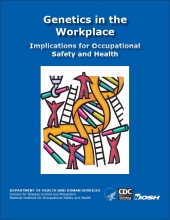
NIOSH ‘s recently published report, Genetics in the Workplace: Implications for Occupational Safety and Health, addresses balancing some of aspects of these issues while focussing on the paramount issue of safety in the workplace. “The use of genetic information in occupational safety and health research requires careful attention because of the real or perceived opportunities for the misuse of genetic information. Society in general and workers in particular have concerns that discrimination and lack of opportunity will result from the inappropriate use of genetic information [MacDonald and Williams-Jones 2002; Maltby 2000]. While only sparse or anecdotal information supports this contention, a wide range of workers, legislators, scientists, and public health researchers have concern that such discrimination could occur. Thus, GINA and other regulations were passed to prevent the potential misuse and abuse of genetic information in the workplace. Examples of safeguards include rules and practices for maintaining privacy and confidentiality, prohibition of discrimination, and support of a worker’s right of self- determination (autonomy) with regard to genetic information.”
Click here to read more about occupational illness and genetics.
Sunday, December 13, 2009
Teacher Acting as School Chaperone Wins Benefits for Skiing Accident
Massachusetts has expanded the recreational activity doctrine to include volunteer recreational activity as compensable. The Supreme Court permitted a schoolteacher, who acted as a school chaperone on a ski trip, to recover benefits as a result of a ski accident necessitating two surgeries and physical therapy.
Karen Sikorski’s Case, SJC-10481 Decided Oct. 5, 2009
Alan Pierce, attorney for the injured workers said, “It sends a message to municipalities and teachers that the work they do on either side of the classroom bell is valued.’’
Karen Sikorski’s Case, SJC-10481 Decided Oct. 5, 2009
Tuesday, December 8, 2009
NJ Assembly Passes Bill to Stop Raid on Second Injury Fund
Click here to read more about the Second Injury Fund.
Monday, December 7, 2009
US Supreme Court Turns Down RICO Appeal- Good News for Injured Workers
Good news was message to injured workers' from the US Supreme Court today. The Court upheld a favorable RICO decision of the Court of Appeals that permits injured workers to institute federal Racketeer Influenced and Corrupt Organizations Act(RICO) claims against employers, insurance carriers and defense medical experts. It upheld the 6th Cir. decision that Michigan's Workers' Compensation Disability Act (WDCA) did not reverse preempt, under the federal McCarran-Ferguson Act by engaging in predicate acts of mail fraud and wire fraud, in order to deny the injured employees' valid claims for workers' compensation benefits.
The motion of MI Self-Insurers Association for leave to file
a brief as amicus curiae is granted. The motion of American
Trucking Associations, Inc. for leave to file a brief as amicus
curiae is granted. The motion of DRI - The Voice of the Defense
Bar for leave to file a brief as amicus curiae is granted. The
motion of National Council of Self-Insurers, et al. for leave to
file a brief as amici curiae is granted. The petition for a
writ of certiorari is denied."
Cassens Transport Co. v. Brown, --- S.Ct. ----, 2009 WL 1269080, 77 USLW 3635, 78 USLW 3011 (U.S. Dec 07, 2009) (NO. 08-1375)
a brief as amicus curiae is granted. The motion of American
Trucking Associations, Inc. for leave to file a brief as amicus
curiae is granted. The motion of DRI - The Voice of the Defense
Bar for leave to file a brief as amicus curiae is granted. The
motion of National Council of Self-Insurers, et al. for leave to
file a brief as amici curiae is granted. The petition for a
writ of certiorari is denied."
Cassens Transport Co. v. Brown, --- S.Ct. ----, 2009 WL 1269080, 77 USLW 3635, 78 USLW 3011 (U.S. Dec 07, 2009) (NO. 08-1375)
Click here to see the Workers' Compensation Blog for additional articles on RICO matters and workers' compensation.
Click here to read more about the late Judge Harold Ackerman who sat below on the 6th Cir. By Designation. That decision was affirmed by the US Supreme Court. Judge Ackerman was a former NJ Workers' Compensation Judge(1955-1965), the Federal Judge who managed the entire, original, asbestos litigation docket in the 1980's (ie. Austin v. Johns-Manville Products Corp., 672 F.2d 902 (C.A.3 (N.J.) 1981)). Judge Ackerman passed away last week at age 81.
Sunday, December 6, 2009
David Michaels Confirmed by US Senate to Head OSHA
Click here to read more about David Michaels and OSHA.
Saturday, December 5, 2009
Workplace Safety, the Aging Workforce & The Logical Step
Safety in the workplace is now a growing concern as US aging workforce expands. It has been frequently reported that the expansion of this dimension of the labor sector has generated an increase in serious accidents and illness at work.
Over the past decade the work force has demographically changed. The number of those who are working past age 55 has grown. This increase mirrors an increase in accidents at work. It well known that those age 55 and older have a higher propensity for illness and disease resulting in complex of medical conditions.
The workers' compensation claims for this age group have become more serious and eventually evolve into Social Security Disability Claims. Besides the administrative complexity of navigating a fragile and dysfunction workers' compensation, these workers are require more emergent medical care for exigent conditions.
The National Institute for Occupational Safety and Health (NIOSH) has recognized this issue and is attempting to put SAFETY back into the equation.
"A report of conference presentations and discussions among participants from the National Academies of Science, universities and research institutions, and representatives of professional associations, industry and labor, recommends attention to workplace environments to maintain “work ability” as workers age, along with legislative fixes and research to fill in knowledge gaps for keeping workers healthy and productive."
As Social Security studies these issues, and more reliable data becomes available through NIOSH's efforts, a redesign of the approach to mandate safety, and deliver medical benefits universally and in a more efficient fashion, appears to be the next logical step.
Click here to read more about safety and workers' compensation.
Over the past decade the work force has demographically changed. The number of those who are working past age 55 has grown. This increase mirrors an increase in accidents at work. It well known that those age 55 and older have a higher propensity for illness and disease resulting in complex of medical conditions.
The workers' compensation claims for this age group have become more serious and eventually evolve into Social Security Disability Claims. Besides the administrative complexity of navigating a fragile and dysfunction workers' compensation, these workers are require more emergent medical care for exigent conditions.
The National Institute for Occupational Safety and Health (NIOSH) has recognized this issue and is attempting to put SAFETY back into the equation.
"A report of conference presentations and discussions among participants from the National Academies of Science, universities and research institutions, and representatives of professional associations, industry and labor, recommends attention to workplace environments to maintain “work ability” as workers age, along with legislative fixes and research to fill in knowledge gaps for keeping workers healthy and productive."
As Social Security studies these issues, and more reliable data becomes available through NIOSH's efforts, a redesign of the approach to mandate safety, and deliver medical benefits universally and in a more efficient fashion, appears to be the next logical step.
Click here to read more about safety and workers' compensation.
Subscribe to:
Posts (Atom)