Copyright

(c) 2010-2026 Jon L Gelman, All Rights Reserved.

Saturday, September 20, 2014

Part 2: Asbestos at VA Medical Center

Today's post was shared by Take Justice Back and comes from www.wlos.com

Part 2: Asbestos at VA Medical Center story image

A News 13 investigation of asbestos at Asheville's  VA Medical Center uncovers critical information left out of reports to federal safety inspectors.

Workers at the VA along with an expert say the problem could put public health at risk. News 13's Mike Mason has part two of our special investigation into “Hidden Hazards”.

One current maintenance worker at the Asheville VA hospital fears retaliation so he agreed to speak with us only if we concealed his identity. We'll call him "Bill". Bill says photos taken this past May show there is still damaged asbestos piping and debris in the sub-basement and sections of the crawlspace where most people can't see. Bill tells us, “The old pipe insulation literally coming unraveled and falling apart. It was told to us 2 to 3 times it has all been abated but everything is as it was."

Photos show many crumbling pipes clearly tagged as containing asbestos, others have been duct-taped together instead of being replaced. Workers provided us with additional photos containing captions to describe how broken pipe insulation has been dangling above air handler access doors and the door seal outside of an A/C filter room has been ripped. Workers say the old A/C air handlers are not air tight and they suspect they're sucking in clouds of dust and debris.

Bill tells us, "They move a lot of air into areas of the hospital and they're in these dirty areas."

...

[Click here to see the rest of this post]

Part 1: Asbestos at VA Medical Center

Today's post was shared by Take Justice Back and comes from www.wlos.com


Part 1: Asbestos at VA Medical Center story image

A News 13 investigation sparks a federal investigation into hazardous asbestos at Asheville's V-A Medical Center. We found the hospital's main building has been housing tons of damaged asbestos for decades. Investigative Reporter Mike Mason has this special report on these "Hidden Hazards.”
V-A workers say they now fear for their safety and that of thousands of vets who rely on the center for medical services.  Last year, a complaint was filed with federal OSHA officials, claiming workers and patients were being exposed to asbestos.  OSHA soon closed out the case based on information provided by the V-A's Medical Director. But our investigation found the situation was much more serious and now OSHA is investigating this case once again.
For most people, controlling a model plane is a lot easier than flying a real one. But Rick Bryson says he prefers piloting much bigger aircraft, "I worked for the department of the Air Force in Tampa, Florida." Bryson's a pilot and Vietnam Vet. His military career began in 1967. That was the same year the V-A built this hospital on Tunnel Road in Asheville, known as the Charles George V-A Medical Center. It provides offices for V-A employees and critical medical services for thousands of local vets. But some say a section of the building itself may be posing some serious health problems. Bryson recalls the conditions in the building’s sub-basement,...
[Click here to see the rest of this post]

FDA tells Nashville pharmacy to correct problems

Today's post was shared by Take Justice Back and comes from www.tennessean.com


The U.S. Food and Drug Administration has put a Nashville compounding pharmacy on notice to correct multiple safety hazards in a warning letter issued this month to its owner, John W. Hollis.
The letter comes after the FDA last spring cited John Hollis Pharmacy on 11 rule violations, ranging from failing to maintain sterility safeguards to compounding drugs without having legally required individually identified patients. The FDA acknowledged that Hollis had agreed to recall drug products and verbally stated in May that he would cease sterile compounding.
However, the pharmacy continues to fill and compound prescriptions that do not require sterility measures.
“If you decide to resume production of sterile drugs, FDA strongly recommends your management immediately undertake a comprehensive assessment of your operations, including facility design, procedures, personnel, processes, materials and systems,” the letter stated. “In particular, this review should assess your aseptic processing operations. A third-party consultant with relevant sterile drug manufacturing expertise could be useful in conducting this comprehensive evaluation.”
The Sept. 4 letter instructs Hollis to take prompt actions to correct the violations and to submit in writing within 15 days whether the pharmacy has taken specific steps to correct the violations.
Reach Tom Wilemon at 615-726-5961 and on...
[Click here to see the rest of this post]

Influenza Vaccination Coverage Among Health Care Personnel — United States, 2013–14 Influenza Season

Today post is shared from cdc.com/


Comprehensive worksite intervention strategies that include vaccination promotion and convenient access to vaccination at no cost might increase vaccination coverage among Health Care Personnel (HCP).

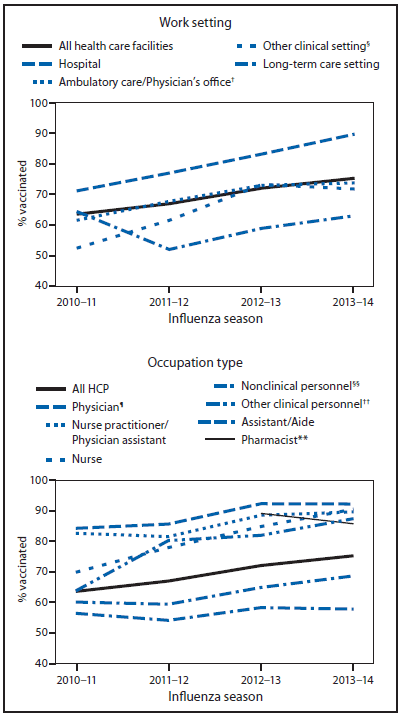
Influenza vaccination coverage among HCP during the 2013–14 influenza season, assessed using an opt-in Internet panel survey, was 75.2%, similar to coverage for the 2012–13 season. Vaccination coverage was highest among physicians overall and HCP working in hospital settings; coverage was lowest among assistants/aides overall and HCP working in long-term care settings. Offering vaccination at the workplace at no cost was associated with higher vaccination coverage.


The Advisory Committee on Immunization Practices recommends that all health care personnel (HCP) be vaccinated annually against influenza (1). Vaccination of HCP can reduce influenza-related morbidity and mortality among both HCP and their patients (1–4). To estimate influenza vaccination coverage among HCP during the 2013–14 season, CDC analyzed results of an opt-in Internet panel survey of 1,882 HCP conducted during April 1–16, 2014. Overall, 75.2% of participating HCP reported receiving an influenza vaccination during the 2013–14 season, similar to the 72.0% coverage among participating HCP reported in the 2012–13 season (5). Coverage was highest among HCP working in hospitals (89.6%) and lowest among HCP working in long-term care (LTC) settings (63.0%). By occupation, coverage was highest among physicians (92.2%), nurses (90.5%), nurse practitioners and physician assistants (89.6%), pharmacists (85.7%), and "other clinical personnel" (87.4%) compared with assistants and aides (57.7%) and nonclinical personnel (e.g., administrators, clerical support workers, janitors, and food service workers) (68.6%). HCP working in settings where vaccination was required had higher coverage (97.8%) compared with HCP working in settings where influenza vaccination was not required but promoted (72.4%) or settings where there was no requirement or promotion of vaccination (47.9%). Among HCP without an employer requirement for vaccination, coverage was higher for HCP working in settings where vaccination was offered on-site at no cost for 1 day (61.6%) or multiple days (80.4%) compared with HCP working in settings not offering free on-site vaccination (49.0%). Comprehensive vaccination strategies that include making vaccine available at no cost at the workplace along with active promotion of vaccination might be needed to increase vaccination coverage among HCP and minimize the risk for influenza to HCP and their patients.

Friday, September 19, 2014

Subcommittee to Examines Legislation to Provide Greater EEOC Transparency and Accountability

On Wednesday, September 17 at 10:00 a.m., the Subcommittee on Workforce Protections, chaired by Rep. Tim Walberg (R-MI), held a legislative hearing on the EEOC Transparency and Accountability Act (H.R. 4959), the Litigation Oversight Act of 2014 (H.R 5422), and the Certainty in Enforcement Act of 2014 (H.R. 5423). 
The Equal Employment Opportunity Commission (EEOC) enforces federal laws prohibiting employment discrimination. At a recent oversight hearing, witnesses shared growing concerns with various EEOC regulatory and enforcement actions. For example, “guidance” finalized in 2012 limits employers’ use of criminal background checks during the hiring process. The subcommittee also examined EEOC’s increasing reliance on systemic discrimination cases and the commission’s delegation of its litigation authority to the Office of General Counsel. In response to these concerns, a number of legislative proposals have been introduced:
  • H.R. 4959, introduced by Rep. Richard Hudson (R-NC), would increase EEOC transparency by, among other provisions, requiring the commission to post on its website and in its annual report any case in which the commission was required to pay court sanctioned fees or costs.
              
  • H.R. 5422, introduced by Rep. Walberg, would require EEOC commissioners to approve by majority vote all EEOC-initiated litigation involving multiple plaintiffs or allegations of systemic discrimination. 
               
  • H.R. 5423, also introduced by Rep. Walberg, would provide a safe harbor to employers complying with federal or state mandates, such as a law requiring criminal background checks.
"Chairman Walberg, Ranking Member Courtney and members of the Subcommittee, I  thank you for the opportunity to express my views on the proposed legislation. Unfortunately, however well intended, these proposed changes to the federal employment discrimination  statutes are unnecessary, premature and in practical effect, would thwart the effective law  enforcement function of the EEOC."
To learn more about the hearing, visit http://edworkforce.house.gov/hearings.

Definitions of health care personnel groups for National Healthcare Safety Network reporting — United States, 2013–14 influenza season

The Advisory Committee on Immunization Practices recommends annual influenza vaccination for all health care personnel (HCP) to reduce influenza-related morbidity and mortality in health care settings.
What is added by this report?
Nationally, 81.8% of HCP included in National Healthcare Safety Network data were reported as receiving influenza vaccination during the 2013–14 influenza season. Reported proportion of HCP vaccinated was highest among employees (86.1%) and...
[Click here to see the rest of this post]

* The American Hospital Association defines community hospitals as all nonfederal, short-term general, and other special hospitals (including obstetrics and gynecology; eye, ear, nose, and throat; rehabilitation; orthopedic; and other individually described specialty services) accessible by the general public.
† Data for the 2012–13 season will not be published by CDC or CMS because reporting was required beginning January 1, 2013; therefore, reported data for 2012–13 might not cover the entire influenza season.
§ Estimates of influenza vaccination coverage among health care personnel working in settings other than acute care hospitals can be obtained for selected states via the optional industry and occupation module of the Behavioral Risk Factor Surveillance System (BRFSS). This module was implemented in the 2013 BRFSS survey; module questions are available at http://www.cdc.gov/brfss/questionnaires/pdf-ques/2013%20brfss_english.pdf.
What is already known on this topic?

Robots Work Their Way Into Small Factories

Today's post was shared by Steven Greenhouse and comes from online.wsj.com

Robots aren't just for the big guys anymore.

A new breed of so-called collaborative machines—designed to work alongside people in close settings—is changing the way some of America's smaller manufacturers do their jobs.

The machines, priced as low as $20,000, provide such companies—small jewelry makers and toy makers among them—with new incentives to automate to increase overall productivity and lower labor costs.

At Panek Precision Inc., a Northbrook, Ill., machine shop, 21 shiny new robots hum as they place metal parts into cutting machines and remove the parts after they are done. It's a tedious and oily task once handled by machine operators who earn about $16.50 an hour.

One new robot doubled the output from a machine that was previously operated by a worker "because robots work overnight and don't take lunch breaks and they just keep going," says Gregg Panek, the company's president. In some cases, the robots, which are single articulated arms, can even hold a part while it's getting cut since there is no danger of injury.

Robots have been on factory floors for decades. But they were mostly big machines that cost hundreds of thousands of dollars and had to be caged off to keep them from smashing into humans. Such machines could only do one thing over and over, albeit extremely fast and precisely. As a result, they were neither affordable nor practical for small businesses.

Collaborative robots can be set to do one task one day—such...

[Click here to see the rest of this post]

Wage Theft is a Much Bigger Problem Than Other Forms of Theft—But Workers Remain Mostly Unprotected

Today's post was shared by Steven Greenhouse and comes from www.epi.org

Wage theft—employers’ failure to pay workers money they are legally entitled to—affects far more people than more well-known and feared forms of theft such as bank robberies, convenience store robberies, street and highway robberies, and gas station robberies. Employers steal billions of dollars from their employees each year by working them off the clock, by failing to pay the minimum wage, or by cheating them of overtime pay they have a right to receive. Survey research shows that well over two-thirds of low-wage workers have been the victims of wage theft.
In 2012, there were 292,074 robberies of all kinds, including bank robberies, residential robberies, convenience store and gas station robberies, and street robberies. The total value of the property taken in those crimes was $340,850,358. By contrast, the total amount recovered for the victims of wage theft who retained private lawyers or complained to federal or state agencies was at least $933 million in 2012. This is almost three times greater than all the money stolen in robberies that year. Further, the nearly $1 billion successfully reclaimed by workers is only the tip of the wage-theft iceberg, since most victims never sue and never complain to the government.


Nevertheless, few local governments have any resources to combat wage theft, and several states have cut their labor department’s, leaving workers vulnerable to...
[Click here to see the rest of this post]

Pay Gap Is Smaller Than Ever, and Still Stubbornly Large

Today's post was shared by Steven Greenhouse and comes from www.nytimes.com

The Census Bureau released new data Tuesday on the pay gap between men and women, showing a statistically insignificant increase. But the news is better than it might seem.
Women were paid 78 cents for every dollar a man earned last year, up from 77 cents in 2012. The 22-cent pay gap is a record low, down from 40 cents in 1960. (Annualize that and it takes a woman three more months to make what a man does.)
A closer look at the numbers reveals the good news: Within nearly every age group, the pay gap is shrinking even more than the census data shows, said Claudia Goldin, a Harvard University economist and one of the leading scholars on the pay gap.
The census data is a broad generalization — it reports the median earnings of people 15 and older working full-time and year-round ($50,033 for men and $39,157 for women). The reason for the discrepancy is that the baby boomers skew the results — because there are so many of them, because the pay gap tends to widen as women age and because they were the first generation in which women began to approach men in educational and career achievements.
So while the gap looks as if it has remained more or less stable for several years, she said, it has actually been declining. “It adds up — a cent here, a cent there,” Ms. Goldin said.
Still, the gap remains wide, and after it shrank rapidly from the mid-1970s until the early 1990s, its reduction has slowed significantly. So what has worked to shrink the gap as...
[Click here to see the rest of this post]

How asbestos exposure leads to mesothelioma

Today's post was shared by Take Justice Back and comes from www.ksl.com


shutterstock_farbled.jpg

SALT LAKE CITY — Mesothelioma is a rare form of cancer that develops in the lungs. It is caused by exposure to asbestos, a mineral fiber the U.S. Consumer Product Safety Commission says was once "added to a variety of products to strengthen them and to provide heat insulation and fire resistance."
While treatments for mesothelioma are improving, it remains a very difficult cancer to treat, and it has no cure.

Who is at risk?

The unfortunate fact is short-term and one-time exposures to asbestos are known to cause mesothelioma cancer.
If you've worked in shipyards and auto repair shops, or frequented homes and public buildings built prior to 1977, you may be at risk of developing the cancer.
There are also several products that contain asbestos that you may have not thought of: adhesives, cements, sealers, mill board, automotive materials, paints, plasters, clay, mechanical products (like heating ducts), flooring, packing materials, fire-proofing materials, roofing, rope.
According to Mesothelioma.com, other risk factors that increase the likelihood that a person will develop mesothelioma include exposure to radiation, exposure to zeolite and exposure to SV40.
While smoking does not cause mesothelioma, it does not help the problem.

How mesothelioma develops

Mesothelioma usually affects the thin protective membrane that surrounds the lungs, heart and abdominal area.
  • Pleural mesothelioma forms in the lining of the lungs.
  • Peritoneal mesothelioma forms in the lining of...
[Click here to see the rest of this post]

Regulators Are Faulted in Defects at General Motors

Today's post was shared by Take Justice Back and comes from www.nytimes.com

WASHINGTON — Federal regulators had ample information to identify the dangerous ignition defect in General MotorsChevrolet Cobalt and other cars as early as 2007, a House committee investigating the National Highway Traffic Safety Administration has found.
The House report was obtained by The New York Times on the eve of a hearing Tuesday by a Senate panel that will examine the operations of the National Highway Traffic Safety Administration and question its administrator, David J. Friedman.
The report details how investigators from the agency repeatedly discounted information that did not match their assumptions — at one point a staff member referred to their efforts as “beating a dead horse.” As a result, many of G.M.’s small cars, which had defective ignition switches that were prone to turn off and disable air bags, continued to crash, sometimes with fatal results.
Making matters worse, some agency officials did not seem to understand the air bag technology at the heart of the case: At one point, the chief of the agency’s Defects Assessment Division wrote that he did not believe G.M.’s air bags were supposed to deploy when a driver was not wearing a seatbelt.
The initial report by the House Energy and Commerce Committee is based on 15,000 pages of agency documents and dozens of interviews with its staff.
“It is tragic that the evidence was staring N.H.T.S.A. in the face and the agency didn’t identify the...
[Click here to see the rest of this post]

Capitol Hill Employees Concerned About July 10 Asbestos Exposure

Today's post was shared by Take Justice Back and comes from blogs.rollcall.com


asbestos 03 080107 440x292 Capitol Hill Employees Concerned About July 10 Asbestos Exposure
Capitol Hill Employees Concerned About July 10 Asbestos Exposure

The asbestos emergency that temporarily closed the House side of the Capitol was a scary ordeal for Architect of the Capitol and Capitol Police employees working the overnight shift.
Union officials representing workers at both agencies told CQ Roll Call they are concerned about potential exposure to the human carcinogen, which can cause chronic lung disease as well as cancer. The Office of Compliance, an agency created by Congress to ensure safety in the legislative branch workplace, has been asked to inspect the incident for an alleged violation of the Occupational Safety and Health Act.
Asbestos fibers and other debris were released into the air around 2:30 a.m. or 3 a.m., when AOC contractors removing insulation containing asbestos from pipes and valves on the Capitol’s fourth floor had an accident above the East Grand Staircase. Most of Capitol Hill learned about the incident hours later, when doors to the House side of the Capitol were closed as engineers and certified industrial hygienists evaluated the scene.
Wally Reed, president of American Federation of State, County, and Municipal Employees Local 626, which represents approximately 500 laborers, custodians, gardeners and other workers in the House and Senate office buildings, Capitol and Botanic Garden, said he has made multiple attempts to get a list from the AOC of employees who were exposed and the level of exposure, but no...
[Click here to see the rest of this post]

Death Count Raised to 19 in GM Ignition-Switch Defect

Today's post was shared by Take Justice Back and comes from online.wsj.com

The General Motors Co. faulty ignition-switch death toll now stands at 19, above the company's earlier estimate, and may go higher as a review of compensation claims continues.
Attorney and compensation expert Kenneth Feinberg —hired by GM to create a claims process and evaluate submissions—released the figure on Monday, his first public update on ignition-switch injury claims. Mr. Feinberg said he continues to evaluate some of the 125 death claims that have been filed as of Friday.
The new figure comes after the auto maker spent months down-playing the death count, saying it knew of only 13 deaths based on the information it had at the time. GM Chief Executive Mary Barra later softened the company's stance when she established the victim compensation fund and delegated the responsibility of determining who was killed or injured to Mr. Feinberg.
"We have previously said that Ken Feinberg and his team will independently determine the final number of eligible individuals, so we accept their determinations for the compensation program," GM said in a statement. "What is most important is that we are doing the right thing for those who lost loved ones and for those who suffered physical injury."
The compensation fund has received a total of 445 claims. Nineteen were certified as deaths while 12 others were certified as legitimate injury claims. Details about all the claims weren't released although no one has yet agreed to take the...
[Click here to see the rest of this post]

Influenza Vaccination Coverage Among Health Care Personnel — United States, 2013–14 Influenza Season

The figure shows the percentage of health-care personnel (HCP) who received influenza vaccination, by work setting and occupation type, in the United States for the 2010-11 through 2013-14...
The Advisory Committee on Immunization Practices recommends that all health care personnel (HCP) be vaccinated annually against influenza (1). Vaccination of HCP can reduce influenza-related morbidity and mortality among both HCP and their patients (1–4). To estimate influenza vaccination coverage among HCP during the 2013–14 season, CDC analyzed results of an opt-in Internet panel survey of 1,882 HCP conducted during April 1–16, 2014. Overall, 75.2% of participating HCP reported receiving an influenza vaccination during the 2013–14 season, similar to the 72.0% coverage among participating HCP reported in the 2012–13 season (5). Coverage was highest among HCP working in hospitals (89.6%) and lowest among HCP working in long-term care (LTC) settings (63.0%). By occupation, coverage was highest among physicians (92.2%), nurses (90.5%), nurse practitioners and physician assistants (89.6%), pharmacists (85.7%), and "other clinical personnel" (87.4%) compared with assistants and aides (57.7%) and nonclinical personnel (e.g., administrators, clerical support workers, janitors, and food service workers) (68.6%). HCP working in settings where vaccination was required had higher coverage (97.8%) compared with HCP working in settings where influenza vaccination was not required but promoted (72.4%) or settings where there was no requirement or promotion of vaccination (47.9%). Among HCP without an employer requirement for vaccination, coverage...
[Click here to see the rest of this post]

Thursday, September 18, 2014

Opinion: Employees getting shorted on pay

Today's post is shared from cincinnati.com/
As the stock market, corporate profits and worker productivity have reached record highs, average employee compensation has reached record lows. But perhaps most troubling is the fact that American workers are getting robbed – literally – in the form of wage theft, or the illegal withholding or denial of compensation owed.
Millions of workers each year are forced to work for less than minimum wage, do not receive overtime pay when they come in early or stay late, have illegal deductions taken out of their paychecks, or have their timesheets falsified.
Tipped employees face additional challenges since tips can be stolen and because employers often do not make up the difference when tips fall below the minimum wage, as they are required to do.
12 moments in Cincy labor history
Lawson: Ohioans have earned the right to work
McLinden: Workers need to be part of recovery
Wage theft also happens when workers are misclassified as independent contractors, who are not covered by overtime rules and do not receive overtime pay when they work more than 40 hours a week. While misclassification may not always be intentional, not having to pay overtime is a huge boon to employers and a significant loss of income for the misclassified worker.
Truck drivers, home health aides and construction workers are often misclassified as exempt or independent...
[Click here to see the rest of this post]

Proposed Revisions to the Special Minimum Benefit for Low Lifetime Earners

Social Security's special minimum benefit is declining in relative value, does not provide a full benefit equal to the poverty threshold, and reaches fewer beneficiaries each year. Members of Congress and other key policymakers have proposed several methods for revising the special minimum benefit, either as part of reforming Social Security more broadly or as stand-alone policy options. Most of the new options would index the benefit to wages, helping ensure its sustainability into the future. The options differ in how they define a “year of coverage,” how many years of coverage are required to be eligible for any benefit increase, and how much the full benefit increase should be. Those choices will determine who will receive the benefit increase and how adequate their benefit will be.

Glenn Springstead, Kevin Whitman, and Dave Shoffner are with the Office of Retirement Policy, Office of Retirement and Disability Policy, Social Security Administration. Questions about the analysis should be directed to the authors at (202) 358-6234, (202) 358-6317, and (202) 358-6210, respectively.

Acknowledgments: The authors thank Natalie Lu, Mark Sarney, Melissa Favreault, Kathleen Romig, Hilary Waldron, and Craig Feinstein for their helpful comments and suggestions.

The findings and conclusions presented in this brief are those of the authors and do not necessarily represent the views of the Social Security Administration.

Summary

Selected Abbreviations
AWI average wage...

[Click here to see the rest of this post]

Is Football The New Tobacco?

How scandals could change the business of football is today's post shared from pbs.org/ Editor’s Note: Due to rights restrictions, the online version of this segment has been edited from its original broadcast version.

HARI SREENIVASAN: Meanwhile, there’s been a new development in the Ray Rice domestic violence case. The NFL Players Union filed an appeal last night for the former Baltimore Ravens running back. He’s been suspended indefinitely by the league for punching the woman who’s now his wife.

Two other NFL players are also facing domestic violence cases. Carolina Panthers defensive end Greg Hardy played in week one, but not last weekend. Today, he was taken off the active roster while he appeals his conviction for domestic assault. And San Francisco 49ers defensive end Ray McDonald has played in both his team’s games so far.

Minority Leader Nancy Pelosi, a California Democrat, said today that was the wrong call. Even so, the 49ers’ Sunday night game with the Chicago Bears drew one of the largest TV audiences ever for a regular season game. Chicago won that 28-20.

What kind of threats do these stories pose to the future of the game as a business?  And is the business itself showing any cracks?

We check in with two who have a good lens onto all of this.

Gregg Easterbrook is the author of “The King of Sports: Football’s Impact on America.”  He’s a contributing editor to “The Atlantic” and a columnist for ESPN and NFL.com. And Andrew Zimbalist is an economist...

[Click here to see the rest of this post]

There's No Other Place I Wanna Be

Today's post is shared from Judge David Langham and I would encourage to read his blog at: http://flojcc.blogspot.com/ David Langham is the Deputy Chief Judge of Compensation Claims for the Florida Office of Judges of Compensation Claims and Division of Administrative Hearings. 

I check the Florida Supreme Court opinions each Thursday. Florida's District Courts of Appeal issue their decisions when they are made. If you are interested in them, you can sign up on their sites to receive email notifications (access them through www.flcourts.org). Unlike Florida's District Courts, the Supreme Court releases their opinions on a schedule, each Thursday, which provides some regularity to the process.

Watching the Supreme Court is not usual in Florida Workers' Compensation. There has not been much regarding substantive workers' compensation issues from this Court since 2009 when they decided Murray v. Mariner Health, 994 So.2d 1051. Before that, there was Sanders v. City of Orlando, 997 So.2d 1089 in 2008. Looking for a substantive workers' compensation case in the Florida Supreme Court before that might take you back to Aguilera v. Inservices, Inc., 905 So.2d 84 in 2005.

There have been some other cases on the subject, which were arguably not exactly substantive workers' compensation cases, but touched the subject. They are interesting reading nonetheless, such as Saleeby v. Rocky Elson Const., Inc., 3 So.3d 1078 in 2009,Bakerman v.The Bombay Company, 961 So.2d 259 in 2007,Summit Claims Management Inc. v. Lawyers Exp. Trucking, 944 So.2d 339 in 2006, Florida Division of Workers' Compensation v. Cagnoli, 914 So.2d 950 in 2005 and Taylor v. School Board of Brevard County, 888 So.2d 1 in 2004.

So, over a ten year period, something perhaps...

[Click here to see the rest of this post]