Copyright

(c) 2010-2026 Jon L Gelman, All Rights Reserved.

Monday, April 4, 2011

The Republican Plan: Just End Medicare

This week, the Republicans will offer a proposal that ultimately would end Medicare involvement. The plain is simply end Medicare. The proposal outlined is outlined in the Wall Street Journal today.

"The plan would essentially end Medicare, which now pays most of the health-care bills for 48 million elderly and disabled Americans, as a program that directly pays those bills. Mr. Ryan and other conservatives say this is necessary because of the program's soaring costs. Medicare cost $396.5 billion in 2010 and is projected to rise to $502.8 billion in 2016. At that pace, spending on the program would have doubled between 2002 and 2016."

Converting the program for coverage to the poor only would still not end the plans' involvement in workers' compensation and in fact may only increase it. The dichotomy between rich and poor will increase. The numbers of uninsured are growing as well as the working elderly.

It is anticipated that Medicare premium costs will continue to increase under the present plan and wealthy Americans will opt-out. This proposal will merely mean a universal opt-out plan leaving the Federal program strapped for cash. The premium base needs to be increased rather than diminished.

As Peter Rousmaniere, a noted workers' compensation commentator,  recently observed, the workers' compensation program has "leaks in the system."  Occupational disease claims will continue to be denied at increasing rates, and the cost shifting will merely be perpetuated from workers compensation  to the taxpayers. Just ending Medicare will not solve the problems with the Workers' Compensation medical delivery system.

Sunday, April 3, 2011

Vermont Single Payer System Called the Dawn of A New Era

The proposed state based Vermont Single-Payer health care system, that would embrace workers' compensation medical care, is gaining momentum. A recent article in the New England Journal of Medicine, citing increased costs and the failure of the workers' compensation systems to provide a medical delivery system for occupational injuries, has embraced the proposal as a "Dawn of a New Era."

Friday, April 1, 2011

Federal Probe Launched Into Illinois Workers Compensation System

Federal investigators have reportedly launched a wide scale investigation into the Illinois workers' compensation system  after millions of dollars of questionable claims and practices have been reported by arbitrators. Subpoenas have been issued for e-mails and other records from arbitrators by the U.S. Attorney for the central district of Illinois.

Wednesday, March 30, 2011

Drugs, Alcohol and Mauling Bears


Guest Blog by Thomas M. Domer 

I’ve received dozens of emails and phone calls from friends and colleagues railing on the Montana court ruling granting workers’ comp benefits to a man high on pot when a grizzly mauled him at a nature park. “How ridiculous, how unfair!” rings the common theme from almost every caller. 


In response, I remind folks that the court said grizzlies are ”equal opportunity maulers”, and no proof existed that the man provoked the attack because he was high. I also remind everyone that workers’ comp is a no-fault insurance system, where concepts like “fairness” are all very relative. 

Many states, including Wisconsin, hold that if an injury results from intoxication (by alcohol or drugs) benefits are not denied, but reduced (usually by 15%) as an employee safety violation, but intoxication is not evidence of a deviation if the employee is otherwise in the course of employment. The much-heralded “Frozen Fingers” case in Wisconsin confirmed that rule, where a salesman was so drunk he couldn’t open his own door, passed out and has his frostbitten fingers amputated. Benefits were awarded, but reduced by 15%.

Thomas M. Domer practices in Milwaukee, Wisconsin (www.domerlaw.com). He has authored and edited several publications including the legal treatise Wisconsin Workers' Compensation Law (West) and he is the Editor of the national publication, Workers' First Watch. Tom is past chair of the Workers' Compensation Section of the American Association for Justice. He is a charter Fellow in the College of Workers' Compensation Lawyers. He co-authors the nationally recognized Wisconsin Workers' Compensation Experts Blog.


Zadroga Fund Cancer Claims Info Sought by NIOSH

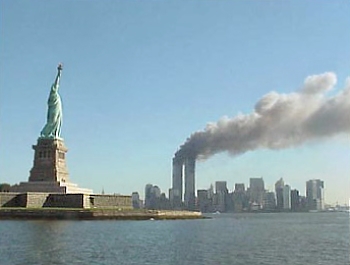
On March 8, 2011, the Director of the National Institute of Occupational Safety and Health (NIOSH) of the Centers for Disease Control and Prevention (CDC) published a notice in the Federal Register (76 FR 12740) requesting information from the public on three questions regarding conditions relating to cancer for consideration under the World Trade Center Health Program. Written comment was to be received by March 31, 2011. NIOSH has received comment about extending the request for information to include persons living and working in the affected area. In consideration of that comment, the Director of NIOSH is modifying one of the questions posed in the Federal Register and extending the public comment period to April 29, 2011.

ADDRESSES: You may submit comments, identified by docket number NIOSH- 227, by any of the following methods: Mail: NIOSH Docket Office, Robert A. Taft Laboratories, MS-C34, 4676 Columbia Parkway, Cincinnati, OH 45226. Facsimile: (513) 533-8285. E-mail: nioshdocket@cdc.gov.


All information received in response to this notice will be available for public examination and copying at the NIOSH Docket Office, 4676 Columbia Parkway, Cincinnati, Ohio 45226. The comment period for NIOSH- 227 will close on April 29, 2011. All comments received will be available on the NIOSH Docket Web page at http://www.cdc.gov/niosh/ docket, and comments will be available in writing by request. NIOSH includes all comments received without change in the docket and the electronic docket, including any personal information provided.

The Director of the National Institute for Occupational Safety and Health (NIOSH) of the Centers for Disease Control and Prevention (CDC) serves as the World Trade Center (WTC) Program Administrator for certain functions related to the WTC Health Program established by the James Zadroga 9/11 Health and Compensation Act (Pub. L. 111-347). In accordance with Section 3312(a)(5)(A) of that Act, the WTC Program Administrator is conducting a review of all available scientific and medical evidence to determine if, based on the scientific evidence, cancer or a certain type of cancer should be added to the applicable list of health conditions covered by the World Trade Center Health Program


The WTC Program Administrator is requesting information on the following: 
  • (1) Relevant reports, publications, and case information of scientific and medical findings where exposure to airborne toxins, any other hazard, or any other adverse condition resulting from the September 11, 2001 terrorist attacks, is substantially likely to be a significant factor in aggravating, contributing to, or causing cancer or a type of cancer; 
  • (2) clinical findings from the Clinical Centers of Excellence providing monitoring and treatment services to WTC responders (i.e., those persons who performed rescue, recovery, clean- up and remediation work on the WTC disaster sites) and community members directly exposed to the dust cloud, gases and vapors on 9/11/01 and those living and working in the affected area; and 
  • (3) input on the scientific criteria to be used by experts to evaluate the weight of the medical and scientific evidence regarding such potential health conditions.

Tuesday, March 29, 2011

Symposium on Prevention of Occupationally-Related Distracted Driving

Distracted driving (including texting while driving and cell phone use) is a major cause of motor vehicle crashes. Many workers may be distracted while performing work-related driving or during vehicle operations. Reducing distracted work-related driving and increasing awareness of the risk to employees that result from distracted driving is an important mission for safety and health professionals, employers and employees. This Symposium is designed to bring together a variety of stakeholder groups who are interested in reducing work-related driving distractions and generate recommendations for action, including new directions for research. This Symposium will include didactic presentations, interactive discussions and opportunities for networking, and demonstrations of training materials.

Monday, April 18, 2011
8:30 AM - 4:00 PM

Kossiakoff Conference Center
11100 Johns Hopkins Road
Laurel, Maryland 20723
1-800-548-3647

8:30 - 9:00 am:
Registration and continental breakfast

9:00 - 9:15 am:
Welcome and Review of the Agenda
Mary Doyle, MPH,RN, COHN-S/CM
Director, ERC Continuing Education Program
Johns Hopkins Bloomberg School of Public Health
Meeting Moderator

9:15 - 9:30 am:
Mission of the Symposium and Call to Action
Christine Branche, PhD
Principal Associate Director
The National Institute for Occupational Safety and Health
Centers for Disease Control and Prevention

9:30 - 9:50 am:
U.S. DOT Perspective on Distracted Driving
Peter Appel
Administrator, Research and Innovative Technology Administration
Department of Transportation

9:50 - 10:10 am:
OSHA’s Perspective on Distracted Driving
David Michaels, PhD, MPH
Assistant Secretary of Labor for OSHA
Department of Labor

10:10 - 10:40 am:
What Does the Research Tell Us?
Jeffrey S. Hickman, PhD
Virginia Tech Transportation Institute
Center for Truck and Bus Safety
Virginia Polytechnic Institute and State University

10:40 - 11:00 am:
Audience Q & A/Feedback for morning sessions

11:00 – 11:15 am
Break and Networking

11:15 - 12:00 pm:
Panel Discussion: Elements of Model Programs: Implementation Challenges
Moderator: Jack Hanley
Executive Director
Network of Employers for Traffic Safety

Panelists:

Joseph Van Houten, PhD, CSP
Senior Director, Worldwide EHS
Johnson & Johnson

Tom Bennett
SH&E/OIMS Advisor, Fuels Marketing
Downstream & Chemical SSH&E

Amy Lokken, ARM
Group Director, North American Health & Safety
Coca-Cola Refreshments

David Hopps
Vice President, Risk Management Operations & Environment, Safety & Health
ServiceMaster

12:00 – 12:15 pm:
Audience Discussion and Feedback on Model Programs Panel

12:15 - 1:15 pm:
Lunch (provided on-site)

1:15 - 2:00 pm:
Panel Discussion: In-vehicle Technology to Address Distracted Driving
Moderator: Peter Appel
Administrator, Research and Innovative Technology Administration
Department of Transportation

Panelists:

Eric Collins, JD
Chief Operations Officer
Mobile Posse

Michael Petricone, JD
Senior VP, Government Affairs
Consumer Electronics Association

2:00 - 2:15 pm
Audience Discussion and Feedback on In-Vehicle Technology Panel

2:15 - 3:00 pm:
Panel Discussion: Worker Perspectives
Moderator: James August, MPH
Health and Safety Consultant

Panelists:

LaMont Byrd
Director, Safety and Health Department
International Brotherhood of Teamsters

Rich Duffy
Assistant to the General President for Occupational Health, Safety and Medicine
International Association of Fire Fighters – AFL/CIO

Ed Watt, MS
Director of Health and Safety
Transportation Workers Union of America

3:00 - 3:15 pm
Audience Discussion and Feedback on Workers’ Perspective Panel

3:15 - 3:45 pm:
Facilitated Discussion with Audience
Leslie Nickels, PhD, MEd
Senior Health Communications Fellow
National Institute for Occupational Safety and Health
Centers for Disease Control and Prevention

3:45 - 4:00 pm:
Closing
Mary Doyle, Meeting Moderator

4:00 - 5:00 pm: 
Reception (on site)

Monday, March 28, 2011

Colorado Court Allows RICO Case to Proceed Against Wal-Mart

A partial summary judgment motion was denied by Judge Robert E. Blackburn in a pending Colorado case against Wal-Mart where the plaintiff alleged that the employer,  working in concert with other defendants "dictated and interfered unlawfully " with employees who were entitle to medical treatment flowing from occupational accidents. 

The Court stated that, "The plaintiffs allege that the defendants improperly required, and continue to require, treatment providers to follow protocol notes that improperly direct and/or restrict the medical treatment provided to injured Wal-Mart workers under the Act. The plaintiffs allege that the policies implemented by the defendants result in delays in the injured workers' receipt of treatment, denial of prescribed medical treatment, withholding of benefits, and/or the inability of the injured workers to obtain prescribed medical treatment."

The case involves a certified class of plaintiffs. The defendants had sought to limit the number of claimants by shortening the statute of limitations for the viability of the claims under the Racketeer Influenced and Corrupt Organizations Act (RICO), 18 U.S.C. § 1961-1968. Since the relevant time periods were not evident on the face of the complaint, and the defendants did not offer proof to establish it, the Court denied the motion.

Gianzero v. Wal-Mart Stores Inc., 2011 WL 1085647 (D. Colo. 2011) Decided March 24, 2011.