The Associated Press reports today that, "Insurer Travelers Cos. spent $1.66 million in the fourth quarter to lobby the federal government on global warming issues, workers compensation, consumer protection rights and other issues, according to a recent disclosure report." Travelers "also lobbied on issues including the National Insurance Consumer Protection Act, coastal wind zone proposals, bankruptcy issues and asbestos-related legislation."
To read more about Travelers Insurance Company and workers' compensation click here.

Wednesday, February 10, 2010
Workers Compensation Countable as Income Despite Special Needs Trust
An injured worker was denied food stamps in NJ because money from a workers' compensation award was countable as income despite the existence of a special needs trust.
"A special needs trust that effectively exempts assets or income from inclusion in Medicaid eligibility calculation can be established for the benefit of an individual deemed disabled pursuant to 42 U.S.C.A. § 1382c(a)(3). 42 U.S.C.A. § 1396p(d)(4)(A). The disability determination, however, can only be made by the Social Security Administration or the state disability review team, and only based on the definition set forth in the federal statute. See N.J.A.C. 10:71-3.10 to -3.12(a). Hence, the workers' compensation court judgment as to petitioner's disability, issued by a judge in the workers' compensation context, is not dispositive of whether she is "disabled" pursuant to the federal definition. See N.J.A.C. 10:71-3.10. As the Director of DMHS stated, unless and until petitioner is found to be disabled by the Social Security Administration or the state disability review team, she is not entitled to protect her assets through the use of a special needs trust. See Determining Disability and Blindness, 20 C.F.R. § 404.1504 (2009); Determining Disability and Blindness, 20 C.F.R. § 416.904 (2009)."
"A special needs trust that effectively exempts assets or income from inclusion in Medicaid eligibility calculation can be established for the benefit of an individual deemed disabled pursuant to 42 U.S.C.A. § 1382c(a)(3). 42 U.S.C.A. § 1396p(d)(4)(A). The disability determination, however, can only be made by the Social Security Administration or the state disability review team, and only based on the definition set forth in the federal statute. See N.J.A.C. 10:71-3.10 to -3.12(a). Hence, the workers' compensation court judgment as to petitioner's disability, issued by a judge in the workers' compensation context, is not dispositive of whether she is "disabled" pursuant to the federal definition. See N.J.A.C. 10:71-3.10. As the Director of DMHS stated, unless and until petitioner is found to be disabled by the Social Security Administration or the state disability review team, she is not entitled to protect her assets through the use of a special needs trust. See Determining Disability and Blindness, 20 C.F.R. § 404.1504 (2009); Determining Disability and Blindness, 20 C.F.R. § 416.904 (2009)."
J.C. v. Division of Medical Assistance and Health Services, et al., Docket No.: a5632-07 Decided: 2010-02-08
http://lawlibrary.rutgers.edu/courts/appellate/a5632-07.opn.html
Note: N.J.A.C. 10:71-3.10 Disability and Blindness Factors
For purposes of determining medical eligibility for the Medicaid Only program, the disability and blindness standards shall be the same as for the Supplemental Security Income program under Title XVI of the Social Security Act, as amended by Public Law 92-603. 42 N.J. Reg. No. 4.
http://lawlibrary.rutgers.edu/courts/appellate/a5632-07.opn.html
Note: N.J.A.C. 10:71-3.10 Disability and Blindness Factors
For purposes of determining medical eligibility for the Medicaid Only program, the disability and blindness standards shall be the same as for the Supplemental Security Income program under Title XVI of the Social Security Act, as amended by Public Law 92-603. 42 N.J. Reg. No. 4.

Tuesday, February 9, 2010
CMS Set-Aside Rules Raise Concern of Civil Trial Bar
At a recent continuing legal education program in Wisconsin members of the plaintiff and defense civil trial bar raised their concerns over the Rules governing CMS set-aside arrangements. While both sides recognized the need to reimburse Medicare, the methods being utilized by CMS to obtain reimbursement of future medical expenses caused deep concern by the lawyers.
Click here to read more about CMS Set-aside arrangements.
Click here to read more about CMS Set-aside arrangements.
Secretary at Former Asbestos Plant Awarded $17.87 Million

The lawsuit alleged that Pneumo Abex LLC and Honeywell International Inc. and their corporate predecessors knew of the dangers of asbestos and failed to warn their employees and customers of the hazards.
UNARCO also operated an asbestos plant in Paterson NJ from 1942 through November, 1954. It produced asbestos pipe covering and textile material for US Navy ships and and others. The Paterson NJ group of workers, and their families, became the cohort group for sentinel studies conducted by the late Irving J. Selikoff, MD (1915-1992), who linked asbestos exposure to various disease including: asbestosis, lung cancer and mesothelioma. Those studies ultimately lead to a world renown conference in 1964 sponsored by The New York Academy of Sciences.
Asbestos is still mined in Canada. The use of asbestos in the United States has yet to be banned in the United States.
Disease caused by asbestos has resulted in an epidemic of disease and resulting massive amounts of workers' compensation occupational exposure claims and civil actions. Asbestos litigation has been deemed "The Longest Running Tort in American History."
Click here to read more about asbestos and workers compensation.
Click to read more about asbestos litigation.
Monday, February 8, 2010
The Saga of Asbestos in LIbby Montana

The plight of the workers of Libby Montana may have been highlighted by efforts of Senator Harry Reid in the recent Senate Health Care Reform legislation, but it goes historically much deeper. While the hazardous of asbestos may have been studied for over a hundred years, it wasn't until a newspaper article 1999 did horrors of Libby become nationally recognized.

Friday, February 5, 2010
Quebec's The Selling of Asbestos Called "Immoral"
The Montreal Gazette has called for a ban on the sale of asbestos. Asbestos continues to be mined in Quebec.

Asbestos is a long known carcinogen causally related to asbestos, lung cancer and mesothelioma (a rare and fatal disease.) A major effort has been underway internationally to ban asbestos as the epidemic of asbestos disease continues to be rampant. Injured workers and their families have inundated workers' compensation system throughout the US highlighting insufficiencies in the system to provide adequate benefits and straining the traditional tort system.
In an editorial the paper stated, "The day should be long gone when a civilized society such as Quebec's knowingly sells a carcinogenic substance - asbestos - to a poorer, developing country such as India."" In an interview with an Indian publication in December, New Democratic Party MP Pat Martin said, 'Asbestos and tobacco are the two industries where the industry knows well it is killing people, but it survives by junk science and aggressive lobbying of politicians.'"
"A coalition of more than 100 scientific experts from 28 countries sent a letter to Charest [Quebec's Premier] last week, on the eve of his trade-mission visit to India, pointing out that Quebec is facing an uspurge of asbestos-related illness. Asbestos is to blame, the province's workers' compensation board says, in 60 per cent of the 104 cases of Quebec workers who died from work-related causes in a seven-month period last year."

Asbestos is a long known carcinogen causally related to asbestos, lung cancer and mesothelioma (a rare and fatal disease.) A major effort has been underway internationally to ban asbestos as the epidemic of asbestos disease continues to be rampant. Injured workers and their families have inundated workers' compensation system throughout the US highlighting insufficiencies in the system to provide adequate benefits and straining the traditional tort system.
In an editorial the paper stated, "The day should be long gone when a civilized society such as Quebec's knowingly sells a carcinogenic substance - asbestos - to a poorer, developing country such as India."" In an interview with an Indian publication in December, New Democratic Party MP Pat Martin said, 'Asbestos and tobacco are the two industries where the industry knows well it is killing people, but it survives by junk science and aggressive lobbying of politicians.'"
"A coalition of more than 100 scientific experts from 28 countries sent a letter to Charest [Quebec's Premier] last week, on the eve of his trade-mission visit to India, pointing out that Quebec is facing an uspurge of asbestos-related illness. Asbestos is to blame, the province's workers' compensation board says, in 60 per cent of the 104 cases of Quebec workers who died from work-related causes in a seven-month period last year."
CMS Sues Lawyers Over MSP Reimbursement
The Secretary of Health and Human Services (HHS) [The Centers for Medicare and Medicaid Services (CMS)] has filed a recovery action in the US District Court in Alabama for recovery of Medicare Secondary Payments (MSP).
The recovery action is based upon an alleged failure of the attorneys to honor a claim that CMS had filed in an underlying bankruptcy claim filed in 2003. The settlement provided for distributions to be paid from 2004 through 2013 by the defendants.
The complaint alleges that the US may initiate a claim for recovery of Medicare conditional payments when it "learns that payment 'has been or could have be made' under a liability insurance policy of plan. 42 C.F.R. Sec 411,24(b)."
Ethnic Disparities in Workers' Compensation

NIOSH reports, " Low-wage, low-skilled, and immigrant workers face disproportionately high risks for work-related injuries and illnesses in comparison with the U.S. workforce in general. They also encounter significant barriers in accessing training and education programs, health care systems, and legal protections that are critical for mitigating those risks."
“This special issue of the American Journal of Industrial Medicine adds to our knowledge by examining occupational health disparities and inequities immigrant and other workers face, and measuring the extent of the problem,” U.S. Secretary of Labor Hilda Solis states in a Foreword to the issue. “In addition to helping address the need for better data, this research promises to create new knowledge that can be used to improve the lives of our nation’s workers."
- Occupational health surveillance must be enhanced and improved to describe the nature and extent of disparities in occupational illnesses and injuries (including fatalities), identify priorities for research and intervention, and evaluate trends. This is a priority of NIOSH and its partners under the National Occupational Research Agenda (NORA). Serious shortcomings in current surveillance systems include an undercounting of what research suggests to be the true incidence of work-related injuries, illnesses, and deaths, and a lack of information in key datasets that would allow users to identify incidence and trends in cases by race, ethnicity, and place of birth.
- A case study under NIOSH’s state-based Sentinel Event Notification System for Occupational Risk (SENSOR) demonstrated the value of occupational health surveillance for protecting migrant farmworkers from risk of job-related illness. SENSOR’s pesticide-poisoning surveillance staff identified a birth-defects cluster among migrant farmworkers exposed to pesticides. Subsequent state legislation in North Carolina provided funding to strengthen surveillance, improve the quality of state inspections for compliance with pesticide regulations, increase and improve worker pesticide safety training, and broaden the coverage of state anti-retaliation rules to include agricultural workers.
- Questionnaires for worker health studies that ask questions in different languages are essential for identifying work-related injuries and illnesses, and trends in those cases, among the ethnically diverse U.S. workforce. Developing such questionnaires is complex, and literal translation often is not appropriate or accurate. More research should be focused on development of useful bilingual and multilingual research tools.
Thursday, February 4, 2010
Requesting a CMS Overpayment Waiver For Hardship
In conjunction with the enhancement of Section 111 mandatory reporting, The Medicare Secondary Payment Contractor (MSPRC) has defined a 13 step process to collect overpayment from beneficiaries. Once post demand correspondence is issued, interest accrues on the overpayment if a full refund is not received within 60 days. If the full refund is not received after 120 days a case is referred to the US Treasury for collection.
In certain situations the beneficiary may have a financial hardship which could reduce or entirely eliminate the repayment request. In such circumstances a waiver request may be made by the beneficiary. The Social Security Administration (SSA) form number SSA-632 must be completed and submitted in a timely fashion. The beneficiary must advise SSA of the factors concerning the alleged hardship and then make a complete financial disclosure to SSA.
To read more about the Medicare Secondary Payer Act and workers' compensation click here.
In certain situations the beneficiary may have a financial hardship which could reduce or entirely eliminate the repayment request. In such circumstances a waiver request may be made by the beneficiary. The Social Security Administration (SSA) form number SSA-632 must be completed and submitted in a timely fashion. The beneficiary must advise SSA of the factors concerning the alleged hardship and then make a complete financial disclosure to SSA.
To read more about the Medicare Secondary Payer Act and workers' compensation click here.
Tuesday, February 2, 2010
Occupational Hazards in the Home Healthcare Industry
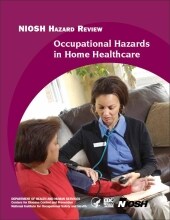
The US agency reported, "Home healthcare workers are frequently exposed to a variety of potentially serious or even life-threatening hazards. These dangers include overexertion; stress; guns and other weapons; illegal drugs; verbal abuse and other forms of violence in the home or community; bloodborne pathogens; needlesticks; latex sensitivity; temperature extremes; unhygienic conditions, including lack of water, unclean or hostile animals, and animal waste. Long commutes from worksite to worksite also expose the home healthcare worker to trans- portation-related risks."
The report concludes, "The Bureau of Labor Statistics has projected home healthcare work to be the fastest growing occupation through 2016. Home healthcare workers, including home healthcare aides, nurses, physical therapists, occu- pational therapists, speech therapists, therapy aides, social workers, and hospice care workers, face unique hazards delivering services in patients’ homes and in various di- verse communities. Persons other than the patient who are residing or visiting in the patient’s home may be a risk to the worker. Home healthcare workers are susceptible to injuries. These may result from overexertion due to transferring patients into and out of bed or to assisting with patient walking or standing. Home healthcare workers may be exposed to bloodborne pathogens, needlesticks, infectious agents, latex, stress, violence occurring in the home or street, verbal abuse, weapons, illegal drugs, and they may encounter animals, temperature extremes, unsanitary conditions in the homes, lack of water, severe weather, or a response to a chemical spill or act of terrorism. The large amount of driving from home to home ex- poses the home healthcare worker to risks of vehicular injury or fatality."
Click here to read the complete NIOSH report.
Click here to read more bout NIOSH and workers' compensation.
Monday, February 1, 2010
Senate Votes to End Debate on Smith Nomination
In an historic action, the US Senate this evening voted 60 to 32 to end debate on the nomination of Patricia Smith for US Labor Solicitor. The favorable Role Call vote on Motion to Invoke Cloture on the Nomination of M. Patricia Smith, to be Solicitor for the Department of Labor successfully ended the Republican filibuster on the nomination of Ms. Smith. The nomination had the support of the AFL-CIO. It has been almost a year since she was nominated by President Obama for the position.
Sunday, January 31, 2010
Patricia Smith for US Solicitor of Labor

On Monday the US Senate will have the opportunity to end debate and confirm the nomination of Patricia Smith as US Solicitor of Labor. Senator Reid will be calling for a closure vote on debate by the Senate and move her nomination.
Pat Garofalo writes at the Wonk Room about Smith’s successes:
"The New York Times has called Smith “one of the nation’s foremost labor commissioners because of her vigorous efforts to crack down on minimum wage and overtime violations at businesses including restaurants, supermarkets, car washes and racetracks.” During her time with the New York State Labor Department, where she is labor commissioner, Smith helped win more than $20 million in back pay for thousands of low-wage workers, including a record $2.3 million settlement with the owner of Ollie’s Noodle Shop and Grill chain in Manhattan.
As David Madland and Karla Walter pointed out, 'too often penalties [for labor law violations] are easily reduced or levied for low amounts, and the solicitor’s office has minimized civil and criminal liability for the worst violators.' Smith can change that, if only her nomination could come to a vote."
This is a unique opportunity for the Republicans to demonstrate their partisan support in the spirt that President Obama called for in his State of Union speech last week and confirm an eminently qualified individual, Patricia Smith, as US Solicitor-Department of Labor.
Saturday, January 30, 2010
OSHA releases workplace injury and illness information
Data represents administration's "Open Government" policy
Every year since 1996 the Occupational Safety and Health Administration (OSHA) has collected work-related injury and illness data from more than 80,000 employers. For the first time, the Agency has made the data from 1996 to 2007 available in a searchable online database, allowing the public to look at establishment or industry-specific injury and illness data. The workplace injury and illness data is available at http://www.osha.gov/pls/odi/establishment_search.html as well as Data.gov.
OSHA uses the data to calculate injury and illness incidence rates to guide its strategic management plan and to focus its Site Specific Targeting (SST) Program, which the agency uses to target its inspections.
"Making injury and illness information available to the public is part of OSHA's response to the administration's commitment to make government more transparent to the American people," said David Michaels, Assistant Secretary of Labor for OSHA. "This effort will improve the public's accessibility to workplace safety and health data and ensure the Agency can function more effectively for American workers."
Information available at the Data.gov and www.osha.gov Websites includes an establishment's name, address, industry, associated Total Case Rate (TCR), Days Away, Restricted, Transfer (DART) case rate, and the Days Away From Work (DAFWII) case rate. The data is specific to the establishments that provided OSHA with valid data through the 2008 data collection (collection of CY 2007 data). This database does not contain rates calculated by OSHA for establishments that submitted suspect or unreliable data.
Data.gov provides expanded public access to valuable workforce-related data generated by the Executive Branch of the federal government. Although the initial launch of Data.gov provides a limited portion of the rich variety of Federal datasets presently available, the public is invited to participate in shaping the future of Data.gov by suggesting additional datasets and site enhancements to provide seamless public access and use of federal data.
More information about the Department of Labor's Open Government Web site is available athttp://www.dol.gov/open/ where there are links to the latest data sets, ways to connect with Department staff, and information about providing public input that will make the Department's site and its work more useful and engaging.
Under the Occupational Safety and Health Act of 1970, employers are responsible for providing safe and healthful workplaces for their employees. OSHA's role is to assure these conditions for America's working men and women by setting and enforcing standards, and providing training, education and assistance. For more information, visit http://www.osha.gov
OSHA uses the data to calculate injury and illness incidence rates to guide its strategic management plan and to focus its Site Specific Targeting (SST) Program, which the agency uses to target its inspections.
"Making injury and illness information available to the public is part of OSHA's response to the administration's commitment to make government more transparent to the American people," said David Michaels, Assistant Secretary of Labor for OSHA. "This effort will improve the public's accessibility to workplace safety and health data and ensure the Agency can function more effectively for American workers."
Information available at the Data.gov and www.osha.gov Websites includes an establishment's name, address, industry, associated Total Case Rate (TCR), Days Away, Restricted, Transfer (DART) case rate, and the Days Away From Work (DAFWII) case rate. The data is specific to the establishments that provided OSHA with valid data through the 2008 data collection (collection of CY 2007 data). This database does not contain rates calculated by OSHA for establishments that submitted suspect or unreliable data.
Data.gov provides expanded public access to valuable workforce-related data generated by the Executive Branch of the federal government. Although the initial launch of Data.gov provides a limited portion of the rich variety of Federal datasets presently available, the public is invited to participate in shaping the future of Data.gov by suggesting additional datasets and site enhancements to provide seamless public access and use of federal data.
More information about the Department of Labor's Open Government Web site is available athttp://www.dol.gov/open/ where there are links to the latest data sets, ways to connect with Department staff, and information about providing public input that will make the Department's site and its work more useful and engaging.
Under the Occupational Safety and Health Act of 1970, employers are responsible for providing safe and healthful workplaces for their employees. OSHA's role is to assure these conditions for America's working men and women by setting and enforcing standards, and providing training, education and assistance. For more information, visit http://www.osha.gov
US Department of Labor's OSHA proposes recordkeeping change to improve illness data
The U.S. Department of Labor's Occupational Safety and Health Administration (OSHA) is proposing to revise its Occupational Injury and Illness Recording and Reporting (recordkeeping) regulation by restoring a column on the OSHA Form 300 to better identify work-related musculoskeletal disorders (MSDs). The rule does not change existing requirements for when and under what circumstances employers must record musculoskeletal disorders on their injury and illness logs.
Many employers are currently required to keep a record of workplace injuries and illnesses, including work-related MSDs, on the OSHA Form 300 (Log of Work-Related Injuries and Illnesses). The proposed rule would require employers to place a check mark in a column for all MSDs they have recorded.
The proposed requirements are identical to those contained in the OSHA recordkeeping regulation that was issued in 2001. Prior to 2001, OSHA's injury and illness logs contained a column for repetitive trauma disorders that included noise and MSDs. In 2001, OSHA separated noise and MSDs into two separate columns, but the MSD column was deleted in 2003 before the provision became effective. OSHA is now proposing to restore the MSD column to the OSHA Form 300 log.
"Restoring the MSD column will improve the ability of workers and employers to identify and prevent work-related musculoskeletal disorders by providing simple and easily accessible information," said Assistant Secretary of Labor for OSHA Dr. David Michaels. "It will also improve the accuracy and completeness of national work-related injury and illness data."
For more information, view OSHA's proposal at:http://www.osha.gov/pls/oshaweb/owadisp.show_document?p_table=FEDERAL_REGISTER&p_id=21314. This notice will be published in the Jan. 29 edition of theFederal Register.
Interested parties may submit comments on the proposed rule electronically athttp://www.regulations.gov, the federal e-rulemaking portal; or by mailing three copies to the OSHA Docket Office, Room N-2625, U.S. Department of Labor, 200 Constitution Ave. NW, Washington, DC 20210; or by fax at 202-693-1648 if the comments and attachments do not exceed 10 pages.
Comments must include the agency name and docket number for this rulemaking (Docket Number OSHA-2009-0044). The deadline for submitting comments is March 15. OSHA will hold a public meeting on the proposed rule March 9.
Under the Occupational Safety and Health Act of 1970, employers are responsible for providing safe and healthful workplaces for their employees. OSHA's role is to assure these conditions for America's working men and women by setting and enforcing standards, and providing training, education and assistance. For more information, visit http://www.osha.gov.
Many employers are currently required to keep a record of workplace injuries and illnesses, including work-related MSDs, on the OSHA Form 300 (Log of Work-Related Injuries and Illnesses). The proposed rule would require employers to place a check mark in a column for all MSDs they have recorded.
The proposed requirements are identical to those contained in the OSHA recordkeeping regulation that was issued in 2001. Prior to 2001, OSHA's injury and illness logs contained a column for repetitive trauma disorders that included noise and MSDs. In 2001, OSHA separated noise and MSDs into two separate columns, but the MSD column was deleted in 2003 before the provision became effective. OSHA is now proposing to restore the MSD column to the OSHA Form 300 log.
"Restoring the MSD column will improve the ability of workers and employers to identify and prevent work-related musculoskeletal disorders by providing simple and easily accessible information," said Assistant Secretary of Labor for OSHA Dr. David Michaels. "It will also improve the accuracy and completeness of national work-related injury and illness data."
For more information, view OSHA's proposal at:http://www.osha.gov/pls/oshaweb/owadisp.show_document?p_table=FEDERAL_REGISTER&p_id=21314. This notice will be published in the Jan. 29 edition of theFederal Register.
Interested parties may submit comments on the proposed rule electronically athttp://www.regulations.gov, the federal e-rulemaking portal; or by mailing three copies to the OSHA Docket Office, Room N-2625, U.S. Department of Labor, 200 Constitution Ave. NW, Washington, DC 20210; or by fax at 202-693-1648 if the comments and attachments do not exceed 10 pages.
Comments must include the agency name and docket number for this rulemaking (Docket Number OSHA-2009-0044). The deadline for submitting comments is March 15. OSHA will hold a public meeting on the proposed rule March 9.
Under the Occupational Safety and Health Act of 1970, employers are responsible for providing safe and healthful workplaces for their employees. OSHA's role is to assure these conditions for America's working men and women by setting and enforcing standards, and providing training, education and assistance. For more information, visit http://www.osha.gov.
Friday, January 29, 2010
Time to Lab Test Chemicals
The 5 substances that TSCA mandates regulations for are all known carcinogens: Asbestos, Hexavalent Chromium, Vinyl Chloride, Trichloethylene, Methyene Chloride and Dicloromethene.
Since 1976 chronic and terminal diseases have increased: Leukemia +20%; Breast Cancer 40% with a risk factor increase from 1 in 10 women to 1 in 8 women; and asthma +200%. Additionally, major increases in conceiving and making pregnancy, birth defects and autism have been reported.
Chronic conditions now result in 70% of all deaths and 75% of all health costs. Direct health care costs from cancer alone, in 2008, was $93.2 Billion of the total health care costs in the US that amounted to $304 Billion.
A recent report reveals the inadequacies of the TSCA and urges an update. As medical science continues to investigate these medical conditions, it is critically important that Congress updates the TSCA and requires better regulation
Dr. Maryann Donovan, associate director of research services for the University of Pittsburgh's Cancer Institute and director of the Center for Environmental Oncology stated, "It's not a matter of whether we test toxic chemicals. It's a matter of how we test them. Right now we test them in the bodies of our children, our consumers, our workers, ourselves. It's time to start testing chemicals in the lab, and to take action before anyone is harmed."
Click here to read more about toxic exposures and workers' compensation.
Asbestos: Not Banned in US But Use Declining
The use of asbestos, a known carcinogen, is not yet banned in the US, but the use of it continues to decline. Asbestos has not been mine in the US since 2002 and therefore the country is dependent upon imports for asbestos products.
The US Geological Survey reports that asbestos consumption in 2009 was 715 metric tons. In 2008 1,460 metric toms were estimated to be imported. Roofing products account for 65% of US consumption while other applications account for 35%. Over 89% of asbestos used in the US is imported from Canada.
The US government no longer stockpiles asbestos for use. It had been widely use in Word War II as a strategic commodity to insulate ships. Many exposures occurred in naval yards and to Navy personnel.
Asbestos is the sole cause of mesothelioma, a rare but fatal asbestos disease. It is also causally related to many cancers, including lung cancer, and to asbestosis. One of the last known asbestos mines in the US was in Libby MT, which has now been declared to be a Super Fund site and asbestos there has been declared to be "a public health emergency." Under the recently passed Senate health care reform legislation, Libby MT has been afforded medical benefits under the Medicare program.
While the US has not yet banned the use of asbestos, other nations have, The Republic of South Korea has enacted the final stage of a ban on the the use of asbestos manufactured products as of September 2009. Under the ban, asbestos may not be used to manufacture any children's products or products which asbestos particles may come loose and contact the skin.
Substitutes are available or the use of asbestos fiber. The US Geological Survey reports, "Numerous materials substitute for asbestos in products. Substitutes include calcium silicate, carbon fiber, cellulose fiber, ceramic fiber, glass fiber, steel fiber, wollastonite, and several organic fibers, such as aramid, polyethylene, polypropylene, and polytetrafluoroethylene. Several nonfibrous minerals or rocks, such as perlite, serpentine, silica, and talc, are considered to be possible asbestos substitutes for products in which the reinforcement properties of fibers were not required.."
Many workers, their families and their dependents have filed workers' compensation against former employers and civil actions against the asbestos manufacturers, suppliers and health research groups for the damages including the reimbursement of medical costs. Asbestos litigation has been called "The longest running tort in history."
Tuesday, January 26, 2010
A Once-In-A-Generation Chance
The NY Times today called for passage of the Senate version of health care reform and salvage the opportunity for important change in the nation’s health care plan. More emphatically, the Senate version provides an opportunity for change in the way the nation’s century-old workers’ compensation system provides for the delivery of medical care in occupational disease claims.
The paper’s editorial rightly observes that one botched election in Massachusetts
The efforts of Senator Mat Baucus (D-MT) has made to craft an occupationally health care program has the potential for being the most extensive, effective and innovative system ever enacted for the delivery of medical care to injured workers. Libby Care [see Patient Protection and Affordable Care Act Sec. 10323 pp. 2222-2237] , and its envisioned prodigies, will embrace more exposed workers, diseases and geographical locations than any other program of the past. An ancillary benefit will be the integration of Centers for Medicare and Medicaid Services (CMS) and Centers for Disease Control (CDC) for the advancement of greater worker safety through organized data collection and research.
Caring for those who have been the victims of occupational disease has been an illusive goal of the nation’s patchwork of workers’ compensation systems for over a decade. Occupational diseases were a supplement to the compensation system that developed when Industry tried to shield itself from the emerging economic liabilities that silicosis was generating.
History reflects that the system just didn’t work. The longest running tort, asbestos reacted illness, plagued the workers’ compensation system and produced a plethora of problems that only created more delay and denial of medical care for injured workers.
Economically the costs of direct costs for occupational illnesses and diseases continue to soar. Unfair cost shifting continues. A study in the year 2000 indicated that direct costs amounts to $51.8 Billion per year for hospitals, physicians and drugs. Workers’ compensation was reportedly covering only 27% of the costs and taxpayers were sharing un even share of the burden. The costs of occupational disease amounted for 3% of the gross national product.
The problems of under-reporting of occupational illnesses and disease even compound the reporting the true reality of the issue even further. The recent NY Times and Nebraska Appleseed investigative reports indicate that true numbers are hard to come by because of the fear and intimidation injured employees suffer in reporting claims.
Since the enactment of workers’ compensation in 1911, there has never been a greater opportunity to provide meaningful change to make the workplace healthier and safer. Congress and the President Obama should take advantage of this one-in-a-lifetime chance and make the Senate version of health care reform the law of the nation.
Monday, January 25, 2010
NJ Workers' Compensation Revenue Bills to be Shelved
Bolstered by a united chorus of favorable comments at recent NJ Legislative hearings, the transition team of NJ Governor Christie has urged opposition to any new benefit increases for workers' compensation. The hearings were in response to a series on investigative articles that appeared in The Star Ledger alleging problems existed in the present system.
The transition team has made the following recommendations:
Oppose A-5181 (Egan, Evans) / S-639 (Sarlo, Gill): Increases workers' compensation for loss of hand or foot.
Impact: $20 - $25 million in increased costs to the system.
Oppose A-2846 (Greenstein, DeAngelo) / S-785 (Sweeney, Madden): Extends supplemental disability and dependent benefits for post-1979 claims.
Impact: These added benefits would be paid entirely by employers through an increased surcharge in their Workers' Compensation policy. An analysis by the Office of Special Compensation Funds within the Department of Labor and Workforce Development projects the annual cost to New Jersey employers at $125 million with the potential to be significantly higher if this law change caused New Jersey to lose its "reverse offset" benefit from the Social Security Administration.
Oppose S-1982 (Sweeney): Establishes an ombudsman for injured workers in, but not of, the Department of Labor and Workforce Development.
Impact: This would create an entirely new department within the State government with its incumbent salary and administrative costs. This would also duplicate many of the responsibilities now handled effectively by the Division of Workers' Compensation.
Click here to read more about workers' compensation reform efforts.
The transition team has made the following recommendations:
Oppose A-5181 (Egan, Evans) / S-639 (Sarlo, Gill): Increases workers' compensation for loss of hand or foot.
Impact: $20 - $25 million in increased costs to the system.
Oppose A-2846 (Greenstein, DeAngelo) / S-785 (Sweeney, Madden): Extends supplemental disability and dependent benefits for post-1979 claims.
Impact: These added benefits would be paid entirely by employers through an increased surcharge in their Workers' Compensation policy. An analysis by the Office of Special Compensation Funds within the Department of Labor and Workforce Development projects the annual cost to New Jersey employers at $125 million with the potential to be significantly higher if this law change caused New Jersey to lose its "reverse offset" benefit from the Social Security Administration.
Oppose S-1982 (Sweeney): Establishes an ombudsman for injured workers in, but not of, the Department of Labor and Workforce Development.
Impact: This would create an entirely new department within the State government with its incumbent salary and administrative costs. This would also duplicate many of the responsibilities now handled effectively by the Division of Workers' Compensation.
Click here to read more about workers' compensation reform efforts.
NJ Second Injury Fund Is In Financial Trouble
Governor Christie's transition team reported that the NJ Second Injury Fund (SIF) is insolvent. Several options were presented, if the SIF is going continue to operate.
The SIF was established to compensate totally disabled workers for their pre-existing disabilities shield the last employer from the total cost of the last compensable injury. The was enacted by NJ prior to the existence of the American With Disabilities Act (ADA) and theoretically was to encourage employers to hire handicapped workers.
Since the enactment of the ADA many states have felt that their was no need to continue the SIFs and the growing trend is to eliminate them. The SIF in NJ currently supports the operating funds on the NJ Division of Workers' Compensation.
The transition report concludes:
"The SIF has been experiencing cash flow problems recently due to diversions from the fund in 2003 and 2004 and also as a result of legislative changes made in 2000 and 2003. Prior to 2000, the assessment against employers and insurance companies that finance the Division of Workers Compensation was determined by estimating the costs incurred to run all programs (including benefits) and multiplying that by 150%. In 2000, this was changed to 125% of estimated benefits and 100% of estimated administrative costs. These changes initially did not cause any significant cash flow issues; however, when the State began diverting money the combination of these factors resulted in an insufficient amount of cash being collected through assessments.
Solutions: Due to the legislative changes to the assessment calculations, the fund will never be able to restore solvency. The only solution requires legislative approval to phase out the $40 million “add back” and adjust the $5 million fund balance cap to a percentage of the prior years’ benefit payments. The only other option would be to find a supplemental appropriation to replenish the diverted money from FY2010."
Historically, surpluses in the NJ SIF have been raided by the Legislature and Governor and the funds diverted to the general treasury of the State. Like other NJ agencies, the NJ Division of Workers' Compensation has been challenged by mandated furloughs and short staffing issues. The fiscal problems of the SIF have compounded Medicare delays in the workers' compensation program in dealing with catastrophic and serious disability claims.
Click here to read more about The Second Injury Fund.
The SIF was established to compensate totally disabled workers for their pre-existing disabilities shield the last employer from the total cost of the last compensable injury. The was enacted by NJ prior to the existence of the American With Disabilities Act (ADA) and theoretically was to encourage employers to hire handicapped workers.
Since the enactment of the ADA many states have felt that their was no need to continue the SIFs and the growing trend is to eliminate them. The SIF in NJ currently supports the operating funds on the NJ Division of Workers' Compensation.
The transition report concludes:
"The SIF has been experiencing cash flow problems recently due to diversions from the fund in 2003 and 2004 and also as a result of legislative changes made in 2000 and 2003. Prior to 2000, the assessment against employers and insurance companies that finance the Division of Workers Compensation was determined by estimating the costs incurred to run all programs (including benefits) and multiplying that by 150%. In 2000, this was changed to 125% of estimated benefits and 100% of estimated administrative costs. These changes initially did not cause any significant cash flow issues; however, when the State began diverting money the combination of these factors resulted in an insufficient amount of cash being collected through assessments.
Solutions: Due to the legislative changes to the assessment calculations, the fund will never be able to restore solvency. The only solution requires legislative approval to phase out the $40 million “add back” and adjust the $5 million fund balance cap to a percentage of the prior years’ benefit payments. The only other option would be to find a supplemental appropriation to replenish the diverted money from FY2010."
Historically, surpluses in the NJ SIF have been raided by the Legislature and Governor and the funds diverted to the general treasury of the State. Like other NJ agencies, the NJ Division of Workers' Compensation has been challenged by mandated furloughs and short staffing issues. The fiscal problems of the SIF have compounded Medicare delays in the workers' compensation program in dealing with catastrophic and serious disability claims.
Click here to read more about The Second Injury Fund.
Sunday, January 24, 2010
Requests to Preserve Evidence Must be Timely
The failure to act swiftly in both requesting preservation of evidence, as well as inspecting the physical evidence of a work related accident, can lead to a waiver of a cause of action for spoliation of evidence. An attorney for an injured worker quickly requested that a potentially defective forklift be preserved, but did not hastily have an expert conduct a physical inspection.
Ciapinski v Crown Equipment Corp., 2010 WL 183903 (N.J. App. Div.) Decided Jan. 21, 2010.
Click here to read more about evidence and workers' compensation.
Ciapinski v Crown Equipment Corp., 2010 WL 183903 (N.J. App. Div.) Decided Jan. 21, 2010.
Click here to read more about evidence and workers' compensation.
Saturday, January 23, 2010
Perception of Claimant Insuffient to Meet Burden of Proof
The Chief Financial Officer of a day care center was denied her caim for psychological disability resulting from a claim of a heavy work load. The Court held the cause was not peculiar to her employment, that there was a lack of supporting objective mendical evidence, and that the underlying, pre-existing disability from childhood resulting in a compulsive disorder was the cause of the condition.
K.S. v Sunnydays Early Childhood Services, 2010 WL 173531 (N.J. Super.A.D.) decided January 20, 2010.
Click here to read more about hostile work environment claims and workers' compensation.
K.S. v Sunnydays Early Childhood Services, 2010 WL 173531 (N.J. Super.A.D.) decided January 20, 2010.
Click here to read more about hostile work environment claims and workers' compensation.
Friday, January 22, 2010
Workers Compensation Law Firm Absolved of Legal Malpractice for Negligent Advice
A NJ workers' compensation firm, successor to another firm representing the claimant in a workers' compensation claim, has prevailed on appeal in defending against charges of providing negligent advice to an injured worker. The successor firm was joined as a third-party defendant in a legal malpractice claim where the claimant alleged that he should have been furnished advice about his claim for retirement benefits.
While the court reasoned that the injured worker may have had a viable cause of action against the law firm, the mechanism of a third-party joinder was not an effective method of bringing a claim. The withdrawing defendant-law firm, that had previously presented the worker, was not entitled under the law to join the successor firm for contribution. The court concluded, "...that attorneys in this situation cannot be characterized as joint tortfeasors and that a successor attorney owes no duty to a predecessor attorney to correct the predecessor's errors."
Summary Judgement was granted the third-party defendant firm and it was awarded sanctions $16,622.49) and expenses ($15,555.20) against the defendant firm for filing a frivolous claim.
Arthur v Klitzman & Gallagher v. Ansell, et al. and Schebell, et al., 2010 WL 163194 (N.J.Super.A.D.) Decided November 23, 2009
Click here to read more about workers compensation.
While the court reasoned that the injured worker may have had a viable cause of action against the law firm, the mechanism of a third-party joinder was not an effective method of bringing a claim. The withdrawing defendant-law firm, that had previously presented the worker, was not entitled under the law to join the successor firm for contribution. The court concluded, "...that attorneys in this situation cannot be characterized as joint tortfeasors and that a successor attorney owes no duty to a predecessor attorney to correct the predecessor's errors."
Summary Judgement was granted the third-party defendant firm and it was awarded sanctions $16,622.49) and expenses ($15,555.20) against the defendant firm for filing a frivolous claim.
Arthur v Klitzman & Gallagher v. Ansell, et al. and Schebell, et al., 2010 WL 163194 (N.J.Super.A.D.) Decided November 23, 2009
Click here to read more about workers compensation.
Thursday, January 21, 2010
Silica Workers Prone to Fungal Infections
A just release study reports that silica workers have a greater risk of contracting fungal infections and dying from them:
"We found that persons who die with silicosis are more likely to die with pulmonary mycosis than are those who die without pneumoconiosis or who die with the more common pneumoconioses. Insofar as silica dust impairs cellular defense, silica-exposed workers (without silicosis) may be at increased risk for fungal infections, as they are for mycobacterial infections."
Concurrent Silicosis and Pulmonary Mycosis at Death,Yulia Iossifova, Rachel Bailey, John Wood, and Kathleen Kreiss, DOI: 10.3201/eid1602.090824 Emerg Infect Dis. 2010 Feb
Click here to read more about silicosis litigation.
"We found that persons who die with silicosis are more likely to die with pulmonary mycosis than are those who die without pneumoconiosis or who die with the more common pneumoconioses. Insofar as silica dust impairs cellular defense, silica-exposed workers (without silicosis) may be at increased risk for fungal infections, as they are for mycobacterial infections."
Concurrent Silicosis and Pulmonary Mycosis at Death,Yulia Iossifova, Rachel Bailey, John Wood, and Kathleen Kreiss, DOI: 10.3201/eid1602.090824 Emerg Infect Dis. 2010 Feb
Click here to read more about silicosis litigation.
Wednesday, January 20, 2010
Subject of Smear Campaign Recovers for Psychiatric Condition
An employee, who was the object of a smear campaign that included being the subject of circulated pornographic cartoons, was permitted to seek benefits for psychological residuals flowing from the humiliation, shock and anger that resulted in her loss of sleep. The worker was treated for an adjustment disorder with mixed anxiety and depressive mood.
The trial court, that was affirmed, had concluded:
"...[t]he aforementioned events cannot be characterized as an honest attempt to ensure that an office is running in an efficient and effective manner. Here, [p]etitioner was subjected, in part, to a resignation rumor, a potentially improper layoff, together with the aforementioned . . . sexual propaganda . . . . [I]t shocks the conscience that same would have occurred over such a long period of time without otherwise being addressed by the employer."
In affirming the Appellate Court held:
"In finding in petitioner's favor, Judge Leslie A. Berich applied correct legal standards. The Workers' Compensation Act is 'humane social legislation designed to place the cost of work connected injury upon the employer who may readily provide for it as an operating expense.'"
Lori Ross v. City of Asbury Park, Docket No. A-0379-08T3
Click here to read more about stressful conditions and workers' compensation.
The trial court, that was affirmed, had concluded:
"...[t]he aforementioned events cannot be characterized as an honest attempt to ensure that an office is running in an efficient and effective manner. Here, [p]etitioner was subjected, in part, to a resignation rumor, a potentially improper layoff, together with the aforementioned . . . sexual propaganda . . . . [I]t shocks the conscience that same would have occurred over such a long period of time without otherwise being addressed by the employer."
In affirming the Appellate Court held:
"In finding in petitioner's favor, Judge Leslie A. Berich applied correct legal standards. The Workers' Compensation Act is 'humane social legislation designed to place the cost of work connected injury upon the employer who may readily provide for it as an operating expense.'"
Lori Ross v. City of Asbury Park, Docket No. A-0379-08T3
Click here to read more about stressful conditions and workers' compensation.
Monday, January 18, 2010
Releasing 3rd Party Workers Compensation Liability Upheld
A security guard, who was injured on the premises of the employer's client, was prohibited from recovery in a negligence claim. As a condition of pre-employment, the employer had requested, and the injured worker signed, a waiver of liability against the third party.
The Court held that the waiver did not violate public policy and the release was enforceable. The third party workers' compensation release, signed as a condition of pre-employment, was upheld as the guard agreed to extinguish only her right under workers' compensation to recover only amount additional to what she already recovered under workers' compensation.
The Court held that the waiver did not violate public policy and the release was enforceable. The third party workers' compensation release, signed as a condition of pre-employment, was upheld as the guard agreed to extinguish only her right under workers' compensation to recover only amount additional to what she already recovered under workers' compensation.
Sunday, January 17, 2010
The Starbucks Doctrine: Injury on Coffee Break Held Compensable
The NJ Appellate Division has expanded the exceptions to the "going and coming rule" by affirming a trial court decision hold that an injury while on a coffee break is a compensable event. The injured worker was involved in a motor vehicle accident, off the employers' premises.
The employee was a union office who drove a company car from home to work site. His duties required him to travel to a union hall to discuss future work plans with an official. The official was in am eeting and no coffee was available at the union hall, so the employee decided to drive to a coffee vendor when the motor vehicle accident occurred.
The Court's reasoning, of the so called, "Starbucks Doctrine", expanded compensbility to off-premises injuries where the deviation from employment was minor and reasonable. It was equated by the trial court as encompassed in the "the personal comfort" exception.
"Here, the judge of compensation made comprehensive findings based on credibility determinations. He found that petitioner was an “off-site” employee who, facing an extended wait to consult with an expert concerning a work-related issue, was injured while driving for a cup of coffee. It cannot be expected that he would stand like a statue or remain at the union hall with nothing to do for such a period, particularly when there was no coffee available at the site. We cannot conclude in these circumstances that the injuries were not compensable merely because petitioner chose to take his authorized “coffee break” other than at the closest location. The distance of the coffee shop from respondent's off-site jobsite was reasonable given the rural nature of the community in Winslow Township and the time petitioner had to wait to seek the counsel he sought. The judge found petitioner to be credible, and under Jumpp, accidents occurring during coffee breaks for off-site employees, which are equivalent to those of on-site workers, are minor deviations from employment which permit recovery of workers' compensation benefits."
Cooper v. Barnickel Enterprises, Inc.,
--- A.2d ----, 2010 WL 98866, N.J.Super.A.D., January 13, 2010 (NO. A-1813-08T3)
The employee was a union office who drove a company car from home to work site. His duties required him to travel to a union hall to discuss future work plans with an official. The official was in am eeting and no coffee was available at the union hall, so the employee decided to drive to a coffee vendor when the motor vehicle accident occurred.
The Court's reasoning, of the so called, "Starbucks Doctrine", expanded compensbility to off-premises injuries where the deviation from employment was minor and reasonable. It was equated by the trial court as encompassed in the "the personal comfort" exception.
"Here, the judge of compensation made comprehensive findings based on credibility determinations. He found that petitioner was an “off-site” employee who, facing an extended wait to consult with an expert concerning a work-related issue, was injured while driving for a cup of coffee. It cannot be expected that he would stand like a statue or remain at the union hall with nothing to do for such a period, particularly when there was no coffee available at the site. We cannot conclude in these circumstances that the injuries were not compensable merely because petitioner chose to take his authorized “coffee break” other than at the closest location. The distance of the coffee shop from respondent's off-site jobsite was reasonable given the rural nature of the community in Winslow Township and the time petitioner had to wait to seek the counsel he sought. The judge found petitioner to be credible, and under Jumpp, accidents occurring during coffee breaks for off-site employees, which are equivalent to those of on-site workers, are minor deviations from employment which permit recovery of workers' compensation benefits."
Cooper v. Barnickel Enterprises, Inc.,
--- A.2d ----, 2010 WL 98866, N.J.Super.A.D., January 13, 2010 (NO. A-1813-08T3)
NY Governor Appoints New WC Executive Director
NY Governor David A. Patterson has appointed Jeffrey R. Fenster, age 29, as the new executive director of the NY Workers' Compensation Board. Fenster, a lawyer, is reportedly an outsider to the system, but has some financial management experience.
The NY workers' compensation system, like most throughout the county, has been plagued with problems. The NY Times, after in an in depth analysis of the NY system, concluded that it was, "A World of Hurt: A Costly Legal Swamp."
The appointment comes with a salary of $143,730 and was effective January 11, 2010.
Subscribe to:
Posts (Atom)