Copyright

(c) 2010-2026 Jon L Gelman, All Rights Reserved.

Wednesday, April 28, 2010

Facing Unacceptable Hazards in the Workplace


TESTIMONY OF JORDAN BARAB DEPUTY ASSISTANT SECRETARY FOR OCCUPATIONAL SAFETY AND HEALTH U.S. DEPARTMENT OF LABOR BEFORE THE SUBCOMMITTEE ON WORKFORCE PROTECTIONS THE COMMITTEE ON EDUCATION AND LABOR U.S. HOUSE OF REPRESENTATIVES APRIL 28, 2010


Chair Woolsey, Ranking Member McMorris Rodgers and Members of the Subcommittee, thank you for the opportunity to testify today on the Protecting America’s Workers Act (PAWA) particularly on the issues of whistleblower protections and victim’s rights in OSHA’s enforcement process.


I recognize the significance of today’s hearing being held on both the 39th anniversary of the creation of the Occupational Safety and Health Administration and Workers Memorial Day. Today is the day set aside to recognize workers killed, disabled, injured or sickened by their work – to honor the men and women who have died on the job and to rededicate ourselves to improving safety and health in every American workplace.


This commitment is especially needed now, as we commemorate this Workers Memorial Day not only to remember the 29 brave miners who lost their lives at the Upper Big Branch mine, the 7 refinery workers who were killed the week before at the Tesoro refinery in Washington, but also the 14 workers who die on the job every day in this country.


This hearing focuses on two areas that are crucial to reaching the goal set by the Occupational Safety and Health Act (OSH Act) to assure safe and healthful working conditions for all working men and women in the United States: 1) ensuring that workers are safe from retaliation for exercising their health and safety rights; and 2) ensuring victims of workplace incidents and their family members have information and a meaningful role in OSHA enforcement activities.


Whistleblower Protections


Congress realized that OSHA inspectors would never be able to visit more than a small fraction of the nation’s workplaces. The OSH Act therefore relies heavily on workers to help identify hazards at their workplaces. The authors of the OSH Act also realized that employees are not likely to participate in safety and health activities if they fear that they will lose their jobs or otherwise be retaliated against. That is why Congress wrote Section 11(c) -- to protect employees from discrimination and retaliation when they report safety and health hazards or exercise other rights under the OSH Act. The OSH Act was one of the first safety and health laws to contain a provision for protecting whistleblowers.


Section 11(c) was innovative and forward looking in 1970, but 40 years later it is clearly antiquated and in dire need of substantial improvement. Achieving Secretary Solis’ goal of Good Jobs for Everyone includes strengthening workers’ voices in their workplaces. Without robust whistleblower protections, these voices may be silenced.


This Administration strongly supports the whistleblower provisions of the Protecting America’s Workers Act (PAWA), which expands the OSH Act’s anti-retaliation provisions, codifies a worker’s right to refuse to perform unsafe work, prohibits employer policies that discourage workers from reporting illnesses or injuries, prohibits employer retaliation against employees for reporting injuries or illnesses, and grants workers the right to further pursue their case if OSHA does not proceed in a timely fashion.


OSHA currently administers the whistleblower provisions of sixteen other statutes, protecting employees who report violations of various trucking, airline, nuclear power, pipeline, environmental, rail, consumer product, and securities laws. In the four decades since the OSH Act became law, Congress has enacted increasingly expansive whistleblower protections in these other laws, leaving section 11(c) of the OSH Act in significant ways the least protective of the 17 whistleblower statutes. It is time to bring OSHA’s protections up to the same level of these other laws.


Notable weaknesses in section 11(c) include: inadequate time for employees to file complaints; lack of an administrative forum for the adjudication of cases; lack of a statutory right of appeal; lack of a private right of action; and OSHA’s lack of authority to issue findings and preliminary orders, so that a complainant’s only chance to prevail is through the Department of Labor filing an action in U.S. District Court.


PAWA would strengthen section 11(c) by including the full range of procedures and remedies available under the more modern statutes and by codifying certain provisions, such as exemplary damages and the right to refuse work that could result in serious injury or illness, which have been available but not expressly authorized by current statute. There is no reason that workers speaking up about threats to their safety and health should enjoy less protection than workers speaking up about securities fraud or transportation hazards. PAWA would also make explicit that a worker may not be retaliated against for reporting injuries, illnesses or unsafe conditions to employers or to a safety and health committee. This protection is already implicit in the OSH Act, but PAWA would leave no doubt in employers’ or employees’ minds about this right.


PAWA is an improvement on OSHA’s current law in significant ways. It would increase the existing 30-day deadline for filing an 11(c) complaint to 180 days, bringing 11(c) more in line with some of the other whistleblower statutes. Over the years many complainants who might otherwise have had a strong case of retaliation have been denied protection simply because they did not file within the 30-day deadline. For example, we received an 11(c) complaint from a former textile employee who claimed to have been fired for reporting to management that he had become ill due to smoke exposure during the production process. The worker contacted OSHA to file an 11(c) complaint 62 days after he was fired, compelling OSHA to dismiss the case as untimely under existing law. Under PAWA, however, OSHA would be able to investigate the merits of cases such as this one. Increasing the filing deadline to 180 days would greatly increase the protections afforded by section 11(c).


PAWA’s adoption of the “contributing factor” test for determining when illegal retaliation has occurred would be another significant improvement in 11(c). This test, which examines the employer’s decision to take adverse action against the employee following whistleblower activity, is less stringent than the current “motivating factor” test to which OSHA is currently restricted. Adoption of the “contributing factor” test would make 11(c) consistent with other more recently enacted whistleblower statutes and would strengthen the whistleblower protections afforded to America’s workers.


The private right of action is another key element of whistleblower protections that is lacking in OSHA’s current 11(c) provision and is contained in PAWA. It is critically important that, if an employer fails to comply with an order providing relief, both DOL and the complainant should be able to file a civil action for enforcement of that order in a U.S. District Court. We strongly support this provision.


PAWA also allows complainants to move their case to another prescribed venue if the Department does not make prompt decisions or rulings. For example, PAWA would allow complainants to “kick out” from an OSHA investigation to a de novo Administrative Law Judge (ALJ) hearing if the Secretary has not issued a decision within 120 days from the case filing; “kick out” from an ALJ hearing to district court if an ALJ has not issued a decision within 90 days of the request for a hearing; or “kick out” from an Administrative Review Board (ARB) hearing to district court if the ARB has not issued a final order within 60 days of the request for an administrative appeal. “Kick-out” provisions have become a standard feature of whistleblower protection statutes, and OSHA believes it is appropriate for 11(c) complainants to have the same right.


The provision in PAWA allowing employees in states administering OSHA-approved plans to choose between Federal and State whistleblower investigations would likely result in a significant increase in the number of Federal complaints. All 22 states and territories that administer private sector plans are required to provide protections at least as effective as Federal OSHA’s. We have some reservations about this provision because we are not convinced it would add much protection to workers in those states and it would be a significant drain on OSHA and Solicitor resources. We would welcome further discussions on how to best ensure whistleblower protections in these states.


Finally, PAWA would codify a number of OSHA’s high standards for professionalism and transparency in conducting whistleblower investigations that are of critical importance to this Administration. For example, PAWA requires OSHA to interview complainants and to provide them with the respondent’s response and the evidence supporting the respondent’s position. PAWA affords complainants the opportunity to meet with OSHA and to rebut the employer’s statements or evidence. While we train our investigators on the critical importance of conducting thorough interviews with complainants and involving complainants in the rigorous testing of proffered employer defenses, we believe that requiring these investigative steps by statute would assist OSHA in its mission of providing robust protection to occupational safety and health whistleblowers.


These legislative changes in the whistleblower provisions are a long-overdue response to weaknesses that have become apparent over the past four decades. This legislation makes good on the promise to stand by those workers who have the courage to come forward when they know their employer is cutting corners on safety and health and guarantees that they do not have to sacrifice their jobs in order to do the right thing.


Not only do we support the provisions of PAWA intended to improve whistleblower protections, we would like to explore areas where we might want to go further.


I would propose amending the OSH Act to provide for assessment of civil penalties against employers who violate the whistleblower provisions. Currently, while an employer found to be discriminating against an employee must make the employee whole again, there is no provision for civil penalties against employers. The provisions are not in the current version of PAWA but similar provisions were included in the S-MINER Act that was passed by this Committee and the full House of Representatives in 2008. Under such a provision, any employer found to be in violation of Section 11(c) of the Act would be subject to civil penalties of not less than $10,000 and not more than $100,000 for each occurrence of a violation.


Additionally, as conclusion of these cases can often take many months, a provision should be made to reinstate the complainant pending outcome of the case. The Mine Safety and Health Act provides that in cases when the Mine Safety and Health Administration (MSHA) determines that an employee’s complaint was not frivolously brought, the Review Commission can order immediate reinstatement of the miner pending final order on the complaint. OSHA’s 11(c) complainants should have the same reinstatement rights.


Victims’ Rights


OSHA has long known that workers, and often their families, can serve as OSHA’s “eyes and ears,” identifying workplace hazards. Workers injured in workplace incidents and their friends and family often provide useful information to investigators, because employees frequently discuss work activities and co-workers with family members during non-work hours. We are dedicated to findings ways to involve workers and their families in OSHA’s enforcement investigations. Both Assistant Secretary Michaels and I make it a priority to set time aside to talk with victims’ families whenever we have the opportunity.


Last month, as part of an effort to reach out and hear from stakeholders on a variety of safety and health issues, we hosted “OSHA Listens.” As part of the event, we heard recommendations from the family members of workers killed on the job on how to enhance victims’ and families’ participation in the enforcement process.


I want to thank Tonya Ford whose uncle, Robert Fitch, was killed at Archer Daniels Midland on January 29, 2009, for coming to Washington today to testify and describe to us the tragic circumstances of Mr. Fitch’s death and the unnecessary problems she and her family faced getting information about what happened and what OSHA was doing. We appreciate the suggestions she has on how to improve our enforcement process and better involve victims and their families.


Katherine Rodriguez, whose father was killed at the BP Texas City Refinery on September 2, 2004, also spoke at OSHA Listens and made several recommendations to OSHA officials on how to enhance the rights of victims’ families. She said that before her father died in the hospital her family received information about the incident that might have been useful to OSHA investigators, noting that “fellow coworkers are more willing to talk to the family members than any investigator.”


Family members and co-workers are sincerely and understandably interested in learning how an incident occurred, finding out if anything could have been done to prevent it, and knowing what steps employers and employees will take in the future to ensure that someone else is not injured or killed in a similar situation.


It is OSHA’s policy to talk to families during the investigation process and inform them about our citation procedures and settlements. OSHA first contacts the family at the beginning of the inspection. All families get a letter from the Area Director discussing the process and advising that they will be kept informed. In some cases the families initially get a phone call. Families are then normally provided a copy of the citations when issued.


However, we have found that some of these policies have not always been implemented consistently and in a timely manner. It is also clear that a letter is not adequate. Therefore, we will be putting these policies into a directive and adding them to our Field Operations Manual. We will also be instructing the Area Directors to call the family to express condolences, advise that a letter is coming, and assure families we will be staying in contact.


In addition, we need to work on interacting with families following a tragedy. As might be expected, many OSHA inspectors understandably have trouble knowing how to interact with a person who has just lost a loved one in tragic circumstances. While brief training on this issue is provided to Compliance Officers at the Initial Compliance Course at the OSHA Training Institute, clearly more training is needed and will be developed. We will also develop webinars and webcasts for training of all compliance officers, team leaders, and Area Directors.


In general, OSHA is supportive of expanding interactions with families and victims. Therefore, the Agency is examining the issue of victims’ rights from the administrative level to seek ways to better ensure the rights of victims and their families to participate in OSHA’s enforcement efforts. OSHA supports many of the changes to the OSH Act embodied in PAWA for victims and their families.


PAWA would place into law, for the first time, the right of a victim (injured employee or family member) to meet with OSHA regarding the investigation and to receive copies of the citation or resulting report at the same time as the employer at no cost. PAWA would also enable victims to be informed of any notice of contest and to make a statement before an agreement is made to withdraw or modify a citation.


However, we also want to ensure – and I think the families would also want to ensure – that the provisions of PAWA do not unduly slow down the inspection, enforcement and adjudication process, which only hurt victims and their families in the long run. We believe therefore that clarification is needed of the provisions allowing victims or their representatives to meet in person with OSHA before the agency decides whether to issue a citation, or the right to appear before parties conducting settlement negotiations. This could be logistically difficult for victims and OSHA’s regional and area offices, resulting in significant delays in the negotiations and ultimate citation. OSHA would be happy to work with the Committee to address this issue.


Madam Chair, I appreciate the opportunity to appear today to discuss PAWA and how it would improve whistleblower protections and victim’s rights. I believe stronger whistleblower protections and more substantial rights for victims and their families can lead to safer jobsites and ultimately, more men and women who go safely home to their families at the end of the day. I would be happy to answer your questions.

Congressional Hearing: Whistleblower and Victim’s Rights Provisions of H.R. 2067, the Protecting America’s Workers Act


Workforce Protections Subcommittee Hearing10:00 AM, April 28, 20102175 Rayburn H.O.B
Washington, DC
The Workforce Protections Subcommittee of the House Education and Labor Committee held a hearing Wednesday on a proposal to strengthen protections for workers who blow the whistle on dangerous workplace conditions, and guarantee a voice for families of workers killed, and those who are seriously injured, or become ill on the job.
Among other provisions, the Protecting America’s Workers Act (H.R. 2067) and proposed changes to legislation, would update workplace whistleblower protections by mirroring other modern whistleblower statutes, such as the Consumer Product Safety Improvement Act. The bill would also ensure that victims and their families are kept informed about investigations of fatalities and incidents involving serious injuries or illnesses.
Witnesses:
  • Jordan Barab »Deputy Assistant Secretary of Labor for Occupational Safety and HealthWashington, D.C.
  • Lloyd B. Chinn »PartnerProskauer Rose LLPNew York, New York
  • Tonya Ford »Niece of Robert Fitch, a worker killed at an Archer Daniels Midland plantLincoln, Nebraska
  • Neal Jorgensen »whistleblower formerly employed at Plastic IndustriesPreston, Idaho
  • Dr. Celeste Monforton »Assistant Research Professor
    Department of Environmental and Occupational Health
    The George Washington UniversityWashington, D.C.
  • Dennis J. Morikawa »Morgan, Lewis & Bockius LLPPhiladelphia, Pennsylvania
  • Lynn Rhinehart »General CounselAFL-CIOWashington, D.C.

Preventing Joint Replacement Surgery in Workers' Compensation Claims

Joint replacement claims are becoming more frequent in workers’ compensation and proving compensability remains challenging. As the aging working population has expanded so has been the need for workers’ compensation to pay for the cost of replacing aging joints.

The cost for a new hip or knee can cost as much as $30,000 to $40,000. for the surgery alone. Additionally, workers’ compensation companies maybe responsible for the payment of temporary disability benefits to injured workers who are required to undergo surgery. Should the medial procedure fail, the insurance company could possibly be liable for the payment of total disability benefits to the injured worker.

Historically workers’ compensation programs were only liable for specific traumatic injuries. The original acts enacted in 1911 were amended the 1940’ and 1950’s to cover occupational conditions and cumulative stress disorders.

Whether a joint replacement is required because of a work related condition sometimes becomes a difficult proof issue. Pre-existing conditions. ie. natural degeneration, may be considered as the sole or contributing factor for the need for replacement. . Ruhe v. Industrial Commission of Arizona, 2010 WL 1253527 (Ariz. App. Div. I), Raymer v. Interstate Brands Company, 2009 WL 277539 (Ky. App.). A prior condition may be ruled out as a con-contributory factor. Anheuser-Busch Co. Inc., 156 N.H. 677, 940 A.2d 1147 (N.H. 2008).

Even if there is a traumatic injury, there may be a need for joint replacement that can be anticipated in the future. Stevens v. Citizens Memorial Healthcare Foundation, 244 S.W.3d 234 (Mo. Ct. App. 2008). In such situations future medical care should be considered at the time of the initial judgment.

Avoiding the need for joint replacement is the best solution altogether. While 400,000 people a year have joint replacement surgery, taking the preventive route of  caring for your joints can save both lot of money and a lot of discomfort. The NY Times has reported some prevention methods that look promising.  Workers’ compensation courts should consider these concepts and order recognized preventive programs when adjudicating claims where potential joint replacement maybe anticipated.

To read more about workers' compensation click here.

To follow us on Twitter click here.


Sunday, April 25, 2010

Medicare Secondary Payer Recovery Contractor Town Hall Meeting 4/29/10


Changes in the MSPRC Conditional Payment Process for Liability Insurance, No-Fault Insurance, and Workers' Compensation Cases


On April 29, 2010 from 1:00pm – 3:00pm (EDT), the MSPRC will host a Town Hall Meeting regarding
"Changes in the MSPRC Conditional Payment Process for Liability Insurance, No-Fault Insurance, and Workers' Compensation Cases."
This Town Hall Meeting will provide education on the New Conditional Payment Notice and Process, as well as updates on:
  • The MSPRC Recovery Process & Timelines
  • The Rights and Responsibilities Letter
  • Proof of Representation vs. Consent to Release
  • What's new with the MSPRC
Space is limited, to reserve your Webinar seat now : Click Here!

https://www1.gotomeeting.com/register/164660640


REMINDER: As space is limited, if more than one person from your organization is participating, we encourage you to convene in one conference or meeting room.


Click here to read more about Medicare Secondary Payer Act and workers' compensation.

Friday, April 23, 2010

Workers Memorial Day April 28, 2010

"


The AFL-CIO has announced Workers Memorial Day commemoration.


"Decades of struggle by workers and their unions have resulted in significant improvements in working conditions. But the toll of workplace injuries, illnesses and deaths remains enormous. Each year, thousands of workers are killed and millions more are injured or diseased because of their jobs. The unions of the AFL-CIO remember these workers on April 28, Workers Memorial Day.


"The first Workers Memorial Day was observed in 1989. April 28 was chosen because it is the anniversary of the Occupational Safety and Health Administration and the day of a similar remembrance in Canada. Every year, people in hundreds of communities and at worksites recognize workers who have been killed or injured on the job. Trade unionists around the world now mark April 28 as an International Day of Mourning.


CDC reports:
"Workers Memorial Day recognizes those workers who died or sustained work-related injuries or illnesses during the previous year. In 2008, a total of 5,071 U.S. workers died from occupational injuries (1), and 49,000 deaths annually are attributed to work-related illnesses (2). In 2008, an estimated 3.7 million workers in private industry and 940,000 in state and local government had a nonfatal occupational injury or illness; 40%--50% of these workers were transferred, placed on work restrictions, or took time away from work (3). An estimated 3.4 million workers were treated in emergency departments for occupational injuries and illnesses in 2007, and approximately 94,000 were hospitalized (CDC, unpublished data, 2010).

Coaching the Witness to Cry on Cue

A recent trial level decision discounted the testimony of the claimant  after the trial judge made a finding that the witness had been coached. How do you determine if the witness was coached or merely prepared by his or her attorney in anticipation of  testimony? How do you define the fine line between permissible and unethical? What factors are essential in making that finding?


Excellent lawyers spend hours with their clients in advance of testimony. Is it merely to discuss what to wear to court, and what to eat the day before? Sometimes witnesses are so anxious that lawyer needs to calm them down by explaining the routine of trial, the dress code required and the need to get a full night's sleep before the hearing. Sometime there are so many documents and collateral testimony that it is helpful to review them with a client before his or her testimony.


While clients need to know the parameters of what is expected in a judicial proceeding, feeding the answers to a client to mimic like a ventriloquist act is obviously over the line. Telling the client to be honest and accurate as well as responsive is appropriate. The witness needs to know that they shouldn't guess if they don't know an answer to a question.


Attorney's objections made at a hearing can be phrased in such a fashion as to signal or suggest an answer to the witness. That would appear to be coaching is objectionable. Likewise a spectator in the courtroom signaling in a non-verbal manner to a witness could be deemed to be prejudicial error and grounds for a mistrial.


A NJ workers' compensation court characterized coaching when an injured worker started to cry on the witnesses stand, when asked a question as to how he felt. "Overall, the JOC found petitioner's testimony appeared “to be well coached and practiced. [He] cried as if on cue when his counsel asked how he felt.” 


Credibility seems to be the essential criteria in judicial witness evaluations. Judges, especially in a non-jury, administrative action, must take all aspects of the conduct and appearance of the witness into consideration. Determining if an individual is making a non-credible, or coached cry, is an extremely difficult call to make. Applying the law to the facts is a difficult enough judicial task. Even if it is only a workers' compensation proceeding, asking judges to make a determination if a cry is "coached" seems to be an extraordinary responsibility.


Valle v I.M.Supermarkets, Docket # a1910-08, NJ App Div 2010. (Decided April 16, 2010)


Click here to read more about witnesses and workers' compensation.


Wednesday, April 21, 2010

Rescue Legislation for Missouri Second Injury Fund Fails

The Missouri legislature failed to pass legislation that would rescue the state's Second Injury Fund (SIF) from financial collapse. The SIF has been long targeted for extinction by Industry in Missouri. The Attorney General order the SIF to stop making payments in October 2009.


The national trend for decades has been the closing of SIF's throughout the country. That trend has been advocated by those who claim that Federal legislation now supports hiring the handicapped and that the dollars paid into the SIFs are not being utilized to assist the payment of total disability awards as intended by the acts. The State of New Jersey has recently reported that the NJ Fund is also in financial difficulty. 


Monday, April 19, 2010

Football Players File Claims for Brain Damage

Football, the sport of humans clashing heads together, is now subject to a growing wave of workers' compensation claims for dementia. Recent studies have shown that football players have suffered head injuries as a result of multiple concussions suffer chronic traumatic encephalitis (CTE)


At recent discussion on Legal Talk Network reviewing this topic in depth, Christopher Nowinski, President and CEO of the Sports Legacy Institute and former Harvard football player, participated. He remarked that former football players have donated their brains for pathological research concerning CTE and its association with multiple concussions playing the sport.


It has been alleged that CTE results in early dementia, early onset of Alzheimer's Disease and multiple other brain disorders. The average football player sustains over 1,000 concussions each game.


Recently claims have been filed by several players against the National Football League in California. Massachusetts attorney, Alan S. Pierce, explains that that the statutory prohibitions make California a fertile jurisdiction for workers compensation claims.  In additional to the medical causation issue, it is anticipated that players will be confronted with conflict of laws issues in selecting an appropriate jurisdiction(s) to insure a maximum recovery.


As employment relationships become more geographically complex due to interstate and international relationships, the courts have been confronted with an ever-increasing problem as to what forum's law will apply to specific situations.  In most instances, courts have adopted their local law as long as the site of the injury, or the site of the contract, or the site of the employment relationship was within their state.  In certain instances, the court must go beyond those factors and assess whether another forum's law would provide the certainty of result which would occur in the their own state.  The court looks towards fairness to the employee in selecting the choice of law to be applied.  An overwhelming consideration is that public policy demands that the injured employee be cared for adequately within their jurisdiction.


Additionally rates of compensation vary among the states as well as laws defining what constitutes an occupational exposure and the allocation of liability where multiple jurisdiction, employment and events occur.


It is anticipated that these claims will increase and will proliferate in multiple-jurisdictions throughout the country. Since it it is impossible to avoid injuries in a sport designed for body contact sport, the courts and legislatures will be faced  ultimately with  public policy consideration concerning the sport and continuing to mandate workers' compensation benefits.


Click here to read more about jurisdiction and workers' compensation.

Sunday, April 18, 2010

Is The Virtual Doctor a Cure for Workers' Compensation

The American Association of Retired People (ARRP) reports in May/June2010 edition of their magazine that the concept of online appointments is taking hold in the medical system.  Doctors are making house calls by computer or phone. Patients will no longer have to sit in waiting rooms watching "Medical TV" or read magazines while waiting to see their doctor.

One of the primary benefits under the Workers' Compensation Act is that of medical benefits.  Medical benefits are mandated by the Act, and require the employer to furnish the injured worker with medical, surgical and other treatment and hospital services as are necessary "to cure and relieve the worker of the effects of the injury and to restore the functions of the injured member or organ" if possible. The injured worker's exclusive remedy to receive medical treatment is in accordance with the provisions of the Workers' Compensation Act.  The employer can be compelled to provide prompt and adequate medical treatment, and an action at common law against the workers' compensation insurance carrier is barred. The employee's right to medical benefits is independent of other remedies available under the Workers' Compensation Act.  The injured worker need not wait until final adjudication of his claim for permanent disability in order to proceed with a claim for medical benefits.

This year OptumHealth is about to launch NowClinic. The site is compatible with Internet Explorer, Firefox and Safari. Using Chrome will not allow you to access the site. The planned cost, according to AAARP is  $45 for a ten minute dialog.

Will this trend be adaptable to workers' compensation programs is a major question. With so much paranoia concerning fraud on both sides of the program involving into RICO claims, many employers and insurers might be apprehensive in launching such a system. On the other hand, the cost savings benefits to employers and insurance companies maybe monumental. Clinical care, diagnostic testing and pharmaceutical dispensing may also become incorporated into the program. Some delays maybe eliminated for claims that are not contested or denied.  Once into the "system" the chance for straying to unauthorized medical care could be reduced.

As technological expands in the health profession, the use of virtual care system will probably become more available. Tailoring them to the needs of the workers' compensation program will remain a challenging opportunity to improve the benefit system.

To read more about health care and workers' compensation click here.


47ACVKNDVPAV

Saturday, April 17, 2010

Case Advances Challenging MSP Reimbursement Procedures

A Federal Court Judge has permitted discovery to go forward in a potential class action challenging the reimbursement procedures of the U.S. Department of Health and Human Services (HHS) being utilized under the authority of the Medicare Secondary Payer Act (MSP).

The case pending in Arizona questions the authority of the HHS to seek reimbursement in liability claims of conditional payments paid by the Federal government. The plaintiffs are seeking declaratory and injective relief from the HHS procedures. They allege that the HHS has exceeded its authority under the MSP and that the plaintiffs have been denied due process.

The claim challenges the requirement that reimbursement be made within 60, in advance of an appeal or waiver. The case also alleges that the reimbursement claims asserted by HHS are in excess of the actual amount conditionally expended and object to the interest charges on the erroneous amounts asserted.

A motion for class action certification was filed on March4, 2010. Determination of that issue has been held in abeyance as discovery proceeds.

The issues  the Court will determine in this case have been identified as follows:
1.Whether the HHS can require prepayment of an MSP recovery claim before the correct amount is determined through administrative appeal procedures; and
2. Whether the HHS can make plaintiff’s attorneys financially responsible if they do not hold or immediately tender the litigation proceeds.

The Court, in permitting discovery to go forward against the HHS, determined the need to ascertain, not only as to the specific plaintiffs, limited in the Administrative Record, but generally:

·    -----The frequency the appeal process is actually utilized and whether it is burdensome to beneficiaries; and
·    -----The error rate and whether that error rate is extraordinary high in MSP recovery claims; and
·    -----Whether there is a need for current lack of procedural protections for beneficiaries and their attorneys.

Hard v. Sebelius, No. cv 09-134 TUC DCB, 2010 WL 1452932 (D. Ariz), Decided April 12, 1020.


Monday, April 12, 2010

The Health Reform Act Charts a New Course for Occupational Health Care

The occupational healthcare program embodied in the recently enacted legislation has the potential for being the most extensive, effective and innovated system ever enacted for delivering medical care to injured workers. The “Libby Care” provisions, and its envisioned prodigies, will embrace more exposed workers, diseases and geographical locations, than any other program of the past. Potential pilot programs  will now be available to injured workers and their families who have become victims of the failed workers’ compensation occupational disease medical care system.
The legislation initially establishes a program for the identification, monitoring and treatment of those who were exposed to asbestos in Libby Montana where W.R. Grace formerly operated an asbestos (vermiculite) mine producing, among other things, attic insulation. The plant belched thousands of pounds of asbestos fiber into the air of the geographical area daily. Libby Montana has been declared a Federal Superfund Site and the asbestos disease that remains as its legacy has been declared a National Public Health Emergency.
The newly enacted national health care law will have profound effect upon the treatment of occupational disease.  Placed deep within the text of the bill (H.R. 3590), on page 836 (Section 1881A Medical Coverage for Individuals Exposed to Environmental Health Hazards), is the new occupational medical care model, “Libby Care.”  The Manager’s Amendment, embracing the concept of universal occupational health care, inserted in the final moments of the debate, will make all the difference in world to the future of medical care and the handling of work-related illnesses.
What We Learned From History
Historically it is well known that occupational diseases are problematic issues confronting workers’ compensation.They are problematic for all stakeholders in the system. For employers, it is difficult to defend a claim that may occur over a lengthy working period, ie. 280 days per year. Defending occupational disease claims has always been an elusive and a costly goal for employers and insurance carriers. Employees also are confronted with obstacles in obtaining timely medical benefits. Occupational disease claims are universally contested matter and medical care is therefore delayed until the claim is successfully litigated and potentially appealed. This process results in delay and denial of medical care and sometimes death.
In the 1950’s the insurance industry put tag-along verbiage in the statute to modify the 1911 workers’ compensation act to encompass occupational disease claims. This was not a philanthropic gesture, but one rather intended to shield Industry from rapidly spreading silicosis liability in civil actions emerging in the 1950s.
Over time, the failure of the workers’ compensation system to provide adequate medical care to injured workers suffering from occupational illness has given rise to the emergence of several attempted collateral benefit systems by the Federal government. The Black Lung Act-The Federal Coal Mine and Safety Act of 1969 established the Federal Black Lung Trust Fund, which obtained its revenue from the assessment of a percentage tonnage fee imposed on the entire Industry. In October 2000, the Federal government established The Energy Employees Occupational Compensation Program Act that provided a Federal bailout of liability for the monopolistic beryllium industry. The hastily enacted Smallpox Emergency Personnel Protection Act of 2003 (SEPA) shielded pharmaceutical manufacturers from liability.  Following the horrific events of September 11, 2001, the Federal government quickly established The Victims Compensation Fund to compensate the victims and their families through an administrative system.
The largest transfer of economic wealth in the United States from Industry to the private sector, other than in the Attorney General’s thirty-eight State tobacco litigation, emanated from asbestos litigation which had its geneses in workers’ compensation.   The late Irving Selikoff, MD’s pioneering efforts in providing expert testimony, based upon his sentinel studies of asbestos workers in Paterson, NJ, created the trigger mechanism for a massive wave of claims for occupational health care. The program never did adequately nor efficiently or expeditiously provide medical care.
The workers’ compensation system did not provide an adequate remedy because of a constellation of reasons, and subsequently, the wave spread to civil litigation out of desperation for adequate benefits. Asbestos litigation has been named, "The Longest Running Tort” in American history. While the Fairness in Asbestos Resolution Act of 2003, failed to be release from committee, the insurance industry tried to stifle the litigation but the effort failed.  Asbestos litigation expanded into  bankruptcy claims that continue unabated and the epidemic of disease continues. The remaining cases in the Federal court system were transferred to Federal Multi District Litigation (MDL 875) and the majority are finally concluding after twenty years of Panel consolidation. Medical benefits were not a direct component of that system. Unfortunately, asbestos is still not banned in the United States and the legacy of disease continues at historic rates.
The Costs
In a study prepared in 2000 by Dr. Steven Markowitz for a book entitled “Cost of Occupational Injuries  and Illnesses”, it was revealed that the direct medical costs attributed to occupation illness by taxpayers, amount to $51.8 Billion dollars per year for the hospital physicians and pharmaceutical expenses. Overall workers’ compensation is covering 27% percent of the cost. This amounts to 3% of the National Gross National Product. The cost is passed on to: employers, insurance carriers, consumers, injured workers and the taxpayer. Medicare, a target of the cost shifting mechanism employer by Industry, continues its “pay and chase” policy in an effort to seek reimbursement under the Medicare Secondary Payer Act. All the stakeholders and the compensation systems have become increasingly bogged down as cost-shifting continues by Industry. The workers' compensation claims process has become stagnant. 
Reportable Data A Questionable Affair
The quantification of occupational illness data has been very problematic as it is based on sources of questionable reliability. The US Bureau of Labor Statistics (BLS) based its collection on employer driven safety reporting, ieNCCI), keeps its data and procedures under wraps.
Both the NY Times and Nebraska Appleseed have reported that there exists underreporting of occupational disease conditions in epic proportions. They report that the elements of fear and intimidation directed to injured workers compound the defense attitude of employers and the insurance industry resulting in a massive underreporting of occupationally related medical conditions.
Increased Hurtles for Compensability
There have been attempts over the years to integrate more claims statutorily into the workers’ compensation system to shield employers from civil action and resultant large liability verdicts. This resulted in a flood of occupational exposure claims into the workers’ compensation arena. An effort in the mid-1980’s, following the asbestos litigation explosion, was by Industry to contain costs and restrict the payment of occupational disease claims even further in the workers’ compensation.
The initial effort was to create higher threshold standards and requirements in the area of mental stress claims. That was quickly followed by efforts to limit orthopedic and neurological carpal tunnel claims.  Restrictive language interpreting what is peculiar to employment further limited all occupational disease claims.
Furthermore, scientific evidence proof requirements became increasingly difficult to surmount. Daubert type arguments emerged by the defense in the nations’ workers’ compensation forums where simplicity of a remedial and efficient benefit delivery program had existed in the past. Where a biological marker was not present, as was in asbestos exposure claims, the establishment of causal relationship was universally challenged.
Pre-existing and co-existing factors soon became other hurtles for injured workers and their families.  Medical histories of orthopedic difficulties such as back conditions soon complicated repetitive motion trauma litigation. Co-existing and pre-existing smoking habits, family genetics and obesity were yet another obstacle to recovery.
Societal Habits Changed
Life and the way we look at work have changed dramatically with the onset of technology. Off-premises work is becoming more and more common with the advent of Internet access and economic globalization. Defining the barriers between work and pleasure has grown to be exceedingly difficult.
People are working harder and longer. More chronic conditions are prevalent in older workers. Disease increases with age and results in more total disability claims.
Occupational Medical Costs
The compensability of occupational claims is much more difficult to sustain in court. In recent studies over 99.9% of occupational deaths and 93.8% of the medical costs of occupational disease were held to be non-compensable. Over 50% of the lifetime medical costs are incurred during the last year of one’s life.
The Legacy of The Libby Montana Gold Rush
In 1881 gold miners discovered vermiculite, a form of asbestos in Libby, Montana. In 1920 The Zonolite Company was established and began to commercially mine vermiculite. W.R. Grace bought the mining operations in 1963. In 1990 the mine was closed and production ended.
For decades W.R. Grace belched over 5,000 pounds of asbestos into the air in and around Libby on a daily basis. The residents who worked at the plant and their families and household contacts were exposed to asbestos fiber.  Mineworkers brought home the asbestos on their clothing. The unknowing inhabitants and their families  used the asbestos to fill their gardens, their driveways, the high school track, the little league field and in their attics for insulation.
The US Environmental Protection Agency (EPA) visited Libby in 1999 and investigated the incidence of disease and the contamination of the site. The EPA declared Libby a Superfund site in October 2002 and a physical clean-up began of the geographical area. The question of who would pay for the medical care of Libby remained an unknown.
A Manager’s Amendment
Senator Max Baucus (D-MT), Chair of the Senate Finance Committee, utilizing a mechanism known as “A Manager’s Amendment,” at the last moment, modified the Senate’s version of the Health Care Reform Bill. The Patient Protection and Affordable Care Act passed the Senate, ultimate cleared the House and was signed into law by President Obama on March 23, 2010. Section 10323, Medicare Coverage for Individuals Exposed to Environmental Health Hazards, 2009 Cong US HR 3590, 111th Congress, 1st Session (December 31, 2009).
Senator Bacus said,  “This provision is important because it will provide vital medical services to American who—through no fault of their own—have suffered horrible effects from their exposure to deadly poisons. It will provide vital medical services we owe these Americans under our commitment in the Superfund Act.”  The amendment initially provides for screening and medical care to residents of the Libby Montana asbestos contaminated site that was owned and operated by W.R. Grace. It essentially provides for universal health care.
“Libby Care” Is The New Occupational Medical Care Model Legislation
The Libby site qualified for the medical program because the hazardous asbestos contaminated site in Libby was deemed to be “a public health emergency” on June 17, 2009 as defined by the Comprehensive Environmental Response, Compensation, and Liability Act of 1980 (CERCLA). While there are 1700 designated Superfund sites, Libby is the first site in the history of the program that has been designated as “a public health emergency.” The program may be expanded in adopted to other communities at the discretion of the Secretary of of the Department of Health and Human Services (HHS). 
The plan authorizes a grant for initial medical screening purposes. The screening would determine if a medical condition is present that is attributable to the environmental exposure. It allows those individuals with a diagnosed medical condition due to the environmental exposure at the site to get Medicare services. The Secretary of the Department of HHS may establish additional pilot programs to provide additional medical care appropriate for the residents of contaminated communities so designated. The delivery of Medicare medical benefits will be directed to those “who have suffered horrible effects from their exposure to deadly poisons.”
The purpose of the legislation is  “…. to furnish such comprehensive, coordinated and cost-effective care to individuals…..” p2224 l3-1. It mandates the furnishing of “Flexible Benefits and Services,” for items, benefits or services NOT covered or authorized by the Act. It further authorizes the institution of “Innovative Reimbursement Methodologies,” for reimbursement subject to offsets for individuals “eligible to receive public or private plan benefits or legal agreement.” p2226 ll8-11. The Secretary of HHS will maintain “waiver authority.”
Charting A New Course
After a century of struggle, the United States now embarks upon a new course for occupational medical care. The law charts a new path for the delivery of  occupational disease medical benefits on a timely basis. It will permit researchers an avenue for the collection of epidemiological data so that the workplace can be made safer. All will benefit. The innovative legislation provides for a long awaited and much needed initiative to provide an efficient, responsive and coordinated treatment plan and preventive health program that hopefully will expand and will vastly improve occupational health care.

Friday, April 9, 2010

Exclusivity Doctrine Shields an Employer-Manufacturer From Liability in Mesothelioma Claim

A Federal Judge, who is managing the Multi-District Asbestos Litigation, has ruled that the exclusivity doctrine defeats the application of the dual capacity doctrine where the manufacturer's corporation was merged into the employer's corporation. 


The employee was hired by Hewlett-Packard (HP) in 1966 which merged into Agilent Technologies in 1999. In 1966 the employee, while working for HP, worked on asbestos containing products manufactured by F&M Scientific Company (F&M). F&M was acquired by HP in 1965. The employee ceased work in 2001 and ultimately died of mesothelioma on April 7, 2007.


The court reasoned that dual capacity, while it is an exception to the exclusivity doctrine, is not easily obtained.  The economic reality, the court reasoned, is that both companies were the same corporate entity due to the merger of the businesses. 


The Judge held that, "Workers’ compensation must remain the exclusive remedy for injuries sustained in the course of employment. When a corporate entity is simultaneously an employer and a manufacturer of harmful products, workers’ compensation serves to limit its tort liability with respect to its employees." 


Shamir v. Agilent, et al., MDL 875, Civil Action 08-76816, Decided April 5, 2010.


Click here to read about asbestos litigation.

Wednesday, April 7, 2010

World Trade Center Responders Continue to Suffer

The plight of the first responders to the World Trade Center disaster has been objectively corroborated by a recent study published in the New England Journal of Medicine.


"Conclusion: Exposure to World Trade Center dust led to large declines in FEV1 for FDNY rescue workers during the first year. Overall, these declines were persistent, without recovery over the next 6 years, leaving a substantial proportion of workerswith abnormal lung function."

The attack on the World Trade Center (WTC) on September 11, 2001, when terrorists crashed two hijacked planes into both towers of the WTC, resulted in the deaths of 2,751 people on that day. The crashes created massive combustion, fueled by jet fuel, that resulted in a huge release of of contaminants including: asbestos, pulverized concrete, lead and other toxins. It is estimated that over 90,000 individuals were involved in the massive clean-up efforts that went on for months following the horrific event. Thousands of New York City residents, schoolchildren and commuters were also exposed.


Click here to read more about 911 WTC claims.

Tuesday, April 6, 2010

NJ Appellate Court Upholds $30.3 Million Mesothelioma Verdict

In an unpublished decision a NJ Court of Appeals upheld a $30.3 Million verdict in an asbestos case where the worker was exposed to asbestos fiber during summer employment during his youth. The court held that the standard of causation in a mesothelioma case permitted recovery where there was infrequent exposure to a small amount of fiber.

History
"Mark Buttitta was born in December 1952. He worked as a “parts picker” at the GM distribution warehouses in Edgewater and Englewood during the summers of 1971 to 1973, and during his winter breaks while matriculating at Colgate University. As a summer employee, Mark was also responsible for sweeping the warehouse floor at the end of the shift. Mark worked with his father, who had been employed by GM since the 1940’s. During the summer of 1971, Mark also worked with Frank Buttitta, Jr. (Frank, Jr.), his brother. 
"In his de bene esse deposition, played for the jury at trial, Mark testified that as a “parts picker,” he, along with fifty to seventy-five other employees, were responsible for filling orders for parts submitted to GM by automobile dealers. The picker would retrieve parts from open racks or bins located at various locations within the “very busy” warehouse and place them in a cart. Some parts were packaged in boxes and some were stored loose on shelves. If the parts were packaged in a box, the parts picker would open the box, check to make sure it contained the correct parts and the required quantity, and then either remove the part or reseal the box for transport to the shipping area. Brakes were packaged in boxes containing four units; to fill an order, a parts picker would often retrieve one set of brakes from a box. 
"Mark said that, on some days, he would pick as many as fifty brake shoes or pads and twenty-five clutch pads or assemblies. Frank Ripley (Ripley), who had worked with Frank, Jr. and Mark at the GM warehouse, confirmed that brakes and clutches, which then contained asbestos, were the most common products picked at the warehouse. 
"Mark, Frank, Jr., and Ripley described the warehouse as being very dusty, with thick layers of dust on the shelves, boxes, and automotive parts, which became airborne when disturbed. The air was “stagnant” and there was visible dust “in the air.” The warehouse had no windows and ventilation was poor. Mark wore street clothes to work; masks and respirators were not provided. He often returned home from work “covered with dust”; Frank said he came home covered in a “gray kind of dirt”; Ripley said that after a day working in the warehouse “you’d blow your nose in a handkerchief and you know there would be dust.” Mark did not see any warnings on the boxes. 

The frequency, regularity and proximity test
"The frequency, regularity and proximity test “’is not a rigid test with an absolute threshold level necessary to support a jury verdict.’” James, supra, 155 N.J. at 302 (quoting Tragarz v. Keene Corp., 980 F.2d 411, 420 (7th Cir. 1992)). “The phraseology should not supply ‘catch words’ [and] the underlying concept should not be lost.” Sholtis, supra, 238 N.J. Super. at 29. Tailoring causation to the facts and circumstances of the case, “[t]he frequency and regularity prongs become less cumbersome when dealing with cases involving diseases, like mesothelioma, which can develop after only minor exposures to asbestos fibers.” Tragarz, supra, 980 F. 2d at 420. Thus, exposure in this case must be considered in relation to the uncontradicted expert testimony establishing that mesothelioma is associated with the “smallest exposure” to asbestos and can develop from the cumulative effects of minimal and infrequent exposure. 
"Here, with regard to the frequency of exposure requirement, Mark worked for three summers and during his winter breaks at the GM warehouse. He was also exposed through his contact with his father who worked at GM. That rather brief work history must be considered in light of the nature of mesothelioma and the experts’ testimony that the disease can be contracted after infrequent exposure to asbestos. This was sufficient to establish the frequency of exposure. See Rotondo v. Keene Corp., 956 F.2d 436, 442 (3d Cir. 1992) (holding that plaintiff, who developed mesothelioma and had worked several months one summer in close proximity to asbestos, satisfied frequency, regularity, and proximity test). 
"Plaintiff presented sufficient evidence to establish that Mark regularly worked in close proximity to asbestos-containing clutches, including those manufactured by Borg-Warner, to permit the issue of causation to go to the jury.


Saturday, April 3, 2010

Libby Care Launches - Center for Asbestos Related Disease Ground Breaking


The recent health care reform legislation provided for the Libby Care which will provide universal medical care for victims of asbestos related disease. The plan is a pilot program for occupational disease medical care fully funded under the Medicare program.


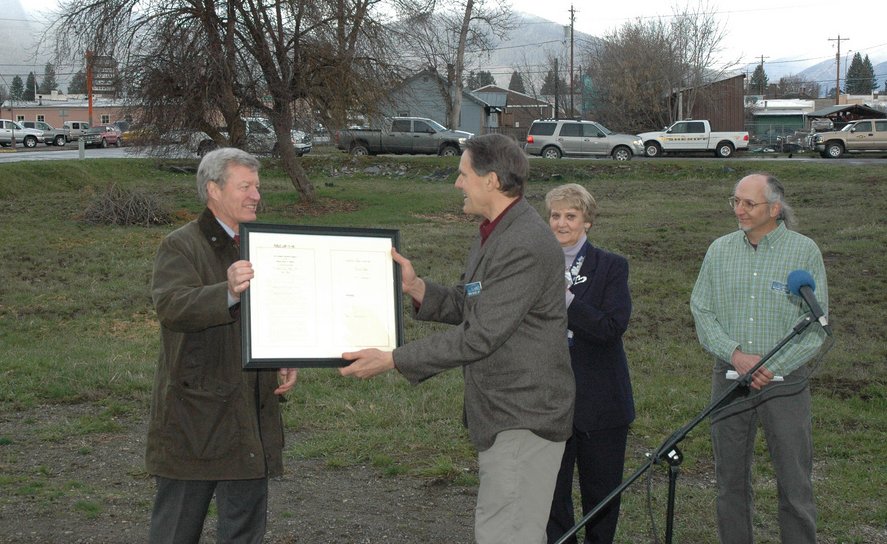
This week Senator Max Baucus, instrumental in crafting and enacting he program, participated in the ground breaking for ceremony for the expansion of the Center for Asbestos Related Disease (CARD).

“Today was a great day for CARD and the people of Libby,” Baucus said at the groundbreaking. “We’re all in this together, and it’s really through team work that we’re able to get this expansion done. It’s also great day because now the people of Libby will get the health care they need and deserve.”
Baucus said that the EPA designation, along with the new legislation, “has triggered over $300 million [in health aid for Libby] over the next 10 years. This is going to be bigger and better than the aid that was given to victims of 9/11.”