Copyright

(c) 2010-2026 Jon L Gelman, All Rights Reserved.

Thursday, July 5, 2012

Path to Federalization: A National Workers Compensation System--US Supreme Court Validates

United States Supreme Court has taken a giant leap forward to facilitate the Federalization of the entire nation's workers' compensation system. By it's recent decision, upholding the mandate for insurance care under the Affordable Health Care for America Act (ACA) 2009, it has set the precedent to federalize the nation's fragmented and chaotic workers' compensation medical delivery system.
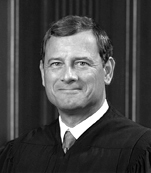
John G. Roberts Jr.,
Chief Justice US Supreme Court
Validating Mechanism
In a 5 to 4 ruling, Chief Justice Roberts validated the individual mandate as a permissible exercise of congressional power under the Taxing Clause of the US Constitution. Under 26 U.S.C. Section 5000A. The law requires that: (a) an individual must maintain minimum essential coverage for each month beginning after 2012; and (b) if there is a failure to maintain minimum essential coverage, a "penalty" is imposed "on the taxpayer" of $695 per year or 2.5% of family income, whichever is greater. The penalty "shall be assessed and collected in the same manner as taxes."

The Chief Justice, writing for himself, stated, "Every reasonable construction must be resorted to in order to save a statute from unconstitutionality." If it is "fairly possible" to interpret the statute as merely imposing a tax on those who've failed to purchase insurance. Writing for the majority, the Chief Justice stated, that the penalty is not a tax for anti-injunction act purposes. The Court, he wrote, needs to look beyond the label when assessing the constitutionality. For constitutional purposes Justice Roberts reasoned that the penalty may be considered as a tax when: it is not so high that there is no choice; and it is not limited to willful violations; and the penalty is collected by the IRS through normal means.

Constitution of the
United States
The Court indicated that the assessment is not really a "penalty." "Taxes that seek to influence conduct are nothing new," the Chief Justice wrote. He reasoned for the Court that there are no negative legal consequences to not buying health insurance, because beyond requiring a payment to IRS, Congress anticipated that some 4 million people would pay the penalty, and Congress did not treat them as "outlaws."

While certain taxes are prohibited under the U.S. Constitution, the penalty under the Affordable Health Care for America Act 2009 is not barred. The Court reasoned that the Constitution states, "No Capitation, or other direct, Tax shall be laid, unless in Proportion of the Census or Enumeration herein before directed to be taken." The majority of the Court held that a tax on "going without health insurance" does not fall within any recognized category of direct tax since it is triggered by certain specific circumstances.


The US Supreme Court previously validated compulsory workers' compensation programs. Compulsory compensation systems have been held not to be an arbitrary classification contrary to the equal protection clause of the United States Constitution, 14th Amendment.  The state-enacted systems were created for the protection of the lives, health and safety of the employees.  The systems provide payment of compensation through a state mandated system for injuries to employees or for the death of employees resulting from injuries related to work, regardless of fault.  The compensation systems are held as a simple, inexpensive and expeditious method of providing recovery to employees who are injured in a highly organized and modern industrial employment environment.  New York Central Railroad Company v. White, 243 U.S. 188, 37 S.Ct. 247, 61 L.Ed. 667 (1917). See also, Lower Vein Coal Co. v. Industrial Board of Indiana, 255 U.S. 144, 41 S.Ct. 252, 65 L.Ed. 555 (1921) and In re Asbestos Litigation, 829 F.2d 1233 (3d Cir.1987), cert. denied 485 U.S. 1029, 108 S.Ct. 1586, 99 L.Ed.2d 901 (1988).

Medical Delivery & Fees
Generally, the ACA provides a much needed national structure for the regulation, delivery, and enforcement of medical coverage. The ACA contains significant fraud and abuse provisions. In 2010 the law significantly expanded the government's authority to prosecute Faults Claims Act (FCA) cases. In 2011-2012 the ACA triggers increased provider screening, oversight and reporting. The ACA also establishes the Independent Payment Advisory Board to evaluate fee schedules and expands the scope of Medicaid and CHIP payments. 


Unlike most State compensation systems that presently struggle with both expeditious medical delivery as well the value and responsibility of medical care, the ACA provides a uniform system and expeditious system. The fragmented network of complex, dilatory and inconsistent results in the State programs have been described recently by national experts as "irrational" and "unjust."  They characterize the present compensation programs as "....dizzying and frustrating in its complexity, and apparent irrationality,"  and  they conclude that "a substantial proportion of persons with work-related disabilities do not receive workers' compensation benefits," and in need of a better format. 

Non-Traditional Revenue Stream
In addition to the widely publicized tax for non-compliance, the ACA contains several other innovative revenue provisions that will provide additional funding from collateral sources without burdening al employers globally. In 2010 an indoor tanning service tax was implemented. In 2011 annual fee was instituted on pharmaceutical companies as well as  an increased penalty for early withdrawal from health savings accounts. In 2013 the following provisions go into effect: the Medicare payroll tax will increase for high-income individuals, an excise tax on medical device manufacturers, limits on Flexible Spending Accounts, and the elimination of the deduction for Employer Part D subsidy. In 2014 there will be an annual fee on health insurance plans. In 2018 there will be an excise tax and high-cost plans commonly referred to as the "Cadillac tax."


"Libby Care"--Universal Care 
Center for Asbestos Related Disease
Libby, MT.
A provision of the Act, that has already been implemented, provides for the treatment of medical conditions, including asbestosis & mesothelioma, arising out the Libby, Montana asbestos contamination. The industrially caused   catastrophe in Libby has resulted in widespread illness and death. The ACA provides medical attention to those exposed to occupational toxins. The Center for Asbestos Related Disease is now operating in Libby, MT. The “Libby Care” provisions, and its envisioned prodigies, will embrace more exposed workers, diseases and geographical locations, than any other program of the past. This type of program, minimally, needs to be expanded to include all occupational illness nationally.


The Future: Universal Health Care
Landmarks on the Path to Federalization
It is very doubtful that ACA repeal legislation, to be offered by the Republicans in the House will pass Congress, nor will the President sign it.. There may be some technical and substantive revisions to the ACA in the next Congress. If there is a mixed political government after the next election,  the ACA will be implemented and go forward as the law of the land.


History reveals that a series of efforts have been made by the Federal government  to federalize medical care for industrial accidents and illnesses. Those efforts demonstrate a commitment to bring the nation ever closer to a universal care medical program incorporating the entire patchwork of workers' compensation medical delivery systems. The US Supreme Court has accelerated the nation down that promising path.
....
Jon L.Gelman of Wayne NJ is the author NJ Workers’ Compensation Law (West-Thompson) and co-author of the national treatise, Modern Workers’ Compensation Law (West-Thompson). 

More on improving the medical delivery system

Jun 14, 2012
Yesterday the US Congress passed and sent to the President, The World Trade Center Health Program, marking yet another advance on the path to federalize the nation's workers' compensation program. The Federally .
Dec 23, 2010
Yesterday the US Congress passed and sent to the President, The World Trade Center Health Program, marking yet another advance on the path to federalize the nation's workers' compensation program. The Federally ...
Feb 15, 2011
In December 2010 US Congress passed and President Obama signed, The World Trade Center Health Program, marking yet another advance on the path to federalize the nation's workers' compensation program.
Jul 05, 2010
The trend toward Federalization of workers' compensation benefits took a giant step forward by recent Presidential action creating the British Petroleum Oil Compensation Fund. While the details remain vague, the broad and ...

Jul 13, 2010
As The Path To Federalization expands, this debate will expand. A recent study by the Center for American Progress addresses these concerns. "Health threats from the oil spill may linger unseen, perhaps for more than a ...
Mar 16, 2011
Historically The Federal government's role has been to rise to the occasion and walk further down a path to federalization. On a smaller scale than the potential consequences of the Japanesse debacle, the US was first in line ...
Mar 05, 2011
Nationally, advocates to improve the delivery of medical benefits to injured workers have urged federalization of the medical delivery system into a single payer approach through universal health care. ... Compensation Claim Draws Major Public Attention (workers-compensation.blogspot.com); Vermont Governor Sets Out to Lead U.S. to True Universal Coverage (huffingtonpost.com); The World Trade Center Health Program Expands The Path to Federalization ...
Apr 03, 2010
The recent health care reform legislation provided for the Libby Care which will provide universal medical care for victims of asbestos related disease. The plan is a pilot program for occupational disease medical care fully ...
May 19, 2010
The “Libby Care” provisions, and its envisioned prodigies, will embrace more exposed workers, diseases and geographical locations, than any other program of the past. Potential pilot programs will now be available to ...

Related articles

Alternative Security Program Changes Collateral Rules


Christine Baker, director of the Department of Industrial Relations (DIR), today approved the implementation of the 2012/13 Alternative Security Program (ASP), freeing $6.17 billion in capital, giving self-insured California businesses greater financial flexibility.

The ASP is a first-in-the-nation, innovative program operated by the non-profit California Self Insurers’ Security Fund with the California Department of Industrial Relations. The program provides guarantees to replace security deposits required to collateralize self-insured workers’ compensation liabilities.

“Self-insurance and the ASP are innovative ways that California can support businesses and help them reinvest capital back into growing their business,” said DIR Director Christine Baker. “With workers’ compensation representing a major expense to businesses, this program benefits both the businesses and the larger California economy in a meaningful and positive way.”

All employers in California are required to have workers’ compensation insurance to protect themselves and workers and minimize the impact of work-related injuries and illnesses.  Meeting this requirement can be accomplished either by buying an insurance policy, or through obtaining authority from the DIR Office of Self Insurance Plans (OSIP) to self-insure the businesses’ workers’ compensation liabilities.

“I’m surprised that there are not more employers taking advantage of self-insurance,” said OSIP Chief Jon Wroten. “While there are standards and requirements that must be met, for employers with sound risk management practices the benefits can be substantial to the firm’s bottom line.”

Traditionally, self-insured employers are required to maintain a deposit to collateralize their risk in the amount equal to 135 percent of estimated future Liability. This deposit, which is cash, irrevocable letters of credit, securities or surety bonds, limits the employer’s ability to use the cash or credit line to expand their business. In contrast, ASP members can apply that cash or line of credit back into their businesses while the ASP assumes responsibility of the security deposits.

California currently has 7,952 employers protecting more than 4 million workers representing a total payroll of $173 billion through self-insurance workers’ compensation plans. One of every four California workers is protected by a self-insurance plan.

Self-insured employers in California represent large and midsized private companies, industry groups, and public entities such as city, county, state and school districts.


NIOSH Seeks Occupational History for Inclusion in Electronic Health records

NIOSH logo
NIOSH logo (Photo credit: Wikipedia)
The National Institute for Occupational Safety and Health (NIOSH) of the Centers for Disease Control and Prevention (CDC), Department of Health and Human Services (HHS) requests public comments to inform its approach in recommending the inclusion of work information in the electronic health record (EHR). NIOSH requests input on these issues (including answers to the three questions listed below).
The instructions for submitting comments can be found at www.regulations.gov. Written comments submitted to the Docket will be used to inform NIOSH with its planning and activities in response to the 2011 letter report “Incorporating Occupational Information in Electronic Health Records” written by the Institute of Medicine (IOM) Committee on Occupation and Electronic Health Records.

Input from primary care providers, occupational and public health specialists, EHR vendors and others with interest in the topic is sought on the questions listed below pertaining to the collection and use of work information in the clinical setting. NIOSH is interested in input both from those who are currently using EHRs as well as those who are not.

(1) For providers of primary health care: When do the clinicians in your practice setting currently ask patients about their work?Show citation box

Specifically, what information on patients' work is collected?Show citation box

If you currently use an EHR:Show citation box

Where in the health record (either paper or electronic) is patient work information stored and/or viewed? For example, is the work information entered in the `social history' section of an EMR? Where would you prefer patient work information to be stored and/or viewed in the EHR?Show citation box

Does your EHR maintain a history of the information so that you can identify how long and when a patient was in a given occupation?Show citation box

If you currently do not use an EHR, where do you record this information in the paper record? Is it available to the care provider during the patient encounter? Is there a history of the patient's work information available to the care provider?Show citation box

In your clinical practice, who (which personnel) besides the clinicians collect patients' work information (e.g., registration personnel or nursing assistants)?Show citation box

Have those personnel been trained specifically in how to collect information about patient's work i.e., how to gain an accurate job title etc.?Show citation box

Do you collect work information from teenagers?Show citation box

Do you collect work information from retirees?Show citation box

Are questions about work routine question or triggered based on specific complaints?Show citation box

How is work information used to inform patient care?Show citation box

Please provide an example/description of the usefulness of patient work information in providing care to a patient.Show citation box

Please provide any additional comments you have about collection or use of patient work information in the clinical setting.Show citation box

(2) For providers of occupational (specialty) health care: At your clinical facility, how is the patient's work information collected?Show citation box

Specifically, what information on patients' work is collected?Show citation box

Is the work information entered in the administrative record used for billing purposes?Show citation box

Is patient work information collected on paper or in an EHR? Is it available to the care provider during the patient encounter?Show citation box

Is there a history of the patient's work information available to the care provider?Show citation box

If you use a standardized form to collection information about patients' work, please briefly describe its main elements.Show citation box

In your clinical practice, who (which personnel) besides the clinicians collect (e.g., registration personnel or nursing assistants)?Show citation box

Have those personnel been trained specifically in how to collect information about patient's work i.e., how to gain an accurate job title, etc.?Show citation box

Where in the health record (either paper or electronic) is the information stored? For example, is the work information entered in the `social history' section?Show citation box

What are the most important ways that clinicians can use to inform clinical care of patients?Show citation box

Please provide an example of the usefulness of work information in providing care to a patient.Show citation box

Do you have any other comments about collection or use of patient work information in the clinical setting?Show citation box

(3) For developers and vendors of EHR/software: Does your base/basic EHR product contain pre-ordained fields for Industry, Occupation, Employer or other information about patients' work? If not, have you been asked to provide these fields?Show citation box

Regardless of whether they are in the base system or added on request, how are the values in the fields for Industry, Occupation, or other work information formatted (e.g., narrative text, drop-down menus, other)?Show citation box

Are these values coded and if so, what coding schema are used (e.g., NAICS, SOC, Census codes, user defined)?Show citation box

To the best of your knowledge, how are the data captured in these fields used by end users of your EHR/product?Show citation box

Please share challenges you anticipate in managing a history of employer, industry and occupation (current and usual) for multiple employment situations as both text and coded fields in your system, if your system does not already perform these functions?Show citation box

Could your system access and retrieve information from another web-based system via web services (such as an automated coding system for coding industry and occupation)?Show citation box

Your comments are appreciated. They will be used to improve NIOSH's electronic health records efforts.

Wednesday, July 4, 2012

Happy 4th of July - "We hold these truths to be self-evident..."

Statute of Liberty, NY
(c) Jon L Gelman 2012
IN CONGRESS, JULY 4, 1776
The unanimous Declaration of the thirteen united States of America
When in the Course of human events it becomes necessary for one people to dissolve the political bands which have connected them with another and to assume among the powers of the earth, the separate and equal station to which the Laws of Nature and of Nature's God entitle them, a decent respect to the opinions of mankind requires that they should declare the causes which impel them to the separation.

We hold these truths to be self-evident, that all men are created equal, that they are endowed by their Creator with certain unalienable Rights, that among these are Life, Liberty and the pursuit of Happiness. — That to secure these rights, Governments are instituted among Men, deriving their just powers from the consent of the governed, — That whenever any Form of Government becomes destructive of these ends, it is the Right of the People to alter or to abolish it, and to institute new Government, laying its foundation on such principles and organizing its powers in such form, as to them shall seem most likely to effect their Safety and Happiness. Prudence, indeed, will dictate that Governments long established should not be changed for light and transient causes; and accordingly all experience hath shewn that mankind are more disposed to suffer, while evils are sufferable than to right themselves by abolishing the forms to which they are accustomed. But when a long train of abuses and usurpations, pursuing invariably the same Object evinces a design to reduce them under absolute Despotism, it is their right, it is their duty, to throw off such Government, and to provide new Guards for their future security. — Such has been the patient sufferance of these Colonies; and such is now the necessity which constrains them to alter their former Systems of Government. The history of the present King of Great Britain is a history of repeated injuries and usurpations, all having in direct object the establishment of an absolute Tyranny over these States. To prove this, let Facts be submitted to a candid world.

He has refused his Assent to Laws, the most wholesome and necessary for the public good.
He has forbidden his Governors to pass Laws of immediate and pressing importance, unless suspended in their operation till his Assent should be obtained; and when so suspended, he has utterly neglected to attend to them.
He has refused to pass other Laws for the accommodation of large districts of people, unless those people would relinquish the right of Representation in the Legislature, a right inestimable to them and formidable to tyrants only.
He has called together legislative bodies at places unusual, uncomfortable, and distant from the depository of their Public Records, for the sole purpose of fatiguing them into compliance with his measures.
He has dissolved Representative Houses repeatedly, for opposing with manly firmness his invasions on the rights of the people.
He has refused for a long time, after such dissolutions, to cause others to be elected, whereby the Legislative Powers, incapable of Annihilation, have returned to the People at large for their exercise; the State remaining in the mean time exposed to all the dangers of invasion from without, and convulsions within.
He has endeavoured to prevent the population of these States; for that purpose obstructing the Laws for Naturalization of Foreigners; refusing to pass others to encourage their migrations hither, and raising the conditions of new Appropriations of Lands.
He has obstructed the Administration of Justice by refusing his Assent to Laws for establishing Judiciary Powers.
He has made Judges dependent on his Will alone for the tenure of their offices, and the amount and payment of their salaries.
He has erected a multitude of New Offices, and sent hither swarms of Officers to harass our people and eat out their substance.
He has kept among us, in times of peace, Standing Armies without the Consent of our legislatures.
He has affected to render the Military independent of and superior to the Civil Power.
He has combined with others to subject us to a jurisdiction foreign to our constitution, and unacknowledged by our laws; giving his Assent to their Acts of pretended Legislation:
For quartering large bodies of armed troops among us:
For protecting them, by a mock Trial from punishment for any Murders which they should commit on the Inhabitants of these States:
For cutting off our Trade with all parts of the world:
For imposing Taxes on us without our Consent:
For depriving us in many cases, of the benefit of Trial by Jury:
For transporting us beyond Seas to be tried for pretended offences:
For abolishing the free System of English Laws in a neighbouring Province, establishing therein an Arbitrary government, and enlarging its Boundaries so as to render it at once an example and fit instrument for introducing the same absolute rule into these Colonies
For taking away our Charters, abolishing our most valuable Laws and altering fundamentally the Forms of our Governments:
For suspending our own Legislatures, and declaring themselves invested with power to legislate for us in all cases whatsoever.
He has abdicated Government here, by declaring us out of his Protection and waging War against us.
He has plundered our seas, ravaged our coasts, burnt our towns, and destroyed the lives of our people.
He is at this time transporting large Armies of foreign Mercenaries to compleat the works of death, desolation, and tyranny, already begun with circumstances of Cruelty & Perfidy scarcely paralleled in the most barbarous ages, and totally unworthy the Head of a civilized nation.
He has constrained our fellow Citizens taken Captive on the high Seas to bear Arms against their Country, to become the executioners of their friends and Brethren, or to fall themselves by their Hands.
He has excited domestic insurrections amongst us, and has endeavoured to bring on the inhabitants of our frontiers, the merciless Indian Savages whose known rule of warfare, is an undistinguished destruction of all ages, sexes and conditions.

In every stage of these Oppressions We have Petitioned for Redress in the most humble terms: Our repeated Petitions have been answered only by repeated injury. A Prince, whose character is thus marked by every act which may define a Tyrant, is unfit to be the ruler of a free people.

Nor have We been wanting in attentions to our British brethren. We have warned them from time to time of attempts by their legislature to extend an unwarrantable jurisdiction over us. We have reminded them of the circumstances of our emigration and settlement here. We have appealed to their native justice and magnanimity, and we have conjured them by the ties of our common kindred to disavow these usurpations, which would inevitably interrupt our connections and correspondence. They too have been deaf to the voice of justice and of consanguinity. We must, therefore, acquiesce in the necessity, which denounces our Separation, and hold them, as we hold the rest of mankind, Enemies in War, in Peace Friends.

We, therefore, the Representatives of the united States of America, in General Congress, Assembled, appealing to the Supreme Judge of the world for the rectitude of our intentions, do, in the Name, and by Authority of the good People of these Colonies, solemnly publish and declare, That these united Colonies are, and of Right ought to be Free and Independent States, that they are Absolved from all Allegiance to the British Crown, and that all political connection between them and the State of Great Britain, is and ought to be totally dissolved; and that as Free and Independent States, they have full Power to levy War, conclude Peace, contract Alliances, establish Commerce, and to do all other Acts and Things which Independent States may of right do. — And for the support of this Declaration, with a firm reliance on the protection of Divine Providence, we mutually pledge to each other our Lives, our Fortunes, and our sacred Honor.


Tuesday, July 3, 2012

Not Taxable: Reimbursed Governmental Sick Leave Benefits

A New Jersey appellate court ruled that workers' compensation benefits to a NJ governmental entity for the payment of sick leave benefits are not subject to the NJ State Gross Income Tax.

The Director of the Division of Taxation argued that the benefits were paid pursuant to a collective bargaining agreement and therefore were considered taxable wages. The court rejected that argument.

Where a municipality paid an injured worker sick leave Injury (SLI) program benefits, pursuant to a collective bargaining agreement, that portion of the benefit which was reimbursed as workers' compensation by the employee to governmental agency, is not subject to state income tax.

Sa v. Director, Division of Taxation, 2012 WL 2515276 (N.J.Tax), Decided June 29, 2012.
....
For over 3 decades the Law Offices of Jon L. Gelman 1.973.696.7900 jon@gelmans.com have been representing injured workers and their families who have suffered work related accident and injuries.

Surveillance Video Barred as Belated Evidence

A New Jersey appellate court held that the trial court's decision to bar the admission of a surveillance tape into evidence was appropriate in a total disability claim, where the employer's attorney did not adhere to the administrative of rules concerning the offering of evidence. On the last day of a trial, the employer attempted to introduce a surveillance video of the of the employee on the basis that the tape would refute the injured worker's testimony that he could do nothing at home more than replace a lightbulb.


At the trial, Judge  Kenneth Kovalcik, exercising his judicial discretion, barred the use of the video as evidence. The court relied upon NJAC 12:235-3.11(a)(4)(i) that requires a pretrial memorandum must reflect that a party intends to utilize videos or other electronic media prior to trial. The defense argued that it was unable to comply with the administrative requirement because the video did not exist at the time the pretrial memorandum was submitted and that it was necessary to rebut the petitioner's testimony.

In affirming the trial judge, the appellate court reasoned that it was not an abuse of discretion to bar the use of the video. It reasoned that the belated surveillance tapes could not be admitted unless the employer could show that it was unaware, and could not have become aware, of the circumstances warranting the surveillance video before the hearing.

Marra v. Ryder Transportation Resources & Second Injury Fund, Docket No. A-5274-10T4, 2012 WL 2505731 (N.J.Super.A.D.), decided July 2, 2012.

WTC Health Program: First Year Anniversay


WTC Program Administrator John Howard, M.D. comments about the one-year anniversary of the James Zadroga 9/11 Health and Compensation Act


On July 1st we marked the one-year anniversary of the James Zadroga 9/11 Health and Compensation Act going into effect, officially launching the World Trade Center (WTC) Health Program. The WTC Health Program is a unique government program that provides medical evaluation and treatment to eligible 9/11 responders and survivors.


After opening our doors one year ago, we have made a lot of progress in our ability to respond to the needs of our members. We wanted to take this opportunity to reflect on the past year and how the Program has grown and what we will be focusing on in the coming months.


If you should have any questions about the WTC Health Program, please email us at WTC@cdc.gov.


Thank you,


John Howard, M.D.
Administrator, World Trade Center Health Program


Achievements and Looking Ahead

  • Since the Program became effective last year, it has helped over 60,000 people receive benefits, including those who were previously enrolled in the medical monitoring and treatment program and more than 1,200 new enrollees.
  • The WTC Health Program Scientific/Technical Advisory Committee (STAC) met three times to discuss and prepare their recommendation on whether to add cancer to the list of health conditions covered by the Program.
  • On June 13, we published a proposed rule to add certain types of cancers to the list of conditions the Program covers. We based this decision on a hierarchy of methods, including the recommendation of the STAC. After a 30 day public comment period, the Administrator will consider and address those comments as appropriate before issuing a final ruling.
  • In May, Stony Brook Medical Center opened a new clinic in Brooklyn to serve 9/11 responders, providing another place to get care that is closer to home and/or work.
  • The funding announcement for outreach and education cooperative agreements has gone out and we are looking forward to reviewing the proposals. The purpose of the awards is to recruit eligible responders and survivors and help them enroll in the Program to receive the care they need and deserve.
  • We will continue to work to improve the Program, including establishing eligibility criteria for Pentagon and Shanksville, PA responders.
  • We will expand the Program so that through the nationwide network of providers both responders and survivors who live outside the New York City metropolitan area can receive monitoring and treatment benefits near to where they live.


Facebook Photo Admissible As Evidence

An injured worker was denied benefits when an Arkansas Court admitted into evidence Facebook pictures that were posted on line showing him drinking and partying. The worker had alleged that as a result of a hernia, sustained at work, he was in excruciating pain.

The trial court held that the evidence went to the weight to be given his testimony and it was within the province of the Court admit them into evidence. The Court dismissed the injured worker's argument that the Facebook photos "are a disgrace to the dignity of the workers' compensation proceeding and the legal system." The case was dismissed.

Clement v. Johnson's Warehouse Showroom, 2012 Ark. App. 17, 2012 WL 11285 (Ark.App.)

EPA Provides Funding Community Groups to Educate About River Contamination from Abandoned Industrial Facilities

The legacy of toxic pollution generated from abandoned industrial facilities located on the NJ Passaic River, and other urban waters,  concern the US Environmental Protection Agency (EPA). The agency will be providing grants to educate the communities, including the former workers of the facilities.

Many of the toxic substances that companies dumped in to the Passaic River have resulted in occupational illnesses that have taken decades to manifest. Claims for industrially-induced occupational diseases are probably the greatest economic burden upon the compensation system at this time. The epidemiological predictions of the manifestation of occupational disease in the 21st century are for numbers of "epidemic" proportion.

The U.S. Environmental Protection Agency is providing a $60,000 grant to the Ironbound Community Corporation, a community organization in the Ironbound section of Newark, New Jersey, to educate the community about the history and ecology of the Passaic River and what can be done to protect it. The funding is part of the EPA’s Urban Waters program, which supports community efforts to restore and revitalize local canals, rivers, lakes, wetlands, aquifers, estuaries, bays and ocean areas and provide access to them. The Ironbound Community Corporation is the largest comprehensive social service provider in the area.

"Urban waterways like the Passaic River have been battered by toxic and sewage pollution for too long," said EPA Regional Administrator Judith A. Enck. "By providing these grants, the EPA is supporting efforts to educate the public about the history of the Passaic River and the need to work together to clean it up.”

The Ironbound Community Corporation will offer a series of river tours and “walkshops” to introduce Newark residents to the Passaic River’s history and ecosystem. The programs will include a series of walks along the river’s edge to celebrate the river and educate participants about what they can do to improve the river. The Ironbound Community Corporation will also produce a Back to the River brochure and map depicting the history and current state of the Lower Passaic River.

Many urban waterways have been polluted for years by sewage, runoff from city streets and contamination from abandoned industrial facilities. Healthy and accessible urban waters can help local businesses grow and enhance educational, recreational, employment and economic opportunities in nearby communities. By promoting public access to urban waterways, the EPA is helping communities become active participants in restoration and protection.

Through the Urban Waters program, the EPA is awarding grants ranging from $30,000 to $60,000 to 46 organizations throughout the nation. The projects selected for the funding will promote the restoration of urban waters through community engagement and outreach, water quality monitoring and studies, and environmental education and training. To view a list of the grant recipients, visit: http://www.epa.gov/urbanwaters/funding.Information on the EPA’s Urban Waters program: http://www.epa.gov/urbanwaters/index.html.

Information on the Urban Waters Federal Partnership: http://urbanwaters.gov/
....
For over 3 decades the Law Offices of Jon L. Gelman1.973.696.7900 jon@gelmans.com have been representing injured workers and their families who have suffered work related accident and injuries.


More Blogs About the Passaic river Pollution
Jun 21, 2012
Seventy Companies Reach Agreement with EPA to Remove Highly Contaminated Mud from Lyndhurst Section of the Passaic River; Cleanup work estimated to cost $20 million. The U.S. Environmental Protection Agency ...
May 09, 2012
The U.S. Environmental Protection Agency will discuss plans to address high levels of contaminants, including PCBs, mercury and dioxin, which are present in Passaic River mud adjacent to Riverside Park in Lyndhurst, New ...
Feb 28, 2012
In 2010, new pollutants were included for waters in the basins of the Hudson River, the Passaic River, the Raritan River, the Delaware Bay, and others. The EPA will continue to work with state and local governments to ensure ...
Dec 28, 2011
The U.S. Department of Labor's Occupational Safety and Health Administration has cited Creamer Sanzari Joint Venture of Hackensack for seven alleged serious safety violations found at the Passaic River bridge project in ...

Monday, July 2, 2012

The Stockton Senario: When the Municipality Goes Into Bankruptcy

Official seal of City of Stockton
Official seal of City of Stockton (Photo credit: Wikipedia)
An injured municipal employee's nightmare is when the governmental entity goes into bankruptcy and uncertainty of benefits and potential elimination of a safety net become a reality. Unfortunately the senario is now threatening to be played out in Stockton, California.


Stockton is self-insured:
"The City of Stockton is "self-insured" for workers' compensation benefits. The City pays benefits directly to injured employees rather than purchasing an insurance policy that would pay benefits.

"All employees of the City are eligible to receive workers compensation benefits if injured or made ill by their job. There is no qualification period for eligibility, such as working a minimum time period or a minimum number of hours per week. If an employee believes that he or she was injured on the job, a claim for benefits can be filed with the employee's supervisor.


Some states have backup coverage system in place to provide benefits and many do not. If the bankruptcy protection becomes a growing trend for municipalities, then the senario can become even more problematic.

Sunday, July 1, 2012

OSHA kicks off summer campaign to prevent heat-related illnesses and fatalities among outdoor workers


The U.S. Department of Labor's Occupational Safety and Health Administration has kicked off a national outreach initiative to educate workers and their employers about the hazards of working outdoors in hot weather. The outreach effort builds on last year's successful summer campaign to raise awareness about the dangers of too much sun and heat.

"For outdoor workers, 'water, rest and shade' are three words that can make the difference between life and death," Secretary of Labor Hilda L. Solis said. "If employers take reasonable precautions, and look out for their workers, we can beat the heat."

Every year, thousands of workers across the country suffer from serious heat-related illnesses. If not quickly addressed, heat exhaustion can become heat stroke, which has killed — on average — more than 30 workers annually since 2003. Labor-intensive activities in hot weather can raise body temperatures beyond the level that normally can be cooled by sweating. Heat illness initially may manifest as heat rash or heat cramps, but quickly can become heat exhaustion and then heat stroke if simple prevention steps are not followed.

"It is essential for workers and employers to take proactive steps to stay safe in extreme heat, and become aware of symptoms of heat exhaustion before they get worse," said Dr. David Michaels, assistant secretary of labor for occupational safety and health. "Agriculture workers; building, road and other construction workers; utility workers; baggage handlers; roofers; landscapers; and others who work outside are all at risk. Drinking plenty of water and taking frequent breaks in cool, shaded areas are incredibly important in the hot summer months."

In preparation for the summer season, OSHA has developed heat illness educational materials in English and Spanish, as well as a curriculum to be used for workplace training. Additionally, a Web page provides information and resources on heat illness — including how to prevent it and what to do in case of an emergency — for workers and employers. The page is available athttp://www.osha.gov/SLTC/heatillness/index.html.

OSHA also has released a free application for mobile devices that enables workers and supervisors to monitor the heat index at their work sites. The app displays a risk level for workers based on the heat index, as well as reminders about protective measures that should be taken at that risk level. Available for Android-based platforms and the iPhone, the app can be downloaded in both English and Spanish by visiting http://s.dol.gov/RI.

In developing last year's inaugural national campaign, federal OSHA worked closely with the California Occupational Safety and Health Administration and adapted materials from that state's successful campaign. Additionally, OSHA is partnering with the National Oceanic and Atmospheric Administration for the second year to incorporate worker safety precautions when heat alerts are issued across the nation. NOAA also will include pertinent worker safety information on its heat watch Web page athttp://www.noaawatch.gov/themes/heat.php.
Read this news release en EspaƱol.