Copyright

(c) 2010-2026 Jon L Gelman, All Rights Reserved.

Wednesday, March 24, 2010

Disgruntled Client Unable to Sue Former Attorney

The Third Circuit Court of Appeals dismissed the claim of a disgruntled former client who brought an action against his prior attorney. The injured worker claimed that his former lawyers failed to investigate his workers' compensation claim properly and had invaded his privacy by discussing his claim with a Judge and another law firm.

"We conclude that the District Court applied the appropriate standard for dismissal pursuant to Rule 12(b)(6) and properly dismissed Donnelly's Amended Complaint for the reasons stated in its Opinion. Donnelly argues on appeal that no COM [Certificate of Merit] was required for his breach of contract and legal malpractice claims against the O'Malley defendants because these claims do not call for expert testimony to explain their lapses in judgment or failures in performance. He asserts that his allegations are easy for an ordinary person to understand. For instance, he asserts that the O'Malley defendants gave him employment advice, which is outside their realm of expertise. (Informal Br. at 5.) Regardless of how he chooses to characterize his claim, however, Donnelly's allegations pertain to the quality of the O'Malley defendants' professional representation of him, and thus a COM is required. See Gorski v. Smith, 812 A.2d 683, 694 (Pa.Super.Ct.2002) (stating that in cases where there is an attorney/client agreement for legal services, “there automatically arises a contractual duty on the part of the attorney to render those legal services in a manner that comports with the profession at large”); Pa. R. Civ. P. 1042.3 (a COM is required in “any action” against an attorney that calls into question whether counsel “deviated from an acceptable professional standard”). Involuntary dismissal under Rule 1042.3 is not a dismissal with prejudice, however. See Moore v. John A. Luchsinger, P.C., 862 A.2d 631, 634 n. 3 (Pa.Super.Ct.2004). Hence, we will affirm the District Court's order dismissing this claim as modified to be a dismissal without prejudice."

Donnelly v. O'Malley & Langan, PC, 2010 WL 925869, C.A.3 (Pa.),2010., March 16, 2010 (Unpublished Decision)

Chubb Permitted to Sue Travelers in Manville Asbestos Claim

The Second Circuit Court of Appeals has held that Chubb was denied its due process in a claim flowing from the Manville bankruptcy that was filed in 1982. In a long and convoluted judicial history, Chubb was seeking reimbursement from Travelers, its insured, for lack of notice of a bankruptcy settlement years before. As a result of that settlement, to which Chubb was not a party, Chubb was sued by a new group of plaintiffs in 2004 as a result of Travelers malfeasance in the asbestos conspiracy.

While denying the asbestos personal injury claimants from seeking recovery, the Court allowed Chubb to proceed with its claim.

"We further hold that Chubb was not adequately represented in the proceedings that lead to the bankruptcy court's approval of the 1984 Insurance Settlement Agreement and the Manville Plan, and that it did not receive adequate notice of the 1986 Orders. Accordingly, both the bankruptcy court and the district court erred by rejecting Chubb's due process argument. Chubb is therefore not bound by the terms of the 1986 Orders. Consequently, it may attack the Orders collaterally as jurisdictionally void. And, as we held in Manville III, that attack is meritorious."

In re Johns-Manville Corp., --- F.3d ----, 2010 WL 1007832, C.A.2 (N.Y.),2010., March 22, 2010


Modification Denied Despite Expert Increases

A NJ Appellate Court affirmed a trial court's decision to deny a petitioner modification of a prior award despite the fact that medical experts on both sides found an increase in disability.

"Respondent's neuropsychiatric expert, L. Scott Eisenberg, M.D., examined petitioner on March 9, 2004. He noted petitioner's unrelated medical disorders as hypertension, diabetes, and a viral infection of the eye. He also noted that he had previously examined petitioner in December 2000. Dr. Eisenberg found "[a] degree of elaboration" by petitioner regarding his subjective complaints and concluded that there was no objective evidence of any increase in neurologic disability in 2004. He wrote: "Assuming the complaints and his presentation for the neuropsychiatric point of view are bona fide, I would estimate an additional disability in that regard of 2% of partial total related to his back condition."

"The judge of compensation was not bound to accept the conclusions of petitioner's doctors. See Perez v. Capitol Ornamental, Concrete Specialties, Inc., 288 N.J.Super. 359, 367-68 (App.Div.1996). On this record, he could reasonably accept the conclusions of respondent's doctors that they found no objective medical evidence in 2004 and 2006 demonstrating an increase in disability from that in 2000.
JOSE MEDINA-SEGARRA v RUDL FENCING & DECKING,, DOCKET NO. A-3652-08T2, 2010 WL 1029948 (N.J.Super.A.D.).

Saturday, March 20, 2010

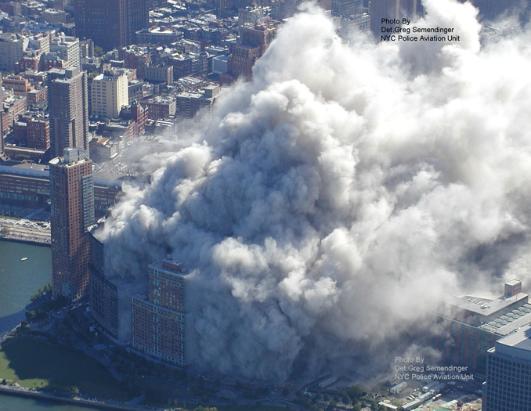
Medical Criteria Swamp for WTC First Responders

The threshold question in determining compensability in any program is how to construct a system that will provide immediate and expeditious delivery. The sick first responders to the horrific attack of September 11, 2001, are still struggling to obtain benefits.

The recent plan offered by the WTC Captive Insurance Company, and rejected by the Court, sets forth elaborate eligibility and disability criteria.  The 96 page agreement, and accompanying exhibits, outlining the settlement process provides insight into struggle.

Drawing from far and wide, the proposed agreement tries to cover all potential diseases and schedule them.


"To constitute a Qualifying Injury, an alleged injury must satisfy all three of the following components of the Medical Proof Criteria: (i) it must be one of the “Qualifying Injuries” listed expressly in the tables immediately below; (ii) it must meet the “Diagnostic Criteria” applicable to the Disease Group in which the Qualifying Injury is listed in the tables immediately below; and (iii) it must satisfy the “Impairment Criteria” for the Disease Group in which the Qualifying Injury is listed in the tables..."
The sources include:
"European Respiratory Society/American Thoracic Society COPD Guidelines – 2005; ATS/ERS Criteria for Diagnosis of Idiopathic Pulmonary Disease in Absence of  Surgical Lung Biopsy; Global Initiative for Asthma/World Health Organization; American College of Chest Physicians Consensus Statement; British Society for Allergy and Clinical Immunology guidelines for the  management of rhinosinusitis and nasal polyposis. Scadding GK; Durham SR; Mirakian R;  Jones NS; Drake-Lee AB; Ryan D; Dixon TA; Huber PA; Nasser SM - Clin Exp Allergy.  2008 Feb; 38(2):260-75. Epub 2007 Dec 20.
The proposed system is yet another attempt to quantify disability and adds another set of elaborate medical criteria and complexity to the insurance company playbook. The loquaciousness of the authors of the proposal is mind boggling. This level of sophistication can only compound the delivery of benefits. This proposal is yet another example of the compelling need for one universal national program that can provide benefits to injured workers without the need of hip  high boots to navigate the swamp.

Judge Rejects 911 Settlement -- $595 Million Not Enough

A US District Court Judge rejected the proposed settlement for $595 Million, for 911 first ill responders, declared it to be "not enough."

The Judge in reviewing the proposal said, "In my judgment, this settlement is not enough." Judge Alvin Hellerstein remarked, "I have the power of review, and I don't think it is fair."

A proposal was presented by the WTC Captive Insurance Company that manages the $1 Billion fund established by Congress to pay injured workers. 

The Court ordered more settlement discussions in an effort to seek a fair resolution of the litigation. 


Workers Compensation Insurance Company Ordered to Pay For Gastric Bypass

Treating medical conditions that are necessary to relieve and cure a medical condition is the responsibility generally of workers' compensation programs throughout the United States. Now a Court has ordered that an insurance company must treat a persons obesity as an extension of its medical benefits so that weight reduction can occur and the underlying work related condition can be addressed.

"Claimant slipped and fell at work in 2002, and his ensuing workers' compensation claim presently encompasses, among other things, injuries to his head, neck, back and knees. His morbid obesity has contributed to his knee and back problems and, in an effort to combat those problems and counter a broader threat to his survival, claimant sought authorization to undergo gastric bypass surgery. The Workers' Compensation Law Judge granted his request. Upon review, the Workers' Compensation Board affirmed, holding that the surgery was causally related to the compensable injuries. 

In affirming the decision the Supreme Court, Appellate Division, Third Department, New York held:

"The employer is obliged to pay for claimant's medical care “for such period as the nature of the injury or the process of recovery may require” (Workers' Compensation Law § 13[a]; see Matter of Spyhalsky v. Cross Constr., 294 A.D.2d 23, 25-26 [2002] ). There is evidence in the record that claimant has gained a substantial amount of weight since 2002 due to the sedentary lifestyle imposed by the compensable injuries. Claimant's treating orthopedic surgeon opined that claimant's back and knee pain was exacerbated by his obesity and that such could be alleviated by weight loss. An independent medical examiner agreed, opining that weight loss would “certainly” help those conditions. While material in the record before us could support a different result, substantial evidence exists for the Board's determination that claimant's weight gain was caused by his compensable injuries and that gastric bypass surgery “would assist in [his] recovery” ( Matter of Bolds v. Precision Health, Inc., 16 A.D.3d 1007, 1009 [2005]; see Workers' Compensation Law § 13[a]; Matter of Spyhalsky v. Cross Constr., 294 A.D.2d at 25-26, 743 N.Y.S.2d 212).
Laezzo v. New York State Thruway Authority, --- N.Y.S.2d ----, 2010 WL 812862, N.Y.A.D. 3 Dept., 2010, March 11, 2010.

Friday, March 19, 2010

The Limited Application of a RICO Claim

A Federal District Court in Michigan has dismissed a RICO [Racketeer Influenced and Corrupt Organizations Act] claim against Sedwick Claims Management Services. The plaintiffs alleged that the insurance company, "....'engaged in a scheme to defraud employees of the minimum wages and fringe benefits to which they were entitled' under the McNamara-O'Hara Services Contract Act, 41 U.S.C. 351,et seq. (SCA), 'in violation of the civil provisions of ... RICO.'"

In dismissing the case, the court reasoned, "an injured worker may not use RICO as an 'end run' around the exclusive procedures and remedies prescribed by the WDCA [Michigan's Workers Disability Compensation Act] -Defendants contend that Plaintiffs have filed this action in an attempt to convert their workers compensation disputes into a federal RICO case-the basis of which is the Defendants' allegedly-fraudulent violation of the WDCA. Plaintiffs' effort to convert their disputes over benefits into RICO claims, while creative, must be rejected. Plaintiffs' RICO claims seek to expand RICO far beyond its intended reach. As the federal courts have repeatedly held, a plaintiff may not use a RICO claim as an 'end run' around a comprehensive, specialized, and exclusive administrative scheme like the scheme established by the WDCA. Yet that is precisely what these Plaintiffs seek to do."

"....RICO was never intended to create a path into courts for litigants who would otherwise be limited to exclusive administrative remedies and procedures, and subject to strict damages limitations. The Court finds that Plaintiffs may not use their RICO claim to reform Michigan's workers' compensation law-allowing them to do so would be an unwarranted intrusion into Michigan state law and procedure."

Jackson v. Sedgwick Claims Management Services, Inc., 2010 WL 931864, E.D. Mich. 2010, March 11, 2010.

Click here to read more RICO claims and workers' compensation.