
Monday, October 27, 2014
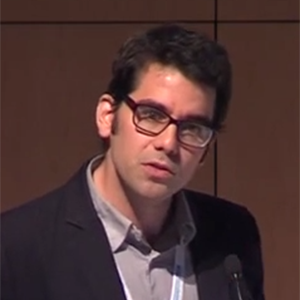
IMIG: Dr. Constantine Alifrangis Speaks on Next Generation Sequencing in Mesothelioma

Sunday, October 26, 2014
Quarantined nurse to CNN: 'My basic human rights' are being violated
| Kaci Hickox, a nurse placed under mandatory quarantine in New Jersey, went on CNN on Sunday and criticized the "knee-jerk reaction by politicians" to Ebola, saying "to quarantine someone without a better plan in place, without more forethought, is just preposterous." Hickox, an epidemiologist who was working to help treat Ebola patients in Sierra Leone, has tested negative twice for Ebola and does not have symptoms, she said. "This is an extreme that is really unacceptable, and I feel like my basic human rights have been violated," Hickox told CNN's Candy Crowley on "State of the Union." She described herself as "physically strong" but "emotionally exhausted." "To put me through this emotional and physical stress is completely unacceptable," she said. She slammed New Jersey Gov. Chris Christie for describing her as "obviously ill." "I'm sorry, but that's just a completely unacceptable statement in my opinion. For him -- a politician who's trusted and respected -- to make a statement that's categorically not true is just unacceptable and appalling," Hickox told Elizabeth Cohen, CNN's senior medical correspondent, in a separate interview. Hickox told Crowley that mandatory quarantine is "not a sound public health decision" and that public health officials -- not politicians... |


Modern Workplaces Add Complexity to Workers' Compenation Cases
| Premises liability is a major issue currently in workers' compensation claims as people "work at home." The change by created by eliminating a commute also changes the pattern of risk. While the coming and going rule may be avoided there are other distractions at home that create new issues challenging compensability. Today's post is shared from thelegalintelligencer.com A day at work isn't always just a day at the office. Attorneys in workers' compensation practice know that all too well. And as technological advances allow more workers to telecommute and correspond on work matters from outside of the office, the conditions surrounding compensable incidents are increasingly complicated. "The ability of an employer to maintain access to an employee and the ability of an employer to give instructions to an employee remotely have increased," said Edward Neyhart, of the Law Offices of Byrne, Neyhart & Higgins. "As people work remotely more and more and people are engaging in various activities and mobile technology allows people greater access to travel and working away from the office setting, it becomes a much more important issue." Neyhart said he has been inundated with workers' compensation cases this year, many borne out of a constant connection to the office. "[These cases] are just the beginning of the pattern of litigation that is going to have to work its way up to the appellate courts," he said. "Employers and insurance companies have to adapt to the changing status of liability." According to a 2010 survey by the Bureau of Labor Statistics, about 24 percent of workers telecommute, meaning they work from home for at least some of their hours each week. That can blur the lines on compensable injuries, especially for those who only work from home sometimes. "It puts them in the... |

GOP changes tune on cutting Social Security with elections on the line
| The focus of the upcoming, expensive, mid-term elections has moved away from Obamacare and toward other issues. This development may impact quite heavily upon medical delivery on a Federal level and may finally be a major concession that Universal Medical will just have to be accepted because of the need to rein in costs and for efficiency. Today's post is shared from washingtonpost.com/ Cutting federal health and retirement spending has long been at the top of the GOP agenda. But with Republicans in striking distance of winning the Senate, they are suddenly blasting the idea of trimming Social Security benefits. The latest attack came in Georgia, where the National Republican Campaign Committee posted an ad last week accusing Rep. John Barrow (D) of “leaving Georgia seniors behind” by supporting “a plan that would raise the retirement age to 69 while cutting Social Security benefits.” Crossroads GPS, the conservative nonprofit group founded by GOP strategist Karl Rove, has run similar ads against North Carolina Sen. Kay Hagan (D), Arkansas Sen. Mark Pryor (D) and Rep. Scott Peters (D-Calif.). Crossroads accused Hagan of supporting a “controversial plan” that “raises the retirement age.” Pryor’s opponent, Rep. Tom Cotton, meanwhile, is one of at least three Republican candidates in competitive Senate races who have released cheery ads promising to protect Social Security. In Colorado, Rep. Cory Gardner (R) appears in a new ad with his “Grandma Betty” and vows to “honor every penny we promised today’s seniors” — a pledge that seems to conflict with demands by Republican congressional leaders for a less-generous inflation formula to calculate seniors’ cost-of-living increases. Older voters typically dominate the electorate in non-presidential years, so the resort to... |

Meet the startups trying to stop pedestrian deaths
| Distracted walking is a new safety concern. Today's post is shared from theverge.com As phones get more powerful and screens get bigger, it gets harder and harder to pull our attention away from them, even when it puts us at risk. One place where that unavoidably happens is in the intersections of city streets, where pedestrians, bikers, and drivers meet — sometimes violently. To try to tackle this problem, AT&T partnered with the NYU Rudin Center for Transportation, the NYC Department of Transportation, educational co-op General Assembly, and software competition site ChallengePost to create Connected Intersections, a four-month developer challenge with the goal of inspiring technologies that can make city streets safer for distracted humans buried in their phones and the people around them. "Traffic lights can only do so much." "Pedestrians and cars are kind of at an impasse right now, and it’s getting to a point where real action needs to be taken," Sarah Kaufman of the Rudin Center said at one of the challenge’s developer open houses back in July. "Every two hours a New Yorker is hurt or badly injured, and every 30 hours one is killed in a car crash. So it’s at a point where we have a big opportunity to start using smart technologies to put the power in the people’s hands. Why not put safety in people’s hands? Traffic lights can only do so much." Connected Intersections ended up collecting 45 ideas from teams in 13 different countries and 26 different states. Eight teams were awarded... |

Tobacco Settlement Funds Sprinklers, Golf Carts and a Grease Trap
What happened to the tobacco settlement funds? Todsay's post is shared from propublica.org
[Click here to see the rest of this post]

| A central tenet of government finance is that money borrowed over the long term should be spent on projects that will outlast the debt – things like buildings, bridges or other essential infrastructure. That's not what upstate New York's Niagara County did with much of its money from tobacco bonds. Golf carts. Computers. Defibrillators. Portable radios. Even a grease trap for the jail's kitchen. The list of goods or projects with just a few years' useful life goes on – all paid for with debt that will last decades. Nor did the money go toward the health care costs of smoking – as hoped by framers of the 1998 legal settlement with tobacco companies that has paid billions to states, counties and other governments. Since then, Niagara County repeatedly borrowed against its share of the settlement, about $3.5 million a year. For some of this debt, it borrowed at nearly 8 percent interest and used the proceeds to pay down debts charging half as much. Niagara's experience shows how "securitizing" the tobacco money – and the windfall of upfront cash it puts at politicians' disposal... |
ACLU demands Christie give legal reason for quarantining nurse who's tested negative for Ebola
| Public health concerns raised over the fear of the spread of Ebola has caused at least three states: NJ, NY and IL, to institute a mandatory quarantine of potentially exposed workers. Today's post is shared fromnj.com. TRENTON — The American Civil Liberties Union is demanding that Gov. Chris Christie provide more information to the public about how the state came to the conclusion that mandatory quarantine of healthcare workers was medically necessary, saying it has “serious constitutional concerns about the state abusing its powers.” The civil liberties group’s demand came after a nurse who had been under quarantine after arriving at Newark International Airport on Friday tested negative for Ebola on Saturday. Currently, the nurse, Kaci Hickox, remains in New Jersey state custody over her objections, published in the Dallas Morning News and the objections of the international aid organization, Doctors Without Borders, for whom she’d worked in Sierra Leone. “Ebola is a public health issue and the government’s response should be driven by science and facts and not by fear. We must treat our medical workers who put... |

Subscribe to:
Comments (Atom)