Copyright

(c) 2010-2026 Jon L Gelman, All Rights Reserved.

Thursday, February 20, 2014

Generic drug makers fight rule on health risk warnings

Drug safety is a concern of all injuured workers. Better regulation will improved the ultimate medical delivery system of a workers' compensation program. Today's post was shared by FairWarning and comes from www.latimes.com

Companies that make generic drugs, the medications most Americans buy, are fighting to kill a proposed federal regulation that would require them for the first time to warn patients of all the known health risks of each drug they sell.

The proposed rule change by the Food and Drug Administration "would be nothing short of catastrophic," said Ralph G. Neas, president of the Generic Pharmaceutical Assn., an industry trade group. It could raise healthcare costs and "create dangerous confusion" for doctors and patients, he said.

At issue is a legal loophole created by Supreme Court rulings that drew a sharp distinction between brand-name drugs and lower-cost generics, which are the same products but usually are marketed under their chemical names.

In 2009, the high court confirmed drug makers could be sued if they failed to warn patients that a brand-name drug carried a serious potential health risk.

The decision upheld a $7-million jury verdict for Diana Levine, a Vermont violinist whose lower arm was amputated after she was injected with an anti-nausea drug made by Wyeth. The drug sometimes caused gangrene if injected into an artery.

But the Supreme Court majority flipped when confronted with a generic drug that also caused a horrible side effect.

Last year, a 5-4 ruling tossed out a $21-million verdict awarded by a lower court to Karen Bartlett, a New Hampshire woman who was disfigured, badly burned and nearly blinded after she had a rare,...

[Click here to see the rest of this post]

Wednesday, February 19, 2014

World Trade Center Fund Now Covers Myeloid Malignancies

Beginning on February 1, 2014, the World Trade Center (WTC) Health Program began considering blood or bone marrow disorders of the myeloid line to be slow-growing blood cancers. Accordingly, they will be considered WTC-related health conditions, making them available for WTC Health Program medical treatment services for eligible members.

These cancers had been considered non-malignant by the Administrator because they were referred to as “pre-leukemic” hematopoietic disorders in the medical literature. Recent scientific advances, however, characterize these “pre-leukemic” myeloid neoplasms as slow-growing blood cancers, and authoritative scientific sources now consider them to be malignant myeloid neoplasms.

After receiving a request from the WTC Clinical Centers of Excellence to review certain myeloid disorders in terms of their status as malignancies, the WTC Health Program has determined that, in addition to types of leukemias, these myeloid malignancies are eligible for coverage by the WTC Health Program as WTC-related health conditions.

The group of myeloid malignancies includes the following health conditions:

(1) Myelodysplastic Syndromes (MDSs);

(2) Myeloproliferative neoplasms (MPNs);

(3) Myelodysplastic/myeloproliferative neoplasms (MDS/MPN); and

(4) Myeloid malignancies associated with eosinophilia and abnormalities of growth factor receptors derived from platelets or fibroblasts.

On January 2, 2010, President Barack Obama signed the James Zadroga 9/11 Health and Compensation Act establishing the World Trade Health Program and extends and expands eligibility for compensation under the September 11th Victim Compensation Fund of 2001.

For over 3 decades the Law Offices of Jon L. Gelman 1.973.696.7900 jon@gelmans.com have been representing injured workers and their families who have suffered asbestos related disease. Please contact our office if you require assistance in filing a claim under the newly enacted James Zadroga 9/11 Health and Compensation Act.

Is Shipping Oil by Rail As Dangerous As the Keystone Pipeline?

Today's post was shared by Mother Jones and comes from www.motherjones.com

When the State Department issued its long-awaited environmental-impact statement on the Keystone XL project earlier this month, one of its key findings was that if the controversial pipeline weren't built, oil-laden rail cars would pick up the slack. "Rail will likely be able to accommodate new production if new pipelines are delayed or not constructed," it argued. As we noted recently, that rail transit is already underway. According to the Association of American Railroads (AAR), crude oil traveling by rail increased from 9,500 carloads in 2008 to an estimated 400,000 in 2013. Recently, an ExxonMobil official said the company had already begun to use trains to haul oil out of the Canadian tar sands, and the company plans to move up to 100,000 barrels of oil per day from a new terminal by 2015. In other words, tar sands will be developed one way or another, according to the State Department, with or without the $5.4 billion pipeline that would eventually link Alberta to the Gulf of Mexico.

The AAR argues carrying crude by tanker car is safe, citing a statistic that 99.9977 percent of dangerous chemical shipments by rail reached their destination without incident through 2010, making it safer than other forms of transport. But as crude by rail in the United States is increasing—the AAR says shipments have shot up 443 percent since 2005—so too...


[Click here to see the rest of this post]

Tuesday, February 18, 2014

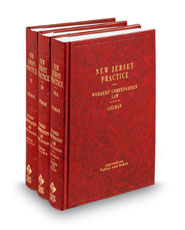
Just Published: 2014 Update - Gelman on Workers' Compensation Law

Jon Gelman’s newly revised and updated treatise on Workers’ Compensation Law has just been published by West Group of Egan, MN. The treatise is the most complete work available on NJ Workers’ Compensation law.

The work offers an in-depth and insightful analysis that provides a  quick and accurate guidance to those who practice workplace injury law. Time-saving comments and instructions shorten the claims process and expedite handling of issues.

New areas of the law reviewed:

The newly enacted SMART Act (The Strengthening Medicare and Repaying Taxpayers Act of 2012), and the proposed Regulations, are discussed at length in this supplement. The newly enacted statutory provision concerning balance billing and expanded jurisdiction of the Workers’ Compensation Court is reviewed. The launch of COURTS 4, the expanded workers’ compensation electronic filing system, implementing e-filing of Notice of Motions, is explained along with accompanying sample forms, codes, and instructions for filing/service. The statutory extension of lifetime benefits embodied in recent legislation for surviving spouses of police and fire department employees, who are fatally injured in-the-line of duty, is discussed. The recent case law concerning the second-prong of the “context test” involving the “Exclusivity Doctrine” is reviewed 

New 2014 Section Sections include:

--Dependency—Surviving spouse of police or fire department killed in the line of duty [12.14.50] 
--Case organization utilization reporting tracking system (COURTS)—Court proceeding type codes [25.22.30] 
--Case organization utilization reporting tracking system (COURTS)—E-filing of motions—General motion [25.22.40] 

Gelman on Workers’Compensation Law is exclusively integrated into the entire world-wide leading legal research network of West Group-Reuters-Thomson publications.

It is now available, in print, on CD-Rom and online via Westlaw™ and WestlawNext™. [Westlaw Database Identifier NJPRAC]


Jon L. Gelman is nationally recognized as an author, lecturer and skilled trial attorney in the field of workers’ compensation law and occupational/environmental disease litigation. Over a career spanning more than three decades he has been involved in complex litigation involving thousands of clients challenging the mega-industries of: asbestos, tobacco and lead paint. Gelman is the author NJ Workers’ Compensation Law (West-Thompson) and co-author of the national treatise, Modern Workers’ Compensation Law (West-Thompson). He is the former Vice-President of  The Workers Injury Law & Advocacy Group (WILG) and a charter member of The College of Workers' Compensation Lawyers. Jon is a founder of the Nancy R. Gelman Foundation Inc., which seeks to fund innovative research to cure breast cancer. He is also an avid photographer. jon@gelmans.com -www.gelmans.com

Monday, February 17, 2014

Toni Atkins prepares for Assembly speakership

Today's post was shared by CAAA and comes from capitolweekly.net

For Toni Atkins, a coal miner’s daughter and the first in her family to graduate from college, the road from Virginia coal country to San Diego to Speaker of the state Assembly has been long and winding.
Atkins, a San Diego Democrat who said she can “really appreciate the depths and the breadth of the people who live in California,” was chosen the next speaker in a closed-door caucus of Democrats, who control the 80-member Assembly with a supermajority. She currently serves as the Assembly’s majority leader.
She will succeed Speaker John Pérez, a former L.A.-area labor activist, who is termed out this year and is running for state controller. Atkins, like Pérez, is openly gay, although her sexual orientation has drawn relatively little notice in the Capitol.
Pérez served as Atkins’ mentor, she said.
“I feel really fortunate the speaker has given me the opportunity to be both the Majority Whip and the Majority Leader,” Atkins said.
She’ll be leading the lower house despite concerns – at least in the north state – that an old tradition over equitable leadership distribution between Northern and Southern California.
“For 40 years there has been an unspoken — and unbroken — rule that Southern California splits leadership of the Legislature with the Bay Area and greater Northern California. This year, Southern California leaders could seize complete control of the...
[Click here to see the rest of this post]

Saturday, February 15, 2014

Yep, There's a Medical Code for Being Bitten by Shamu

Today's post was shared by Mother Jones and comes from www.motherjones.com

Sarah Kliff reports on the ongoing battle over the ICD-10, a set of medical codes for illnesses and injuries that's far more detailed than the current ICD-9:
There are different numbers for getting struck or bitten by a turkey (W61.42 or W61.43). There are codes for injuries caused by squirrels (W53.21) and getting hit by a motor vehicle while riding an animal (V80.919), spending too much time in a deep-freeze refrigerator (W93.2) and a large toe that has gone unexpectedly missing (Z89.419).
....Hospitals and insurers have fought the new codes, calling them a massive regulatory burden....ICD-10 proponents contend that adding specificity to medical diagnoses will provide a huge boon to the country. It will be easier for public health researchers, for example, to see warning signs of a possible flu pandemic — and easier for insurers to root out fraudulent claims.
“How many times are people going to be bitten by an orca? Probably not very many,” said Lynne Thomas Gordon, chief executive of the American Health Information Management Association. “But what if you’re a researcher trying to find that? You can just press a button and find that information.”
Depending on who you listen to, we are either hopelessly behind the rest of the world in implementing common-sense international standards or else the only country in the world that's holding out against the madness. Read the whole thing and decide for yourself.
[Click here to see the rest of this post]

Merck to pay $100 million in NuvaRing contraceptive settlement

Today's post was shared by FairWarning and comes from www.reuters.com

Merck & Co said on Friday it will pay $100 million to resolve all U.S. product liability lawsuits alleging it downplayed serious health risks involving its NuvaRing intrauterine contraceptive device.
The product, which contains the hormones estrogen and progestin commonly found in birth control bills, is associated with an increased risk of developing blood clots that can cause heart attacks, strokes or sudden deaths. Available to women in the United States since 2001, NuvaRing is one of several contraceptive products linked to this higher risk.
Merck, the second-biggest U.S. drugmaker, denied any fault under the agreement, which must be accepted by 95 percent of about 3,800 eligible patients involved in lawsuits pending in federal and state courts.
A lawyer for the plaintiffs, Roger Denton of Schlichter, Bogard and Denton, said the settlement, reached after nearly a year of negotiations, is "an outstanding result and in the best interests of all the women who have suffered an injury associated with the use of Nuvaring."
Under the settlement, Merck would pay a fraction of what at least one company has paid in a similar settlement.
German drugmaker Bayer AG said last year it had paid nearly $1.6 billion to settle thousands of lawsuits involving accusations that its Yaz and Yazmin birth control pills caused blood clots that led to strokes and heart attacks.
Merck shares were up 1 percent at $54.32 on the New York Stock Exchange, in line with a 1.2-percent...
[Click here to see the rest of this post]
California's Drought Could Be the Worst in 500 Years

California's workers' compensation system is about to be afflicted with yet another issue....drought and its economic consequences upon the workers' compensation system. Today's post was shared by Mother Jones and comes from www.motherjones.com

The remains of Cachuma Lake, the main water source for 200,000 people in southern Santa Barbara County. Ruaridh Stewart/ZUMA
The Golden State is in the midst of a three-year drought—and scientists believe that this year may end up being the driest in the last half millennium, according to University of California-Berkeley professor B. Lynn Ingram. Californians are scared, with good reason: Fire danger in the state is high, and drinking-water supplies are low.
But the drought will have repercussions outside the state's borders, as well. California produces a good chunk of the nation's food: half of all our fruits and vegetables, along with a significant amount of dairy and wine.
So how will this historically dry period affect Californians—and the rest of us? Here are a few important facts to keep in mind:
How bad is it? According to the United States Drought Monitor, most of the state is experiencing "extreme drought," the second highest of six rankings. About 10 percent of the state is experiencing "exceptional drought," the highest possible level. As of this week, 17 communities are in danger of running out of water, forcing some to buy it or run pipes from other districts.
CA drought map
CA drought map
CA drought map key
CA drought map key
What do scientists say about the drought? Scientists can't predict how wet or dry a specific season is going to be, but they can forecast drought trends over time, and they've been warning us for decades that the droughts will become...
[Click here to see the rest of this post]

Apprehensive, Many Doctors Shift to Jobs With Salaries

Workers' Compensation will soon be impacted by the full economic force and effect of The Affordable Care Act. The economics of the costs of the delivery of medical care will soon be the issue that determines whether workers' compensation continues as a viable program. Today's post that is hared from the NYTimes.com highlights the issue.
Dr. Suzanne Salamon, with a patient at Beth Israel Deaconess Medical Center in Boston, said she has had trouble filling a prestigious fellowship because of relatively low salaries. Katherine Taylor for The New York Times
American physicians, worried about changes in the health care market, are streaming into salaried jobs with hospitals. Though the shift from private practice has been most pronounced in primary care, specialists are following.
Last year, 64 percent of job offers filled through Merritt Hawkins, one of the nation’s leading physician placement firms, involved hospital employment, compared with only 11 percent in 2004. The firm anticipates a rise to 75 percent in the next two years.
Today, about 60 percent of family doctors and pediatricians, 50 percent of surgeons and 25 percent of surgical subspecialists — such as ophthalmologists and ear, nose and throat surgeons — are employees rather than independent, according to the American Medical Association. “We’re seeing it changing fast,” said Mark E. Smith, president of Merritt Hawkins.
Health economists are nearly unanimous that the...
[Click here to see the rest of this post]

Medicines Made in India Set Off Safety Worries


NEW DELHI — India, the second-largest exporter of over-the-counter and prescription drugs to the United States, is coming under increased scrutiny by American regulators for safety lapses, falsified drug test results and selling fake medicines.


Dr. Margaret A. Hamburg, the commissioner of the United States Food and Drug Administration, arrived in India this week to express her growing unease with the safety of Indian medicines because of “recent lapses in quality at a handful of pharmaceutical firms.”


India’s pharmaceutical industry supplies 40 percent of over-the-counter and generic prescription drugs consumed in the United States, so the increased scrutiny could have profound implications for American consumers.


F.D.A. investigators are blitzing Indian drug plants, financing the inspections with some of the roughly $300 million in annual fees from generic drug makers collected as part of a 2012 law requiring increased scrutiny of overseas plants. The agency inspected 160 Indian drug plants last year, three times as many as in 2009. The increased scrutiny has led to a flood of new penalties, including half of the warning letters the agency issued last year to drug makers.


Dr. Hamburg was met by Indian officials and executives who, shocked by recent F.D.A. export bans of generic versions of popular medicines — such as the acne drug Accutane,...


[Click here to see the rest of this post]


Found on


Related articles
India to flag market access of drugs and spices with US (vancouverdesi.com)
Indian Regulators to Shadow U.S. FDA on Plant Inspections (bloomberg.com)
A California Lesson: How to Kill Workers' Compensation Pill By Pill (workers-compensation.blogspot.com)
Prescription-Drug Coupons - No Such Thing as a Free Lunch (workers-compensation.blogspot.com)


Intimidation: Missouri Senate passes online database for workers' comp

Privacy is a basic premises of workers' compensation law and the State of Missouri is taking a major step to eliminate it and intimidate injure worker. Today's post is shared from therolladailynews.com
An online database of workers' compensation claims would be created under legislation passed by the Missouri Senate.
Under the measure, SB526, passed on Thursday, businesses could provide a potential employee's name and Social Security number to identify the date of workers' compensation claims and whether the claim is open or closed.
Sponsoring Sen. Mike Cunningham, a Rogersville Republican, says the information is already available but only by written request. Supporters say the bill would help businesses control workers' compensation costs.
A similar bill was vetoed by Democratic Gov. Jay Nixon last year. He cited privacy concerns and called it "an affront to the privacy of our citizens."
Senators voted 26-7 to send the measure to the House.
[Click here to see the rest of this post]

Rescinding the Cuts to Veteran's Pensions Was In the Cards From the Start

Today's post was shared by Mother Jones and comes from www.motherjones.com

December's budget deal between Paul Ryan and Patty Murray included a bit of relief from the 2011 sequestration cuts, with the relief split evenly between domestic and military budgets. That even split was one of the guiding principles of the deal. But part of the military relief was paid for by $7 billion in cuts to veterans' pensions, something that immediately prompted a storm of protest and, eventually, a move to rescind the cuts. Jared Bernstein comments:
True, that’s not huge bucks in the scheme of things. But the violation of this budget principle should not be taken lightly. A key point of the budget machinations that brought us to where we are today is that automatic spending cuts should be split between evenly between defense and non-defense (forget for a moment, that it’s not the discretionary side of the budget that’s responsible for our longer term fiscal challenges anyway). If Congress starts stealing from domestic programs to boost defense, it will unfairly and unwisely exacerbate already unsustainable pressures on domestic spending.
I'd take a slightly different lesson from this: Democrats got snookered. Only a little bit, and they knew they were being played, but they still got snookered. It was obvious from the start that cuts to veterans' benefits would be unpopular and unlikely to stand, but Democrats agreed to them anyway in order to get the budget deal across the finish line. Maybe that was the right thing to do, but it was no...
[Click here to see the rest of this post]

Can the NFL Discriminate Against a Gay Player?

Today's post was shared by Mother Jones and comes from www.motherjones.com

Ref: Daniel Goncalves/Cal Sport Media/ZUMA; Flag: Mike Flippo/Shutterstock; Rainbow: Rikke/Shutterstock. Photoillustration by Matt Connolly.

University of Missouri All-American defensive end Michael Sam shocked the sports world Sunday when he announced that he is gay. The National Football League has never had an openly gay player, and the timing of his announcement—just weeks before the league's so-called combine, when draft-eligible players like Sam are put through the paces in front of scouts and team executives—has been hailed as incredibly brave.

But as Kevin Drum noted Sunday night, a group of NFL front-office types had a different take. Several team executives anonymously questioned Sam's talent and pro prospects in a SI.com article published after his announcement. Sample line, from a personnel assistant: "I don't think football is ready for [an openly gay player] just yet. In the coming decade or two, it's going to be acceptable, but at this point in time it's still a man's-man game." Worse still, some of them argued that teams would lower Sam on their draft boards, or not draft him at all, simply because he's gay.

Is that legal? Do state and local laws protect potential draftees from discrimination based on sexual orientation? And what about the NFL's own nondiscrimination policy? Here's a brief explainer:

What sorts of nondiscrimination laws are on the books? Because the federal Employee Nondiscrimination Act (ENDA) died in the House last...

[Click here to see the rest of this post]

Thursday, February 13, 2014

Missouri Further Defines Permanent Total Disability

"The PTD test is whether the worker can compete in the open labor market.
Schussler, 393 S.W.3d at 96. A worker who cannot return to any normal or
reasonable employment is totally disabled; she need not be inert or completely
inactive. Id. “The key question is whether any employer in the ordinary course of
business would reasonably be expected to hire the worker in his or her current
physical condition.” Id. "

 MARLENE STEWART, Respondent vs. CLINT ZWIEFEL, TREASURER OF THE STATE OF MISSOURI AS CUSTODIAN OF THE SECOND INJURY FUND, Appellant
No. SD32827 )  FILED: February 10, 2014 

FBI Offers $10,000 Rewards to Stem Laser-Pointer Incidents

Today's post was shared by WSJ Law Blog and comes from blogs.wsj.com


The FBI has a long history of offering rewards for terrorists, bank robbers, and all sorts of scoundrels. Now it’s offering money to catch people misusing laser pointers.
Twelve different offices of the Federal Bureau of Investigation announced Tuesday they will pay $10,000 for information that leads to an arrest for pointing lasers at aircraft – a dangerous practice that can temporarily blind pilots.
The frequency of such incidents has risen greatly in recent years. In 2005, the year the FBI began tracking the “laser strikes,” it recorded 283. In 2013 it reported 3,960, or nearly 11 per day.
“Shining a laser into the cockpit of an aircraft can temporarily blind a pilot, jeopardizing the safety of everyone on board,” said FAA Administrator Michael Huerta. “We applaud our colleagues at the Justice Department for aggressively prosecuting aircraft laser incidents and we will continue to use civil penalties to further deter this dangerous activity.”
The pilot program offering rewards for information leading to arrests of individuals deliberately aiming such pointers at planes will run for 60 days, officials said.
“It is important that people understand that this is a criminal act with potentially deadly repercussions,’’ said Ron Hosko, head of the FBI’s Criminal Investigative Division.
The FBI offices offering the rewards are in Albuquerque, Chicago, Cleveland, Houston, Los Angeles, New York City,...
[Click here to see the rest of this post]

Wednesday, February 12, 2014

Being Professional

Today's guest post is shared from David DePaolo from daviddepaolo.blogspot.com
The practice of workers' compensation law is relatively relaxed, at least in California, but I suspect the same in most of the rest of the country where it is an administrative system.

That's what attracted me to the practice in the first place nearly 30 years ago. Collegiality, informality - the emphasis was on substance over form, and the primary mission of the practice - delivering benefits to those entitled and discriminating against those not so entitled - took the forefront over everything else.

But relaxed doesn't mean sloppy, and does requires a higher level of self-discipline.

Unfortunately, too many people don't have the discipline to be let loose in an informal, relaxed legal system. Too many need more concrete barriers, more defined lines; perhaps because these folks lack the integrity or control to handle the responsibility that comes with such an insouciant practice.

Or perhaps these folks are, themselves, just sloppy and inconsiderate of the rules.

Rules - these are in place to make sure that everyone is playing on the same field, to keep anyone from having an unfair procedural advantage, and also to put checks and balances on the costs associated with litigation from the institutional perspective.

The California Workers' Compensation Appeals Board collected almost $300,000 in sanctions last year − three times the amount collected in 2012.

The WCAB had been warning...
[Click here to see the rest of this post]