Copyright

(c) 2010-2026 Jon L Gelman, All Rights Reserved.

Monday, April 11, 2011

US OSHA Warns Workers of Brazilian Blowout Formaldehyde Hazards

US Labor Department’s OSHA issues hazard alert to hair salon owners, workers on smoothing and straightening products that could release formaldehyde
The U.S. Department of Labor's Occupational Safety and Health Administration is issuing a hazard alert to hair salon owners and workers about potential formaldehyde exposure from working with some hair smoothing and straightening products.
The hazard alert, available on OSHA's website at http://www.osha.gov/SLTC/formaldehyde/hazard_alert.html, provides information about OSHA's investigations, the health hazards of formaldehyde and how to protect people who are working with hair smoothing and straightening products.
Responding to complaints and referrals about possible exposure to formaldehyde, federal OSHA and many state occupational safety and health agencies are conducting investigations. Oregon's Occupational Safety and Health Administration, Connecticut's Department of Public Health, and agencies in several other states already have issued warnings.
Federal OSHA has found formaldehyde in the air when stylists used hair smoothing products, some of which do have formaldehyde listed on their labels or in material safety data sheets as required by law. During one investigation, the agency's air tests showed formaldehyde at levels greater that OSHA's limits for a salon, even though the product tested was labeled as formaldehyde-free. California's Occupational Safety and Health Administration recently issued violations to an importer and distributer of smoothing products labeled formaldehyde-free for failing to list formaldehyde as a hazardous ingredient on the company's product labels and in the material safety data sheets.
Formaldehyde presents a health hazard if workers are exposed. It can irritate the eyes and nose; cause allergic reactions of the skin, eyes and lungs; and is linked to nose and lung cancer.
OSHA requires manufacturers, importers and distributors of products that contain formaldehyde as a gas or in solution, or that can release formaldehyde during use, to include information about formaldehyde and its hazards on product labels and in the material safety data sheets that are sent to employers.
"Workers have the right to know the risks associated with the chemicals with which they work, and how to protect themselves," said federal OSHA Assistant Secretary Dr. David Michaels. "Employers need to know these risks in order to ensure the safety and health of their employees."
To eliminate potential worker exposure, OSHA recommends that salon owners use products that do not contain formaldehyde, methylene glycol, formalin, methylene oxide, paraform, formic aldehyde, methanal, oxomethane, oxymethylene or Chemical Abstract Service Number 50-00-0.
If a salon owner decides to continue using a formaldehyde-containing hair smoothing product, then he or she must follow OSHA's formaldehyde standard. Important requirements of this standard include conducting air monitoring, installing ventilation where needed and training workers about formaldehyde, as well as providing protective equipment such as gloves, chemical splash goggles, face shields and chemical resistant aprons.
The material safety data sheet includes important information about what a product contains and how the ingredients can affect a worker's health. Salon owners and other employers must have a material safety data sheet for any of the products they use that contain hazardous chemicals. They must also make the sheet available to stylists and other workers.
OSHA currently has a number of ongoing investigations at salons and of importers/distributors/manufacturers relating to hair smoothing and straightening products. Some citations have been issued.
Under the Occupational Safety and Health Act of 1970, employers are responsible for providing safe and healthful workplaces for their employees. OSHA's role is to ensure these conditions for America's working men and women by setting and enforcing standards, and providing training, education and assistance. For more information, visit http://www.osha.gov.
For over 3 decades the Law Offices of Jon L. Gelman  1.973.696.7900  jon@gelmans.com have been representing injured workers and their families who have suffered occupational disease.

Friday, April 8, 2011

Special Master to be Appointed Soon for Zadroga Fund

September 11, 2001 attacks in New York City: V...Image via Wikipedia


The selection of a Special Master to manage the Zadroga 9/11 health fund is imminent reported The New York Times. The special master will be managing the multi-million dollar  benefit fund created under recent Federal legislation that will provide assistance to those who were injured following the attacks on the World Trade Center on September 11, 2001.

Those who were exposed to the toxic dust and fumes of the World Trade Center disaster continue to suffer from latent and progressive medical conditions. The New England Journal of Medicine has reported that a substantial population that was exposed to the toxic residuals of the event are suffering from sever medical conditions. Positive pathological findings reflect the existence of aluminum and magnesium silicates, chrysotile asbestos, calcium phosphate, calcium sulfate, glass, and carbon nanotubes (CNT) were found in specimens of exposed individuals.

Like the September 11th Victim Compensation Act of 2001, even if the exposed individuals are living in another state, but were exposed at the NY Disaster Area, the ill individuals may apply for benefits. 

For over 3 decades the Law Offices of Jon L. Gelman  1.973.696.7900  jon@gelmans.com have been representing injured workers and their families who have suffered asbestos related disease. Please contact our office if you require assistance in filing a claim under the newly enacted James Zadroga 9/11 Health and Compensation Act.

Illinois Workers Compensation Maybe Heading for Extinction

Illinois lawmakers are now looking at terminating its failed workers' compensation sytem entirely, and allowing civil suits to proceed instead. The State of Illinois is not alone in recognizing that ailing workers' compensation systems throughout the US are having difficulty fulfilling legislative intent, to provide a summary and redial system of benefits under a no-fault system, to injured workers.


Representative John Bradley (D-Marion) said, "Let's give the courts a chance. Let's try something else. Because we know what we've been doing isn't working," 


Read the Article in the Chicago Tribune: http://tinyurl.com/3nk2cx6

Thursday, April 7, 2011

The Federal Shutdown and Workers Compensation

The Federal budget crisis may have a significant adverse  impact on the entire national patchwork of of workers' compensation systems. As President Obama caution yesterday, "A shutdown will have real effects on everyday lives..."

Since the Centers for Medicare and Medicaid Services (CMS) has such an enormous role now in resolving workers' compensation claims, it is apparent that a shutdown of the medical system will leave the State programs stranded as they await data as to conditional payment and approval as to set-aside arrangements. The co-ordination of financial reimbursement and medical records from the Military Personnel Records Center, Veteran's Administration and Tri-Care will also be slowed. Additionally, many state labor departments are  funded by the Federal government for rehabilitation programs, and a loss of income will have a dramatic impact upon their operations.

Lack of funding has already caused states to furlough personnel, close offices and not replace essential staff. A Federal shutdown presents a dismal forecast to the ailing workers' compensation system.

Tuesday, April 5, 2011

New Test Announced for Early Detection of Asbestos Related Lung Cancer

Researchers at NYU Langone Medical Center have investigated a novel protein test to detect early-stage, asbestos-related pulmonary cancer. The test can accurately identify proteins secreted from cancerous tumors caused by asbestos exposure. The study was presented at the American Association for Cancer Research 102nd Annual Meeting 2011 on April 4th.

In a blinded test performed under the sponsorship of the National Cancer Institute's Early Detection Research Network Biomarker Discovery Lab, researchers detected 15 of 19 cases of stage 1 or stage 2 malignant pleural mesothelioma. The study shows the test is approximately 80 percent sensitive in identifying disease. In addition, the specificity of the test was 100 percent with no false positives.

Malignant pleural mesothelioma is an aggressive, asbestos-related pulmonary cancer that develops in the lining of the lungs. Each year, the disease causes an estimated 15,000 to 20,000 deaths worldwide. It can be fatal within 14 months following diagnosis because of the advanced stage that it is typically found.

The goal of a new diagnostic test is to find the cancer early enough to effectively treat it, according to Harvey I. Pass, MD, director of the Division of Thoracic Surgery and Thoracic Oncology at NYU Langone Medical Center and the NYU Cancer Institute.

"The only patients that seem to benefit from therapy in mesothelioma are those that are found in stage 1, and this is only 10 to 15 percent of patients," said lead researcher Dr. Pass. "Moreover, when found early, the magnitude of the operation necessary to reduce the burden of disease may be less, making the patient better able to cope if the disease recurs and the patient needs more aggressive therapy."

The research team used the "Multiplex SOMAmer Assay" by SomaLogic, Inc. to examine 170 blood samples from 90 patients diagnosed with malignant mesothelioma and 80 participants who were previously exposed to asbestos. The technology uses SOMAmers, chemically modified single-stranded DNA molecules to bind specifically to target proteins , to identify and quantify biomarkers.

According to Dr. Pass, this test measures 19 protein biomarkers for malignant pleural mesothelioma and is able to find and quantify the small amount of proteins secreted by tumor cells. Ongoing studies are refining the test and validating the results in other patient blood samples.


For over 3 decades the Law Offices of Jon L. Gelman  1.973.696.7900  jon@gelmans.com have been representing injured workers and their families who have suffered asbestos related disease.

Monday, April 4, 2011

The Republican Plan: Just End Medicare

This week, the Republicans will offer a proposal that ultimately would end Medicare involvement. The plain is simply end Medicare. The proposal outlined is outlined in the Wall Street Journal today.

"The plan would essentially end Medicare, which now pays most of the health-care bills for 48 million elderly and disabled Americans, as a program that directly pays those bills. Mr. Ryan and other conservatives say this is necessary because of the program's soaring costs. Medicare cost $396.5 billion in 2010 and is projected to rise to $502.8 billion in 2016. At that pace, spending on the program would have doubled between 2002 and 2016."

Converting the program for coverage to the poor only would still not end the plans' involvement in workers' compensation and in fact may only increase it. The dichotomy between rich and poor will increase. The numbers of uninsured are growing as well as the working elderly.

It is anticipated that Medicare premium costs will continue to increase under the present plan and wealthy Americans will opt-out. This proposal will merely mean a universal opt-out plan leaving the Federal program strapped for cash. The premium base needs to be increased rather than diminished.

As Peter Rousmaniere, a noted workers' compensation commentator,  recently observed, the workers' compensation program has "leaks in the system."  Occupational disease claims will continue to be denied at increasing rates, and the cost shifting will merely be perpetuated from workers compensation  to the taxpayers. Just ending Medicare will not solve the problems with the Workers' Compensation medical delivery system.

Sunday, April 3, 2011

Vermont Single Payer System Called the Dawn of A New Era

The proposed state based Vermont Single-Payer health care system, that would embrace workers' compensation medical care, is gaining momentum. A recent article in the New England Journal of Medicine, citing increased costs and the failure of the workers' compensation systems to provide a medical delivery system for occupational injuries, has embraced the proposal as a "Dawn of a New Era."

Friday, April 1, 2011

Federal Probe Launched Into Illinois Workers Compensation System

Federal investigators have reportedly launched a wide scale investigation into the Illinois workers' compensation system  after millions of dollars of questionable claims and practices have been reported by arbitrators. Subpoenas have been issued for e-mails and other records from arbitrators by the U.S. Attorney for the central district of Illinois.

Wednesday, March 30, 2011

Drugs, Alcohol and Mauling Bears


Guest Blog by Thomas M. Domer 

I’ve received dozens of emails and phone calls from friends and colleagues railing on the Montana court ruling granting workers’ comp benefits to a man high on pot when a grizzly mauled him at a nature park. “How ridiculous, how unfair!” rings the common theme from almost every caller. 


In response, I remind folks that the court said grizzlies are ”equal opportunity maulers”, and no proof existed that the man provoked the attack because he was high. I also remind everyone that workers’ comp is a no-fault insurance system, where concepts like “fairness” are all very relative. 

Many states, including Wisconsin, hold that if an injury results from intoxication (by alcohol or drugs) benefits are not denied, but reduced (usually by 15%) as an employee safety violation, but intoxication is not evidence of a deviation if the employee is otherwise in the course of employment. The much-heralded “Frozen Fingers” case in Wisconsin confirmed that rule, where a salesman was so drunk he couldn’t open his own door, passed out and has his frostbitten fingers amputated. Benefits were awarded, but reduced by 15%.

Thomas M. Domer practices in Milwaukee, Wisconsin (www.domerlaw.com). He has authored and edited several publications including the legal treatise Wisconsin Workers' Compensation Law (West) and he is the Editor of the national publication, Workers' First Watch. Tom is past chair of the Workers' Compensation Section of the American Association for Justice. He is a charter Fellow in the College of Workers' Compensation Lawyers. He co-authors the nationally recognized Wisconsin Workers' Compensation Experts Blog.


Zadroga Fund Cancer Claims Info Sought by NIOSH

On March 8, 2011, the Director of the National Institute of Occupational Safety and Health (NIOSH) of the Centers for Disease Control and Prevention (CDC) published a notice in the Federal Register (76 FR 12740) requesting information from the public on three questions regarding conditions relating to cancer for consideration under the World Trade Center Health Program. Written comment was to be received by March 31, 2011. NIOSH has received comment about extending the request for information to include persons living and working in the affected area. In consideration of that comment, the Director of NIOSH is modifying one of the questions posed in the Federal Register and extending the public comment period to April 29, 2011.

ADDRESSES: You may submit comments, identified by docket number NIOSH- 227, by any of the following methods: Mail: NIOSH Docket Office, Robert A. Taft Laboratories, MS-C34, 4676 Columbia Parkway, Cincinnati, OH 45226. Facsimile: (513) 533-8285. E-mail: nioshdocket@cdc.gov.


All information received in response to this notice will be available for public examination and copying at the NIOSH Docket Office, 4676 Columbia Parkway, Cincinnati, Ohio 45226. The comment period for NIOSH- 227 will close on April 29, 2011. All comments received will be available on the NIOSH Docket Web page at http://www.cdc.gov/niosh/ docket, and comments will be available in writing by request. NIOSH includes all comments received without change in the docket and the electronic docket, including any personal information provided.

The Director of the National Institute for Occupational Safety and Health (NIOSH) of the Centers for Disease Control and Prevention (CDC) serves as the World Trade Center (WTC) Program Administrator for certain functions related to the WTC Health Program established by the James Zadroga 9/11 Health and Compensation Act (Pub. L. 111-347). In accordance with Section 3312(a)(5)(A) of that Act, the WTC Program Administrator is conducting a review of all available scientific and medical evidence to determine if, based on the scientific evidence, cancer or a certain type of cancer should be added to the applicable list of health conditions covered by the World Trade Center Health Program


The WTC Program Administrator is requesting information on the following: 
  • (1) Relevant reports, publications, and case information of scientific and medical findings where exposure to airborne toxins, any other hazard, or any other adverse condition resulting from the September 11, 2001 terrorist attacks, is substantially likely to be a significant factor in aggravating, contributing to, or causing cancer or a type of cancer; 
  • (2) clinical findings from the Clinical Centers of Excellence providing monitoring and treatment services to WTC responders (i.e., those persons who performed rescue, recovery, clean- up and remediation work on the WTC disaster sites) and community members directly exposed to the dust cloud, gases and vapors on 9/11/01 and those living and working in the affected area; and 
  • (3) input on the scientific criteria to be used by experts to evaluate the weight of the medical and scientific evidence regarding such potential health conditions.

Tuesday, March 29, 2011

Symposium on Prevention of Occupationally-Related Distracted Driving

Distracted driving (including texting while driving and cell phone use) is a major cause of motor vehicle crashes. Many workers may be distracted while performing work-related driving or during vehicle operations. Reducing distracted work-related driving and increasing awareness of the risk to employees that result from distracted driving is an important mission for safety and health professionals, employers and employees. This Symposium is designed to bring together a variety of stakeholder groups who are interested in reducing work-related driving distractions and generate recommendations for action, including new directions for research. This Symposium will include didactic presentations, interactive discussions and opportunities for networking, and demonstrations of training materials.

Monday, April 18, 2011
8:30 AM - 4:00 PM

Kossiakoff Conference Center
11100 Johns Hopkins Road
Laurel, Maryland 20723
1-800-548-3647

8:30 - 9:00 am:
Registration and continental breakfast

9:00 - 9:15 am:
Welcome and Review of the Agenda
Mary Doyle, MPH,RN, COHN-S/CM
Director, ERC Continuing Education Program
Johns Hopkins Bloomberg School of Public Health
Meeting Moderator

9:15 - 9:30 am:
Mission of the Symposium and Call to Action
Christine Branche, PhD
Principal Associate Director
The National Institute for Occupational Safety and Health
Centers for Disease Control and Prevention

9:30 - 9:50 am:
U.S. DOT Perspective on Distracted Driving
Peter Appel
Administrator, Research and Innovative Technology Administration
Department of Transportation

9:50 - 10:10 am:
OSHA’s Perspective on Distracted Driving
David Michaels, PhD, MPH
Assistant Secretary of Labor for OSHA
Department of Labor

10:10 - 10:40 am:
What Does the Research Tell Us?
Jeffrey S. Hickman, PhD
Virginia Tech Transportation Institute
Center for Truck and Bus Safety
Virginia Polytechnic Institute and State University

10:40 - 11:00 am:
Audience Q & A/Feedback for morning sessions

11:00 – 11:15 am
Break and Networking

11:15 - 12:00 pm:
Panel Discussion: Elements of Model Programs: Implementation Challenges
Moderator: Jack Hanley
Executive Director
Network of Employers for Traffic Safety

Panelists:

Joseph Van Houten, PhD, CSP
Senior Director, Worldwide EHS
Johnson & Johnson

Tom Bennett
SH&E/OIMS Advisor, Fuels Marketing
Downstream & Chemical SSH&E

Amy Lokken, ARM
Group Director, North American Health & Safety
Coca-Cola Refreshments

David Hopps
Vice President, Risk Management Operations & Environment, Safety & Health
ServiceMaster

12:00 – 12:15 pm:
Audience Discussion and Feedback on Model Programs Panel

12:15 - 1:15 pm:
Lunch (provided on-site)

1:15 - 2:00 pm:
Panel Discussion: In-vehicle Technology to Address Distracted Driving
Moderator: Peter Appel
Administrator, Research and Innovative Technology Administration
Department of Transportation

Panelists:

Eric Collins, JD
Chief Operations Officer
Mobile Posse

Michael Petricone, JD
Senior VP, Government Affairs
Consumer Electronics Association

2:00 - 2:15 pm
Audience Discussion and Feedback on In-Vehicle Technology Panel

2:15 - 3:00 pm:
Panel Discussion: Worker Perspectives
Moderator: James August, MPH
Health and Safety Consultant

Panelists:

LaMont Byrd
Director, Safety and Health Department
International Brotherhood of Teamsters

Rich Duffy
Assistant to the General President for Occupational Health, Safety and Medicine
International Association of Fire Fighters – AFL/CIO

Ed Watt, MS
Director of Health and Safety
Transportation Workers Union of America

3:00 - 3:15 pm
Audience Discussion and Feedback on Workers’ Perspective Panel

3:15 - 3:45 pm:
Facilitated Discussion with Audience
Leslie Nickels, PhD, MEd
Senior Health Communications Fellow
National Institute for Occupational Safety and Health
Centers for Disease Control and Prevention

3:45 - 4:00 pm:
Closing
Mary Doyle, Meeting Moderator

4:00 - 5:00 pm: 
Reception (on site)

Monday, March 28, 2011

Colorado Court Allows RICO Case to Proceed Against Wal-Mart

A partial summary judgment motion was denied by Judge Robert E. Blackburn in a pending Colorado case against Wal-Mart where the plaintiff alleged that the employer,  working in concert with other defendants "dictated and interfered unlawfully " with employees who were entitle to medical treatment flowing from occupational accidents. 

The Court stated that, "The plaintiffs allege that the defendants improperly required, and continue to require, treatment providers to follow protocol notes that improperly direct and/or restrict the medical treatment provided to injured Wal-Mart workers under the Act. The plaintiffs allege that the policies implemented by the defendants result in delays in the injured workers' receipt of treatment, denial of prescribed medical treatment, withholding of benefits, and/or the inability of the injured workers to obtain prescribed medical treatment."

The case involves a certified class of plaintiffs. The defendants had sought to limit the number of claimants by shortening the statute of limitations for the viability of the claims under the Racketeer Influenced and Corrupt Organizations Act (RICO), 18 U.S.C. § 1961-1968. Since the relevant time periods were not evident on the face of the complaint, and the defendants did not offer proof to establish it, the Court denied the motion.

Gianzero v. Wal-Mart Stores Inc., 2011 WL 1085647 (D. Colo. 2011) Decided March 24, 2011.


US Detects Low Levels of Radioactivity in Eastern States


The Federal government has established a plan to monitor radiation from the failing Japanese nuclear reactor and initially respond to increased radiation levels. An official health advisory has been issued by the US Centers for Disease Control (CDC) through its Health Alert Network (HAN).

"As a result of the incident with the Fukushima nuclear plant in Japan, highly sensitive radiation monitors operated by EPA and others are detecting very low levels of radioactive material in the air in the United States. These levels were expected and consistent with estimated releases from the damaged nuclear reactors and are far below levels of public health concern.
"Elevated levels of radioactive material in rainwater have also been expected as a result of the nuclear incident after the events in Japan, since radiation is known to travel in the atmosphere. There have been reports received that several states including Pennsylvania and Massachusetts have detected elevated levels of radiation in rainwater following recent precipitation events."

As a result of the incident with the Fukushima nuclear plant in Japan, several EPA monitors have detected very low levels of radioactive material in the United States consistent with estimates from the damaged nuclear reactors. These detections were expected and the levels detected are far below levels of public-health concern.

Elevated levels of radioactive material in rainwater have been expected as a result of the nuclear incident after the events in Japan since radiation is known to travel in the atmosphere. There have been reports received that the states of Pennsylvania and Massachusetts have seen elevated levels of radiation in recent precipitation events. EPA is reviewing this data – however, in both cases these are levels above the normal background levels historically reported in these areas.

While short-term elevations such as these do not raise health concerns – and the levels seen in rainwater are expected to be relatively short in duration – the U.S. EPA has taken steps to increase the level of nationwide monitoring of precipitation, drinking water, and other potential exposure routes to continue to verify that. EPA’s only recommendation to state and local governments is to continue to coordinate closely with EPA, CDC and FDA – EPA will continue to communicate our nationwide sampling results as they come in.

In addition to air quality issues, the Federal government is monitoring food safety, and ships and cargo from Japan. The US Centers for Disease Control (CDC) issued a recommendation at this time not to take potassium Iodine (KI) supplements in response to the damaged nuclear reactors in Japan unless advised by your physician, emergency management officials, or public health officials.

Saturday, March 26, 2011

Occupational Chemical Exposures Continue to Take an Enormous on Human Life

Chemical exposures continue to impact health and result in an enormous burden on human life. Over 4.9 million deaths world-wide and 86 million Disability-Adjusted Life Years were attributed to environmental exposure and the management of chemicals.

See: Knowns and unknowns on burden of disease due to chemicals: a systematic review Environmental Health 2011, 10:9 doi:10.1186/1476-069X-10-9

Friday, March 25, 2011

Grizzly Bear Attack Does Not Deter Benefits Even Though Employee Was Using Marjuana

The Montana Supreme Court ordered the Uninsured Fund to pay workers' compensation benefits to an employee who was mauled by an grizzly bear even, though the worker was under the influence of marijuana at the time of the accident.

The Court held that the marjuana was not a major contributing cause of the employee's injuries.

"Non-prescription drug consumption will preclude an injured employee’s benefits if consumption was the leading cause contributing to the result, when compared to all othersSection 39-71-407(4), and -407(13), MCA. No evidence was presented regarding Hopkins’ level of impairment. The WCC [Workers' Compensation Court] aptly noted, “Hopkins’ use of marijuana to kick off a day of working around grizzly bears was ill-advised to say the least and mind-bogglingly stupid to say the most.” However, the WCC further noted that grizzlies are “equal opportunity maulers,” without regard to marijuana consumption. Without evidence of Hopkins’ level of impairment, the WCC correctly concluded that marijuana was not the major contributing cause of Hopkins’ injuries."

The majority of states permit the payment of workers' compensation benefits where the use  was not the sole cause of the accident. Usually Uninsured Funds are able to obtain reimbursement directly for the employer who failed to carry workers' compensation benefits.

Hopkins v. Uninsured Employers Fund, et al., Docket 2011 MT 49 (MT 2011) Decided March 22, 2011

Thursday, March 24, 2011

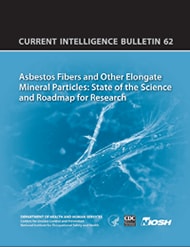
NIOSH Issues "Roadmap" Document Suggesting Asbestos Research Strategy


The National Institute for Occupational Safety and Health (NIOSH) announces the availability of “Current Intelligence Bulletin: Asbestos Fibers and Other Elongate Mineral Particles: State of the Science and Roadmap for Research.” The document contains NIOSH’s recommended framework for a national research strategy to address current scientific uncertainties about occupational exposure and toxicity issues relating to asbestos fibers and other elongate mineral particles.
The Current Intelligence Bulletin is available online at www.cdc.gov/niosh/docs/2011-159/.
It is well documented that asbestos fibers can cause lung cancer and other types of serious lung disease in workers when inhaled. Since the passage of the Occupational Safety and Health Act in 1970, considerable progress has been made in preventing harmful exposures and protecting workers from risks of illness. However, many scientific uncertainties remain as to the health risks associated with exposure to other elongate mineral particles, including those with mineralogical compositions identical or similar to the asbestos minerals and those that have already been documented to cause asbestos-like disease, as well as the physical and chemical characteristics that determine toxicity.
The new NIOSH document incorporates extensive public comment and scientific peer review, including review by an independent committee of the Institute of Medicine and the National Research Council. The document does not set any new NIOSH policy regarding asbestos fibers and other elongate mineral particles.
“The NIOSH roadmap outlines a strategic framework for designing, conducting, and applying the research that will best serve the need to address persistent scientific uncertainties about occupational health and elongate mineral particles,” said NIOSH Director John Howard, M.D. “We look forward to working with our partners to advance this research, building on today’s state-of-the-art scientific tools and methodologies.”
Priority areas for research, as proposed by the roadmap, include:
  • Developing a broader understanding of the factors that determine the toxicity of asbestos fibers and other elongate mineral particles.
  • Developing information and knowledge on occupational exposures to asbestos fibers and other elongate mineral particles, and related health outcomes.
  • Development of improved sampling and analytical methods for asbestos fibers and other elongate mineral particles.
  • Applying research outcomes to improve public policy.
NIOSH is the federal agency that conducts research and makes recommendations for preventing work-related injury, illness, and death. NIOSH has a longstanding program of research and health surveillance to prevent asbestos-related disease, and its scientific findings and recommendations have contributed significantly to national policies for eliminating or minimizing harmful exposures. Further information is available at www.cdc.gov/niosh/topics/asbestos/.
For over 3 decades the Law Offices of Jon L. Gelman  1.973.696.7900  jon@gelmans.com have been representing injured workers and their families who have suffered asbestos related disease.