Copyright

(c) 2010-2026 Jon L Gelman, All Rights Reserved.

Friday, January 13, 2017

Medicare Advantage Organization Allowed to Sue Law Firm and Lawyer Over Conditional Payments

A Federal Court has ruled that a Medicare Advantage Organization (MAO) is permitted under the law to sue a law firm and a lawyer for the failure to reimburse conditional medical expenses arising out of an accident. 

US District Court Judge, Henry E. Hudson, ruled that the Medicare Secondary Payer statute created a private cause of action to pursue recovery for conditional payments that it made on the beneficiary's behalf for medical expenses resulting from an automobile accident.

"Although not binding precedent, this Court finds persuasive the Third Circuit's determination that a MAO may pursue recovery pursuant to the private right of action in § 1395y(b)(3)(A). Section 1395y(b)(2)(A)'s plain language establishes a private right of action to recover double damages where a primary plan fails to pay. Absent from the plain language of the statute is any restriction upon who may utilize that private right of action."

Humana Insurance Co. v Paris Blank LLP, 197 F. Supp. 3d 676 (E.D. Virginia 2016)

Thursday, January 5, 2017

NJ Braces For Winter Weather --- Snow

Workers traveling the NJ highways tonight and tomorrow need to stay informed of the weather service announcements closely as an urgent Winter Weather Message has been issued for an anticipated winter storm.

URGENT - WINTER WEATHER MESSAGE 
NATIONAL WEATHER SERVICE MOUNT HOLLY NJ 
355 PM EST THU JAN 5 2017 
 ...LIGHT SNOW TO AFFECT THE AREA TONIGHT...FOLLOWED BY A POTENTIAL FOR A MORE SIGNIFICANT WINTER STORM PARTICULARLY NEAR THE COAST IN SOUTHERN PORTIONS OF DELAWARE AND NEW JERSEY LATE FRIDAY NIGHT INTO SATURDAY..."

OSHA has made the following suggestions to employers and employees to prepare for winter weather hazards:
Winter Driving
Although employers cannot control roadway conditions, they can promote safe driving behavior by ensuring workers: recognize the hazards of winter weather driving, for example, driving on snow/ice covered roads; are properly trained for driving in winter weather conditions; and are licensed (as applicable) for the vehicles they operate. For information about driving safely during the winter, visit OSHA's Safe Winter Driving page.
Employers should set and enforce driver safety policies. Employers should also implement an effective maintenance program for all vehicles and mechanized equipment that workers are required to operate. Crashes can be avoided. Learn more at: Motor Vehicle Safety (OSHA Safety and Health Topic’s Page).
Employers should ensure properly trained workers' inspect the following vehicle systems to determine if they are working properly:
  • Brakes: Brakes should provide even and balanced braking. Also check that brake fluid is at the proper level.
  • Cooling System: Ensure a proper mixture of 50/50 antifreeze and water in the cooling system at the proper level.
  • Electrical System: Check the ignition system and make sure that the battery is fully charged and that the connections are clean. Check that the alternator belt is in good condition with proper tension.
  • Engine: Inspect all engine systems.
  • Exhaust System: Check exhaust for leaks and that all clamps and hangers are snug.
  • Tires: Check for proper tread depth and no signs of damage or uneven wear. Check for proper tire inflation.
  • Oil: Check that oil is at proper level.
  • Visibility Systems: Inspect all exterior lights, defrosters (windshield and rear window), and wipers. Install winter windshield wipers.
An emergency kit with the following items is recommended in vehicles:
  • Cellphone or two-way radio
  • Windshield ice scraper
  • Snow brush
  • Flashlight with extra batteries
  • Shovel
  • Tow chain
  • Traction aids (bag of sand or cat litter)
  • Emergency flares
  • Jumper cables
  • Snacks
  • Water
  • Road maps
  • Blankets, change of clothes
Work Zone Traffic Safety
Workers being struck by vehicles or mobile equipment lead to many work zone fatalities or injuries annually. Drivers may skid, or lose control of their vehicles more easily when driving on snow and/or ice covered roads. It is therefore, important to properly set up work zones with the traffic controls identified by signs, cones, barrels, and barriers, to protect workers. Workers exposed to vehicular traffic should wear the appropriate high visibility vest at all times, so that they can be visible to motorists (OSHA Letter of Interpretation, dated, August 5, 2009).
Learn more at: Work Zone Traffic Safety* (OSHA QuickCard™) and Highway Work Zones and Signs, Signals, and Barricades (OSHA Safety and Health Topics Page).
Stranded in a Vehicle
If you are stranded in a vehicle, stay in the vehicle. Call for emergency assistance if needed, response time may be slow in severe winter weather conditions. Notify your supervisor of your situation. Do not leave the vehicle to search for assistance unless help is visible within 100 yards. You may become disoriented and get lost in blowing and drifting snow. Display a trouble sign by hanging a brightly colored cloth on the vehicle’s radio antenna and raising the hood. Turn on the vehicle's engine for about 10 minutes each hour and run the heat to keep warm. Also, turn on the vehicle's dome light when the vehicle is running as an additional signal. Beware of carbon monoxide poisoning. Keep the exhaust pipe clear of snow, and open a downwind window slightly for ventilation.
Watch for signs of frostbite and hypothermia. Do minor exercises to maintain good blood circulation in your body. Clap hands and move arms and legs occasionally. Try not to stay in one position for too long. Stay awake, you will be less vulnerable to cold-related health problems. Use blankets, newspapers, maps, and even the removable car mats for added insulation. Avoid overexertion since cold weather puts an added strain on the heart. Unaccustomed exercise such as shoveling snow or pushing a vehicle can bring on a heart attack or make other medical conditions worse.  
Shoveling Snow
Shoveling snow can be a strenuous activity, particularly because cold weather can be tasking on the body. There is a potential for exhaustion, dehydration, back injuries, or heart attacks. During snow removal in addition to following the tips for avoiding cold stress, such as taking frequent breaks in warm areas, there are other precautions workers can take to avoid injuries. Workers should warm-up before the activity, scoop small amounts of snow at a time and where possible, push the snow instead of lifting it. The use of proper lifting technique is necessary to avoid back and other injuries when shoveling snow: keep the back straight, lift with the legs and do not turn or twist the body.
Using Powered Equipment like Snow Blowers
It is important to make sure that powered equipment, such as snow blowers are properly grounded to protect workers from electric shocks or electrocutions. When performing maintenance or cleaning, make sure the equipment is properly guarded and is disconnected from power sources.
Snow blowers commonly cause lacerations or amputations when operators attempt to clear jams with the equipment turned on. Never attempt to clear a jam by hand. First, turn the snow blower off and wait for all moving parts to stop, and then use a long stick to clear wet snow or debris from the machine. Keep your hands and feet away from moving parts. Refuel a snow blower prior to starting the machine; do not add fuel when the equipment is running or when the engine is hot.
Clearing Snow from Roofs and Working at Heights
Employers must evaluate snow removal tasks for hazards and plan how to do the work safely. Workers should be aware of the potential for unexpected hazards due to the weather conditions, for example, layers of ice can form as the environmental temperature drops, making surfaces even more slippery. A surface that is weighed down by snow must be inspected by a competent person to determine if it is structurally safe for workers to access it, because it may be at risk of collapsing. Snow covered rooftops can hide hazards such as skylights that workers can fall through. Electrical hazards may also exist from overhead power lines or snow removal equipment.
Employers can protect workers from these hazardous work conditions, for example, by using snow removal methods that do not involve workers going on roofs, when and where possible. Employers should determine the right type of equipment (ladders, aerial lifts, etc.) and personal protective equipment (personal fall arrest systems, non-slip safety boots, etc.) for the job and ensure that workers are trained on how to properly use them. For more information, see OSHA's Hazard Alert: Falls and Other Hazards to Workers Removing Snow from Rooftops and Other Elevated Surfaces*.
Preventing Slips on Snow and Ice
To prevent slips, trips, and falls, employers should clear walking surfaces of snow and ice, and spread deicer, as quickly as possible after a winter storm. In addition, the following precautions will help reduce the likelihood of injuries:
  • Wear proper footwear when walking on snow or ice is unavoidable, because it is especially treacherous. A pair of insulated and water resistant boots with good rubber treads is a must for walking during or after a winter storm. Keeping a pair of rubber over-shoes with good treads which fit over your street shoes is a good idea during the winter months.
  • Take short steps and walk at a slower pace so you can react quickly to a change in traction, when walking on an icy or snow-covered walkway.
Repairing Downed or Damaged Power Lines
Repairing and/or replacing damaged power lines in severe winter weather conditions are especially hazardous. A major hazard is snow, because the moisture can reduce the insulation value of protective equipment, and could cause electrocution. In these conditions de-energized work is safer, but if energized work must be done, qualified workers and supervisors must first do a hazard analysis that includes evaluating the weather conditions and identifying how to safely do the job.
Other potential hazards include:
  • Electrocution by contacting downed energized power lines, or contacting objects, such as broken tree limbs, in contact with downed energized power lines.
  • Fires caused by an energized line or equipment failure.
  • Being struck or crushed by falling tree limbs, collapsing poles, etc.
When working on downed or damaged power lines, electrical utility workers should use safe work practices, appropriate tools and equipment (including personal protective equipment (PPE)). Extra caution should be exercised when working in adverse weather conditions. Learn more at: Contact with Power Lines (OSHA Construction eTool).
Working Near Downed or Damaged power lines
Assume all power lines are energized and stay clear of any downed or damaged power lines. Establish a safe distance from power lines and report any incidents to the responsible authority. Only properly-trained electrical utility workers can handle damaged power lines. Learn more at: Contact with Power Lines (OSHA Construction eTool) and Working Safely Around Downed Electrical Wires* (OSHA Fact Sheet).
Removing Downed Trees
Clearing downed trees is a critical job during severe winter weather conditions. It is usually urgent to remove downed trees that block public roads and damage power lines. Emergency crews are often tasked with clearing downed trees.
Potential hazards include:
  • Electrocution by contacting downed energized power lines or contacting broken tree limbs in contact with downed energized power lines. Learn more at: Line Clearance Tree Trimming Operations (OSHA Electric Power eTool).
  • Falls from heights.
  • Being injured by equipment such as chain saws (Chain Saw Safety* (OSHA QuickCard™)) and chippers (Chipper Machine Safety* (OSHA QuickCard™)).
Workers should wear PPE that protect them from the hazards of the tree removal tasks. Workers using chainsaws and chippers to clear downed trees should use: gloves, chaps, foot protection, eye protection, fall protection, hearing protection and head protection.
Only powered equipment designed for outdoor and wet conditions should be used. Use all equipment and tools (saws, chippers, etc.) properly and for the purpose that they are designed for. Ensure that equipment is always maintained in serviceable condition and inspected before use by a knowledgeable person that can identify any problems with the equipment. Do not use equipment that is not functioning properly. Equipment must have proper guarding (as applicable); safe guards must never be bypassed.  All controls and safety features must function as designed by the manufacturer. Learn more at: Tree Trimming and Removal* (OSHA QuickCard™).


Wednesday, January 4, 2017

OSHA cites Jersey City Medical Center (St Barnabas) $174,393

OSHA investigation of Jersey City Medical Center worker's fatal fall finds facility exposed employees to dangerous electrical hazardsCitations issued: On Dec. 21, 2016, the U.S. Department of Labor's Occupational Safety and Health Administration issued citations to the medical center for one willful and four serious safety violations.

OSHA began its inspection on June 28, 2016, after the employer notified the Agency that a worker needed to be hospitalized after falling from a ladder as he changed an overhead ballast in a light fixture. The worker later died from his injuries on July 17, 2016.

The agency cited the willful violation because the facility required employees to change ballasts without the proper lockout/tagout training on practices and procedures necessary to disable machinery or equipment to prevent hazardous energy release, as well as other safety hazards and related unsafe practices.

The serious violations involved the medical center's failure to ensure de-energized circuits were locked out, maintain an electrical lockout/tagout program, ensure that only qualified persons worked on live circuits, provide personal protective equipment, and ensure workers did not work on live parts.

"This worker's tragic death was preventable. Jersey City Medical Center did not have basic lockout/tagout safeguards in place to prevent exposure to electrical hazards, and failed to train its maintenance workers on these safeguards. As a result, the worker sustained an electrical shock while changing the ballast, fell approximately 6 feet off a ladder and died from his injuries," said Kris Hoffman, director of OSHA's Parsippany Area Office.

Proposed penalties: $174,593

The citation can be viewed at: https://www.osha.gov/ooc/citations/JerseyCityMedicalCenter_1158589.pdf

The employer has 15 business days from receipt of its citations and proposed penalties to comply, request a conference with OSHA's area director or contest the findings before the independent Occupational Safety and Health Review Commission.

To ask questions; obtain compliance assistance; file a complaint; or report amputations, eye loss, workplace hospitalizations, fatalities or situations posing imminent danger to workers, the public should call OSHA's toll-free hotline at 800-321-OSHA (6742) or the agency's Parsippany Area Office at 973-263-1003.

Saturday, December 31, 2016

NJ Workers' Compensation Rates Increase in 2017 - Max $896.00

The NJ Workers' Compensation Rating and Inspection Bureau (NJCRIB) reported today 2017 rates effective January 1, 2017.

The Commissioner of Banking and Insurance (“Commissioner”) has approved a 3.0% decrease in rates and rating values applicable to New Jersey workers compensation and employers liability insurance effective January 1, 2017 on a new and renewal basis. The rating components of the decrease are summarized below.

Thursday, December 29, 2016

OSHA cites NJ roofing contractor for exposing workers to falls, other hazards $112K


Hackensack Roofing Co. Inc., 83 First St., Hackensack, New Jersey was cited for OSHA
violations.Citations issued: On Dec. 16, the U.S. Department of Labor's Occupational Safety and Health Administration issued citations to the company for one serious and three repeat safety violations.

Investigation findings: As part of the agency's Local Emphasis Program focused on falls, OSHA began the East Rutherford inspection on Oct. 18, after inspectors observed employees working on a roof without fall protection. The Wallington inspection was opened in response to a complaint alleging fall hazards on the site.

Inspectors issued citations for repeat violations due to a lack of fall and eye protection. The company was previously cited for similar violations in 2014.

A serious citation was issued because workers were throwing roof shingles from the roof without the use of a container to catch the materials.

Quote: "The fact that Hackensack Roofing allowed employees to work without basic fall protection on two separate sites is problematic and indicates a breakdown in their safety and health program," said Lisa Levy, director of OSHA's Hasbrouck Heights Area Office. "Falls in construction continue to be the leading cause of workplace fatalities. By repeatedly failing to comply with OSHA regulations, this employer continues to put its workers at risk, leaving them vulnerable to falls that could permanently injure or kill them."

Proposed penalties: $112,487

The citation can be viewed at:

The employer has 15 business days from receipt of its citations and proposed penalties to comply, request a conference with OSHA's area director or contest the findings before the independent Occupational Safety and Health Review Commission.

Under the Occupational Safety and Health Act of 1970, employers are responsible for providing safe and healthful workplaces for their employees. OSHA's role is to ensure these conditions for America's working men and women by setting and enforcing standards, and providing training, education and assistance. For more information, visit http://www.osha.gov.

Related:
Feb 26, 2016 ... OSHA finds Middlesex contractor exposed workers to fall hazards after investigation of roofer's death at Parsippany jobsite S&S Roofing Inc., ...
workers-compensation.blogspot.com
Aug 17, 2016 ... Investigation findings: OSHA initiated an inspection on April 25, 2016, after a compliance officer observed Furia Roofing employees working on ...
workers-compensation.blogspot.com
Mar 8, 2011 ... Feb 9 2011, DISTRIBUTED for Conference of February 25, 2011. Feb 16 2011, Reply of petitioner Vaughan Roofing & Sheet Metal, LLC filed.
workers-compensation.blogspot.com
May 20, 2013 ... For example, a roofing company may have 30 roofers doing the actual work but these workers are classified as "independent contractors" ...
workers-compensation.blogspot.com


Wednesday, December 21, 2016

Zika: The Next Compensable Infectious Disease - Benefit Challenges Begin


Workers' Compensation insures for the consequences of infectious diseases arising out of and in the course of employment. Is the system ready for a potential onslaught of Zika claims?

The line in the sand has been drawn in the State of Florida, where an infected Miami Beach police officer has been denied benefits. The union has actively supporting the municipal employee in an effort to rule the claim compensable.

The NJ Supreme Court in establishing compensability in an occupational disease cited Justice Learned Hand, “Few adults are not diseased … an infection mastered, though latent, is no longer a disease, industrially speaking, until the individual's resistance is again so far lowered that he succumbs.” Bober v. Independent Plating Corp., 28 N.J. 160, 145 A.2d 463 (1958).

Lung-sparing surgery for patients with advanced mesothelioma results in prolonged survival, new study shows

Patients with advanced malignant pleural mesothelioma (MPM) treated with a combination of surgery to remove the cancer but save their lung, plus photodynamic therapy and chemotherapy, had a median survival of nearly three years, with a subset of patients living longer than seven years, according to new research published in the Annals of Thoracic Surgery.

OSHA Issues Final Record Keeping Rule

The Occupational Safety and Health Administration on Monday will issue a final rule that clarifies an employer's continuing obligation to make and maintain an accurate record of each recordable injury and illness. The final rule becomes effective Jan. 18, 2017.

Saturday, December 17, 2016

OSHA Cites Paterson NJ Laundry for Violations - $91K In Fines

OSHA cites New Jersey commercial laundry for workplace safety hazards
Paterson's Star Laundry fined $91K for 12 federal violations
Employer name:
Star Laundry Inc.
421 and 436 East 16th St.
Paterson, New Jersey
Citations issued: On Dec. 7, 2016, the U.S. Department of Labor's Occupational Safety and Health Administration issued citations against Brite Services Inc., doing business as Star Laundry Inc., for seven repeat, two serious and three other-than-serious violations.

NJ Governor Nominates Judges of Compensation and Promotes Bill to Increase Salaries

NJ Governor Chris Christie filed the following nominations with the State Senate. The Governor’s nominations are subject to the advice and consent of the State Senate. The Governor also filed the following direct appointments with the Secretary of State's Office.

Friday, December 16, 2016

FATAL OCCUPATIONAL INJURIES INCREASED in 2015

A total of 4,836 fatal work injuries were recorded in the United States in 2015, a slight increase from the 4,821 fatal injuries reported in 2014, the U.S. Bureau of Labor Statistics reported today.

This release marks the first time that the Census of Fatal Occupational Injuries (CFOI) has published a single, annual release with no revisions and will be the only release for 2015 CFOI data. A similar schedule will be followed in future years. 

Preliminary releases, which appeared in August or September in past years, will no longer be produced. 

Key findings of the 2015 Census of Fatal Occupational Injuries: 
- Annual total of 4,836 fatal workplace injuries in 2015 was the highest since 5,214 fatal injuries in 2008. 
- The overall rate of fatal work injury for workers in 2015, at 3.38 per 100,000 full-time equivalent (FTE) workers, was lower than the 2014 rate of 3.43. 
- Hispanic or Latino workers incurred 903 fatal injuries in 2015—the most since 937 fatalities in 2007. 
- Workers age 65 years and older incurred 650 fatal injuries, the second-largest number for the group since the national census began in 1992, but decreased from the 2014 figure of 684. 
- Roadway incident fatalities were up 9 percent from 2014 totals, accounting for over one-quarter of the fatal occupational injuries in 2015. 
- Workplace suicides decreased 18 percent in 2015; homicides were up 2 percent from 2014 totals. - Heavy and tractor-trailer truck drivers recorded 745 fatal injuries, the most of any occupation. 
- The 937 fatal work injuries in the private construction industry in 2015 represented the highest total since 975 cases in 2008. 
- Fatal injuries in the private oil and gas extraction industries were 38 percent lower in 2015 than 2014. 
- Seventeen percent of decedents were contracted by and performing work for another business or government entity in 2015 rather than for their direct employer at the time of the incident.

Breast cancer all-clear for night work was based on ‘bad science’

The following article is authored by Rory O'Neill Editor, Hazards magazine hazards.org

An Oxford University study that concluded the classification of night work as a cause of breast cancer in women is no longer justified was based on ‘bad science’, top researchers have warned.

The large scale ‘meta-analysis’, published online on 6 October 2016 in the Journal of the National Cancer Institute (JNCI), concluded “night shift work, including long-term night shift work, has little or no effect on breast cancer incidence.” It added the International Agency for Research on Cancer’s (IARC) ranking of night work as a ‘probable’ cause of breast cancer in women “is no longer justified.”

But three of the most respected epidemiologists on night work and breast cancer have now said they “fully disagree” with this conclusion, noting a succession of methodological flaws in the research “invalidate” its conclusions.

Harvard Medical School epidemiologist Eva Schernhammer told Hazards magazine that given the Oxford study’s “bad science”, it was “not surprising” it found no effect. In a detailed criticism of the paper, published online on 15 December, she said the JNCI paper’s many shortcomings “preclude it from making the conclusion that there is no association between night work and breast cancer risk.”

Johnni Hansen, a researcher with the Danish Cancer Society, was equally unimpressed. “They base their conclusion on a poor study, but even worse is that their conclusion may hinder preventive initiatives for night workers,” he said.

Richard Stevens, of the University of Connecticut medical school, who has written influential papers on the topic with both Schernhammer and Hansen, was blunt. “Why was the paper written in the first place?” he asked.

The main cohorts in the Oxford study, which was financed by the Medical Research Council, the Health and Safety Executive (HSE) and Cancer Research UK (CRUK), were “worryingly old”, with many over retirement age, and the follow up was “unusually short”, Hansen said.

The risk of women developing breast cancer appears to wane in the years after night working ends, so studying retired workers without recent exposures misses the point and the cancers, said Schernhammer. She said the higher risk is seen in women with long exposures – at least 15 years – early in their careers. Hansen added the authors behind the JNCI study should have recognised the possibility of ‘truncation bias’ in their analysis.

Night work was sometimes defined so loosely in the study participants, a single night shift might have seen a worker added to the ‘exposed’ group despite facing minimal exposure and risk. The JNCI paper also discounted case-control studies and those exploring the mechanism behind a possible association.

According to Stevens, the JNCI meta-analysis “excluded case-control studies, of which there are many, for no good reason.”

He added that studies considering the biological mechanisms give a valuable insight into why and where you might look for an association. Understanding the process, something integral to his own research, was important, he indicated.

Stevens, Schernhammer and Hansen, together with Scott Davis, a professor of epidemiology in the University of Washington’s School of Public Health, are the stand-out epidemiologists on night work and breast cancer.

Not one of them was asked to review the paper. “We are the four epidemiologists who have been working for by far the longest on the epidemiology of night work and breast cancer,” said Stevens, who is dismayed the Oxford study, led by molecular epidemiologist Ruth Travis, found its way in to a high visibility journal like JNCI. “Any of the four of us would have quickly noticed the severe flaws of the Travis paper and pointed them out to the editors of JNCI.”

He said it was “absurd” that the night work association with breast cancer was being dismissed on the back of a “troubling” paper by “a distinguished group of experienced researchers who should have known better.”

The JNCI study’s lead author, Ruth Travis, declined an invitation from Hazards to address the detailed criticisms of the study.

Related:
Feb 24, 2016 ... Fire fighters in Canada are supporting legislation that would establish a legal presumption that breast cancer is an occupationally related .
workers-compensation.blogspot.com
Mar 18, 2011 ... Fire fighters in Canada are supporting legislation that would establish a legal presumption that breast cancer is an occupationally related ...
workers-compensation.blogspot.com
Jan 12, 2011 ... The injured worker was employed for the City of Las Vegas in 1992 and was diagnosed with breast cancer in 1997. She underwent treatment ...
workers-compensation.blogspot.com
May 29, 2010 ... "Odds ratios (ORs) were increased for the usual risk factors for breast cancer and, adjusting for these, risks increased with occupational ...
workers-compensation.blogspot.com

Thursday, December 8, 2016

Asbestos and Mold in Schools: Paterson NJ Safety Officer Claims Mishandling

The presence of asbestos and mold in schools and the potential exposure of students and employees has been a major health concern for decades. A Paterson NJ health and safety office now claims that the Paterson NJ school system improperly mishandled the removal of these hazards in violation of Federal regulations.

Monday, December 5, 2016

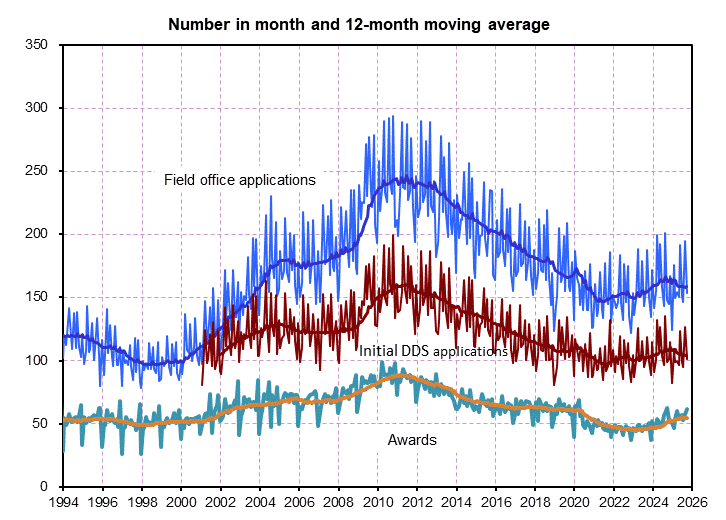
Social Security Disability Trending Downward


click on graph to see underlying data

Both Social Security Disability Applications and Social Security Disability Awards are now trending downward. Additionally, terminations from Social Security Disability Awards are now trending upward (8.62%) according to November 2016 statistics released by the Social Security Administration.

Friday, December 2, 2016

Insurance Rating Company Increases Estimate for Net Ultimate U.S. Asbestos Losses to $100 Billion

A.M. Best has increased its estimate for losses that U.S. property/casualty insurers can ultimately expect from third-party liability asbestos claims by approximately 18% to $100 billion. The $15 billion increase to the net ultimate asbestos loss estimate comes as insurers are incurring approximately $2.1 billion in new losses each year while paying out nearly $2.5 billion on existing claims. The updated figures are contained in a new Best’s Special Report, titled “A.M. Best Increases Estimate for Net Ultimate Asbestos Losses to $100 Billion.” The report also states that A.M. Best is not making any change to its $42 billion estimate on net ultimate environmental losses; therefore, A.M. Best’s view of ultimate industry losses for asbestos and environmental (A&E) is now $142 billion.

Victimizing Undocumented Injured Workers

NY TIMES QUOTATION OF THE DAY

"I was shot by terrorists, and it feels like the people I worked with are 
victimizing me all over again."

VALERIE KALLIS-WEBER, 59, a victim of a mass shooting in San Bernardino, Calif., last year, on medical treatments that have been denied or delayed under the workers' compensation system that covers her care.

Click here to read the entire article, "‘Victimizing Me All Over Again’: San Bernardino Victims Fight for Treatment" NY Times 11.30.2016

In New Jersey, "...without benefit of a legislative directive to the contrary, undocumented aliens are entitled to workers' compensation benefits. While undocumented aliens are not performing any illegal work, the court has reasoned that the New Jersey Workers' Compensation Act is not subject to any prohibitions similar to the unemployment law of each state which must comply with Federal standards; granting unemployment benefits to undocumented aliens would violate these standards."
Montoya v. Gateway Ins. Co., 168 N.J.Super. 100, 401 A.2d 1102 (App.Div.1979), certif. den. 81 N.J. 402, 408 A.2d 796 (1979). "The need for medical treatment is not a benefit derived from immigration status but rather from employment status. Mendoza v. Monmouth Recycling Corporation, 288 N.J.Super. 240, 672 A.2d 221 (App.Div.1996)." Gelman, Jon L., 38 N.J. Prac., Workers' Compensation Law § 11.8 (3d ed.).

Jon L. Gelman of Wayne NJ is the author of NJ Workers’ Compensation Law (West-Thomson-Reuters) and co-author of the national treatise, Modern Workers’ Compensation Law (West-Thomson-Reuters). 

For over 4 decades the
Law Offices of Jon L Gelman  1.973.696.7900  jon@gelmans.com  has been representing injured workers and their families who have suffered occupational accidents and illnesses.

Thursday, December 1, 2016

New Jersey Workers Are at High Risk for Asthma

The US Centers for Disease Control reported today that workers in various industries and occupations are at risk for work-related asthma. CDC analyzed data from the 2013 Behavioral Risk Factor Surveillance System Asthma Call-back Survey and determined that in 21 states among an estimated 74 million adults employed at some time in the 12 months preceding the interview, 7.7% had current asthma.

Cybersecurity is an imminent and costly threat to lawyers and their clients

Cybersecurity is a critical issue in handling the workers’ compensation claims process. Regulatory authorities and clients are mounting an increased concern that the legal profession must employ adequate measures to protect data from cyber attacks. The fragmented century old social insurance system is complex and expensive to operate and is now confronted with security measures that are more time consuming, cumbersome and expense to implement.

The progress of technology and the Internet of Things (IoT) is advancing logarithmically. The participants in the present workers’ compensation system need to be aware of the seriousness of cyber vulnerabilities as well their responsibilities to maintain the confidentiality of client’s interests and protect the legal strategies of the case.

Sunday, November 13, 2016

Weighing Genetic Factors in Cardiovascular Cases

Cardiovascular cases involving occupational risks are complicated causation proof issues in workers' compensation cases. The association of the work exposure and/or effort is usually a challenging proof battle where literature and medical experts are caught in a contentious duel.

Sunday, November 6, 2016

Daylight Saving Time “fall back” doesn’t equal sleep gain

Today's post is shared from harvard.edu and it highlights the need for caution in the workplace following a shift in the time schedule so that bodies can adjust and accidents are avoided because of the exhaustion caused by the semi-yearly statutory time shift.

Daylight Saving Time officially ends at 2:00 am this Sunday. In theory, “falling back” means an extra hour of sleep this weekend.

Saturday, November 5, 2016

Donald Trump And The Art Of Asbestos

Today's post is shared from huffingtonpost.com


According to the Republican presidential nominee, the anti-asbestos movement is a conspiracy rigged by the mob. Yes, the mob.

For nearly five months, people around the country have been campaigning for or against Donald Trump. As one of the most polarizing presidential candidates of the century, we’ve watched debate after debate, commercial after commercial and repeatedly said, “Wow.”

There’s no doubt certain aspects of Trump’s beliefs are startling, overwhelming and offensive. But what the media shows is just one side.

Among all of Trump’s absurd ideologies, such as extreme vetting of immigrants and building a giant wall to keep them out, he also supports the use of asbestos. As a known carcinogen responsible for an estimated 10,000 American deaths a year, it’s surprising that a presidential candidate would uphold an industry that promoted its use.

But then again, is it?

Click here to read the entire article.


Tuesday, November 1, 2016

SCOTUS FL-Stahl : Petition Denied

The United States Supreme Court DENIED the petition in the matter of Stahl v Hialeah raising constitutional issues in the present workers' compensation system in Florida. The Florida program mirrors trending aspects of other state programs that have also been questioned on constitutional grounds.

Thursday, October 27, 2016

CMS Town Hall Conference - Coordination of Benefits & Recovery for Liability Insurance (including Self-Insurance), NoFault Insurance and Workers’ Compensation

Town Hall Teleconference– November 17, 2016 
Coordination of Benefits & Recovery for Liability Insurance (including Self-Insurance), NoFault Insurance and Workers’ Compensation

On November 17, 2016, CMS will host a teleconference to connect with stakeholders and provide status updates. CMS expects to discuss the following topics:
  • Ongoing Responsibility for Medicals (ORM) recovery, 
  • Final Conditional Payment (CP) process reminders, 
  • Medicare Secondary Payer Recovery Portal (MSPRP) improvements.

Employer-reported injury and illness rate declined to 3.0 cases per 100 workers in 2015

Employer-Reported Workplace Injuries and Illnesses – 2015 There were approximately 2.9 million nonfatal workplace injuries and illnesses reported by private industry employers in 2015, which occurred at a rate of 3.0 cases per 100 equivalent full-time workers, the U.S. Bureau of Labor Statistics reported today. (See tables 1 and 2.) The 2015 rate continues a pattern of declines that, apart from 2012, occurred annually for the last 13 years.

Friday, October 7, 2016

US Department of Labor Urges Major Changes in the Nation's Workers' Compensation System

As The Path to Federalization of the US workers' compensation system broadens, the US Department of Labor has published a report urging expansion of the Federal role in reforming the entire patchwork of state systems. As the Presidential Election Cycle moves ahead, the ultimate outcome will impact the the nation's struggling workers' compensation scheme. Based on historical statements both "Hillarycare" or "Trump Medical," (lead by his advisor, Former Speaker Newt Gingrich,  will focus on this issue. See  my prior blog posts below.

Wednesday, October 5, 2016

Asbestos: Kaiser Gypsum files for Bankruptcy Protection

Former asbestos manufacturers, Kaiser Gypsum Company, Inc. and Hanson Permanente Cement, Inc., have filed for bankruptcy protection. Kaiser Gypsum Company is a former manufacturer of building products, including drywall, joint compounds and cements. US Bankruptcy Court Western District of North Carolina, Case 16-31602 Filed 09/30/16
 .


Friday, September 30, 2016

CMS 2016 Recovery Thresholds for Workers’ Compensation Settlements, Judgments, Awards or Other Payments

2016 Recovery Thresholds for Certain Liability Insurance, No-Fault Insurance, and Workers’ Compensation Settlements, Judgments, Awards or Other Payments 

As required by section 1862(b) of the Social Security Act, the Centers for Medicare and Medicaid Services (CMS) has reviewed the costs related to collecting Medicare’s conditional payments and compared this to recovery amounts.

Tuesday, September 20, 2016

Hot Topics in Workers' Compensation Law Seminar 2016 - Available from NJICLE


Hot Topics in Workers' Compensation Law Seminar

Wed. Sept. 14, 2016  Ÿ Law Center, New Brunswick 5-8:35p

This year’s program will focus on professional and ethical responsibilities concerning disclosure and protection of client confidential information throughout the course of discovery and litigation, with specific emphasis on the pretrial conference.

The seminar +reviews the Professional Code of Responsibility and it’s integration with the Rules and procedures of The Division of Workers' Compensation, and The Health Insurance Portability and Accountability Act (HIPAA). 

Workers' Compensation "Demise of the Grand Bargain" Seminar Papers Online

The 2016 workers' compensation "Grand Bargain" seminar sponsored by the Pound Civil Justice Institute has posted the draft seminar papers online in PDF format and are available for download. The 2016 Academic Symposium is entitled, "The Demise of the Grand Bargain: Compensation for Injured Workers in the 21st Century."

Saturday, September 17, 2016

Senator Boxer Calls for Expedited TSCA Asbestos Evaluation

Senator Barbara Boxer (D-CA), Ranking Member of the Environment and Public Works Committee, sent a letter today to Gina McCarthy, the Administrator of the Environmental Protection Agency (EPA), urging the Agency to move quickly to act on all forms of asbestos under the new Toxic Substances Control Act (TSCA).  EPA is required to select 10 chemicals that will be evaluated and then regulated if they are shown to present unreasonable risks. The full text of the letter is below.

August 26, 2016

Dear Administrator McCarthy:

I am sure you share my strong interest in maximizing the success of the new Toxic Substances Control Act (TSCA) and are working to identify positive early actions that demonstrate the Agency’s commitment to bold and effective implementation.

The first important decision EPA must make under the law is to select the initial 10 chemicals that will be evaluated and then regulated if they are shown to present unreasonable risks.  This decision must be made by mid-December of this year.  The chemicals selected will drive EPA’s agenda for the next several years. To build confidence in the agency’s ability to deliver meaningful results for our children and families, EPA must consider all forms of asbestos in this initial list of chemicals it acts on.

In 1989, EPA issued a comprehensive rule under TSCA banning and phasing out the major uses of asbestos.  Despite the extensive record compiled by the agency, the Fifth Circuit Court of Appeals overturned the rule.  The court’s decision paralyzed EPA’s existing chemicals program for the next two decades.  Asbestos became a poster child for the inadequacy of the law and a major impetus for TSCA reform.  As President Obama said when he signed the TSCA reform bill into law, “the system was so complex, it was so burdensome that our country hasn’t even been able to uphold a ban on asbestos….”

During the development of TSCA reform legislation, numerous members of Congress cited asbestos as an example of why the law must be revamped and emphasized that the new TSCA legislation would remove the roadblocks that stymied EPA’s first attempt to regulate asbestos.  Congress was also clear in the recently-passed legislation that regulating asbestos should be one of EPA’s top priorities -- the bill directs EPA to give priority to chemicals like asbestos that are known human carcinogens and have high acute and chronic toxicity.

Now that the impediments in the original TSCA law are gone, completing the job started by EPA in 1989 would send a strong signal that the new law can be effective in addressing the most dangerous chemicals in commerce.

The evidence regarding the dangers of asbestos is overwhelming. As EPA found in its 1989 rulemaking, “[it] is well-recognized that asbestos is a human carcinogen and is one of the most hazardous substances to which humans are exposed in both occupational and non-occupational settings.”  OSHA has similarly said it is “aware of no instance in which exposure to a toxic substance has more clearly demonstrated detrimental health effects on humans than has asbestos exposure.” OSHA has also emphasized that “[t]here is no "safe" level of asbestos exposure for any type of asbestos fiber [and] [a]sbestos exposures as short in duration as a few days have caused mesothelioma in humans.”

Asbestos continues to exact a high toll in disease and death on Americans.  According to the Asbestos Disease Awareness Organization (ADAO), the estimated annual number of asbestos-related disease deaths is nearly 15,000 in the U.S., including nearly 11,000 deaths from lung cancer.

Though asbestos production has ceased in the U.S. and its use has generally declined, significant imports for a range of applications persist and exposures continue to occur with alarming regularity.  According to a detailed study by the Environmental Working Group, from 2006 to 2014, 23 ports on the Gulf of Mexico, West Coast and Eastern Seaboard received more than 8.2 million pounds of raw asbestos, as well as hundreds of shipments of hazardous asbestos waste and products made with asbestos.

Similarly, in its annual report on U.S. mineral importation and use, the United States Geological Service states that in 2015:

“Asbestos consumption in the United States was estimated to be 400 tons, based on asbestos imports through July 2014.  The chloralkali industry accounted for an estimated 88% of U.S. consumption.  The remainder was used in coatings and compounds, plastics, roofing products, and unknown applications.”

The World Health Organization (2006) has called for an end to the use of all types of asbestos as the most effective way to eliminate asbestos-related diseases.  From the European Union to the Persian Gulf, from industrial states like Japan to Africa’s developing economies, 56 nations have followed this recommendation and banned asbestos (with limited exceptions), according to the International Ban Asbestos Secretariat.

The combination of well-documented, widespread and serious health effects and ongoing use and exposure provides a strong basis for EPA to act quickly on asbestos.  With the new tools provided by the Frank R. Lautenberg Chemical Safety for the 21st Century Act, the U.S. now has the ability to be a global leader and join the many other nations that have acted to address the harms posed by asbestos.  EPA should seize this opportunity by including asbestos in the first 10 chemicals that it acts on under the new law.

I look forward to learning more about your plans for asbestos.

Sincerely,

Barbara Boxer
Ranking Member
….

Jon L. Gelman of Wayne NJ is the author of NJ Workers’ Compensation Law (West-Thomson-Reuters) and co-author of the national treatise, Modern Workers’ Compensation Law (West-Thomson-Reuters). For over 4 decades the Law Offices of Jon L Gelman  1.973.696.7900  jon@gelmans.com  has been representing injured workers and their families who have suffered occupational accidents and illnesses.

Related Articles:
Nov 7, 2013 ... The Asbestos Disease Awareness Organization (ADAO) was honored to testify on Wednesday, September 18, 2013 at 2:00 PM EDT before the ...
workers-compensation.blogspot.com
Sep 11, 2014 ... It may come as a surprise to those not familiar with the Toxic Substances Control Act (TSCA) – the primary law that regulates chemicals used in ...
workers-compensation.blogspot.com
Jan 29, 2010 ... The Toxic Substances Control Act (TSCA) was enacted in 1974 and has not kept up with the time. Of the 80,000 chemical substances in use it ...
workers-compensation.blogspot.com
Oct 14, 2013 ... TSCA was passed more than 30years ago and is grossly out of date. ADAO has been a stakeholder in discussions with Congressional ...
workers-compensation.blogspot.com


Saturday, September 10, 2016

Tobacco an Occupational Hazard: The Case Against Cigarette Sales by Pharmacies

Smoking continues to be a two edged sword in workers' compensation claims. Smokers in the workplace cause serious and sometimes fatal consequences to both themselves (synergistically with other toxic substances in the workplace) and their co-workers (environmental tobacco smoke exposures). On the flip side is the employer's defense that the smoking habit is not work-related and a pre-existing or co-existing disease caused by habit and not compensable. Nevertheless, public opinion continues to trend against permissible smoking and for the sale of cigarettes. Today's post is shared from cdc.com :

Friday, September 2, 2016

Labor Day: Protecting Our Children


This Labor Day we should reflect upon the integration of Child Labor Laws into the Workers' Compensation Act (WCA) and how the WCA protects our Nation's children from abuse and harm in the workplace.

Wednesday, August 24, 2016

Graduate Students Held to be Employees - NLRB Rules Bargaining Group


Todays' post is shared from the NYTimes.com

Punctuating a string of Obama-era moves to shore up labor rights and expand protections for workers, the National Labor Relations Board ruled Tuesday that students who work as teaching and research assistants at private universities have a federally backed right to unionize.