Copyright

(c) 2010-2026 Jon L Gelman, All Rights Reserved.

Tuesday, November 19, 2013

NLRB Office of the General Counsel Authorizes Complaints against Walmart, Also Finds No Merit to Other Charges

The labor movement was the catalyst for the legislation known as the Workers' Compensation Act following the Triangle Shirtwaist Factory Fire in 1911. Will this repeat itself? Today's post was shared by Steven Greenhouse and comes from www.nlrb.gov

The National Labor Relations Board Office of the General Counsel has investigated charges alleging that Walmart violated the rights of its employees as a result of activities surrounding employee protests.  The Office of the General Counsel found merit in some of the charges and no merit in others.  The Office of the General Counsel has authorized complaints on alleged violations of the National Labor Relations Act.  If the parties cannot reach settlements in these cases, complaints will issue.
The Office of the General Counsel found merit to alleged violations of the National Labor Relations Act against Walmart, such as the following:
  • During two national television news broadcasts and in statements to employees at Walmart stores in California and Texas, Walmart unlawfully threatened employees with reprisal if they engaged in strikes and protests on November 22, 2012.
  • Walmart stores in California, Colorado, Florida, Illinois, Kentucky, Louisiana, Maryland, Massachusetts, Minnesota, North Carolina, Ohio, Texas and Washington unlawfully threatened, disciplined, and/or terminated employees for having engaged in legally protected strikes and protests.
  • Walmart stores in California, Florida, Missouri and Texas unlawfully threatened, surveilled, disciplined, and/or terminated employees in anticipation of or in response to employees’ other protected concerted activities.
The Office of the General Counsel found no merit, absent appeal, to alleged violations...
[Click here to see the rest of this post]

Sunday, November 17, 2013

Addiction Specialists Wary of New Painkiller

Today's post was shared by The New York Times and comes from www.nytimes.com


Addiction experts protested loudly when the Food and Drug Administration approved a powerful new opioid painkiller last month, saying that it would set off a wave of abuse much as OxyContin did when it first appeared.

An F.D.A. panel had earlier voted, 11 to 2, against approval of the drug, Zohydro, in part because unlike current versions of OxyContin, it is not made in a formulation designed to deter abuse.
Now a new issue is being raised about Zohydro. The drug will be manufactured by the same company, Alkermes, that makes a popular medication called Vivitrol, used to treat patients addicted to painkillers or alcohol.

In addition, the company provides financial support to a leading professional group that represents substance abuse experts, the American Society of Addiction Medicine.

For some critics, the company’s multiple roles in the world of painkillers is troubling.
Dr. Gregory L. Jones, an addiction specialist in Louisville, Ky., said he had long been concerned about financial links between the group and the drug industry, adding that the Zohydro situation amplified those potential conflicts.

Dr. Stuart Gitlow, the current president of the American Society of Addiction Medicine, said he had been unaware until now of Alkermes’s involvement with Zohydro. Dr. Gitlow, who is affiliated with Mount Sinai Hospital in New York City, said that the group would seek more information from Alkermes about the situation and then decide what, if anything, to do next.
...
[Click here to see the rest of this post]

Latest firefighter injury report shows that nearly 70,000 injuries occurred in the line of duty in 2012

Today's post was shared by Safe Healthy Workers and comes from fireservice.blog.nfpa.org


FF injuries


NFPA released the latest edition of its U.S. Firefighter Injury Report, highlighting data on injuries sustained by firefighters on duty that was collected from fire departments responding to the 2012 National Fire Experience Survey.
Firefighter injuries have declined over the past three decades, hovering around roughly 100,000 from the early 1980’s through early 1990’s. In 2012, 69,400 firefighter injuries occurred in the line of duty.
  • Of those injuries, 31,490 (45.4 percent) occurred during fireground operations, with the leading causes reported as overexertion, straining (27.5 percent) and falling, slipping, and jumping (23.2 percent).
  • The Northeast also reported a higher number of fireground injuries per 100 fires than other regions of the country.
The major types of injuries received during fireground operations were:
An estimated 13,820 occurred during other on-duty activities, including:
  • 4,190 while responding to or returning from an incident
  • 7,140 during training activities
  • and 12,760 occurring at non-fire emergency incidents
  • Strains, sprains, and muscular pain accounted for 58.5 percent of all non-fireground injuries
In addition to injuries, there were 8,150 exposures to infectious diseases, and 19,200 exposures to hazardous conditions. Read the latest NFPA Journal article on this newly...
[Click here to see the rest of this post]

California sends misinformation to 246,000 new Medicaid enrollees

Today's post was shared by Kaiser Health News and comes from www.sacbee.com


LOS ANGELES -- California has mistakenly sent letters to 246,000 low-income residents, warning they may need to find new doctors next year under the state's newly expanded Medicaid program.
The error frustrated counties and community health centers, which have repeatedly assured patients they can keep their providers when the Affordable Care Act takes effect in 2014. The patients are part of the state's "bridge to reform" program, which was designed to cover uninsured, poor Californians until they became eligible for Medicaid, known as Medi-Cal here.
The program launched in 2011 and more than 600,000 people across the state enrolled in county-based health coverage. Many of them formed relationships with doctors and started seeking regular care. But county and clinic administrators said the incorrect mailing this month has put the counties' efforts in jeopardy.
The mix-up occurred as people are scrambling to figure out how the health law impacts them, and as private policy holders have been receiving letters canceling their insurance plans.
"The whole key to the success is that people seamlessly transition to Medi-Cal," said Sean South, an associate director at the California Primary Care Association. "It is vitally important that we don't confuse them."
But that's what happened when the incorrect letters started going out on Nov. 1, said clinic and county officials.
Patients immediately began calling and showing up with questions about the letter, said Eva Serrano, a...
[Click here to see the rest of this post]

California Considers Its Options On Canceled Insurance Plans

Today's post was shared by Kaiser Health News and comes from www.kaiserhealthnews.org

President Barack Obama’s announcement Thursday that insurers can extend cancelled policies that don’t comply with the health law has prompted conflicting reactions from California insurance regulators and the companies they oversee.

State Insurance Commissioner Dave Jones said he will urge companies to let more than a million consumers keep their plans for an additional year, fulfilling the president’s promise that people didn’t have to switch policies if they didn’t want to. “The federal government told people in California and throughout the United States that they could stay in their plans,” he said at a press conference Thursday.

But the lobbying group for health plans said its members shouldn’t extend policies that don’t meet the requirements of the Affordable Care Act. The state should “stay the course and transition people into more comprehensive policies,” said Patrick Johnston, chief executive officer of the California Association of Health Plans.

The cancellation notices have caused anger and frustration among consumers and led to growing criticism of Obama and the law.

Covered California, the state’s new insurance marketplace, has contracts with health insurers that sell plans through the state-run website, requiring them to cancel policies that they sell on or off the exchange if they don't meet the law's standards. Those policies will be cancelled by the end of 2013 if they don’t cover...

[Click here to see the rest of this post]

A Framework for Reducing Suffering in Health Care

Today's post was shared by NEJM and comes from blogs.hbr.org

Patients suffer — predictably and so obviously that they bring clichés to life. They wince with pain. They shudder with fear. They lose sleep because of anxiety and confusion.  And, as they suffer, they turn to medicine for help. But medicine, increasingly, has not provided them with relief.

A century ago, little could be done to alter the course of disease, but clinicians understood suffering and their role in addressing it. They acknowledged it, they gave drugs to relieve pain, and they took the time to bear witness to what their patients were enduring. But in recent decades, spectacular medical progress has made many diseases treatable, and some even curable. Super-specialized physicians learned how to attack disease in various organs systems, and fatalism has gone out of fashion. Much good has resulted from that aggressiveness and the narrowed focus of clinicians — but patients’ suffering has been pushed from center stage into the background. Suffering still goes on, of course, but it is often overlooked. Perhaps it is overlooked because clinicians are so busy focusing on the technical details of care, or perhaps it is due to their uncertainty about how to respond. In fact, the profession so systematically avoids acknowledging suffering that medical journals don’t even use the term to describe a patient’s experience. Compliance rates may be said to “suffer,” but not patients. (See Thomas H. Lee’s essay...

[Click here to see the rest of this post]

Fix the Handful of U.S. Hospitals Responsible for Out-of-Control Costs

Today's post was shared by NEJM and comes from blogs.hbr.org

In May 2013, the Centers for Medicare and Medicaid Services (CMS) released CMS Medicare Provider Analysis and Review (MEDPAR) inpatient data that contain discharge information for 100% of Medicare fee-for-service beneficiaries using hospital inpatient services. This data shows what more than 3,200 hospitals in the United States were being paid for the most frequently performed 100 inpatient procedures. The variations were extraordinary. Some hospitals in the New York State were being paid 40 times as much as the world-famous Mayo clinic for some treatments.

This kind of variation is understandably a huge cause of concern at a time when health care costs are widely seen to be spinning out of control. Our research suggests, however, that the data contains a silver lining: The bulk of excess costs to CMS and inpatients for all the procedures — a total of $5.3 billion above the average across all hospital by procedure — are highly concentrated in just a small number of hospitals.

When we applied the techniques of Six Sigma analysis to the CMS data, we found that just 32 hospitals — less than 1% of the hospitals in the data — accounted for about 25% of the excess accepted charges. (Hospitals determine what they will charge, or bill, for items and services, and CMS then decides how much of that amount is appropriate and will be paid.) A handful of hospitals in New York State accounted for nearly half of them. Add some hospitals in...

[Click here to see the rest of this post]

Federal jury finds JM Eagle liable for fraud for making, selling faulty pipes

Today's post was shared by Legal Newsline and comes from legalnewsline.com

Gordon
Gordon

LOS ANGELES (Legal Newsline) — A federal jury on Thursday found JM Eagle, one of the largest pipe manufacturers in the world, liable for knowingly manufacturing and selling to government entities substandard plastic pipe that was used in water and sewer systems in various states.

As a result of the decision, JM Eagle, formerly known as J-M Manufacturing, will have to pay out an undetermined amount of damages to Nevada, New Mexico and Virginia and 42 cities and water districts that joined the whistleblower lawsuit, and dozens of other states, cities and water districts that bought JM Eagle pipe but didn’t join the suit.

Gordon

The seven-week civil trial, held in a federal district court in Los Angeles, focused on the company’s efforts to cut costs by using shoddy manufacturing practices to make weaker, albeit more profitable, polyvinyl chloride, or PVC, pipe.

“The jury obviously decided that JM Eagle management cared only about the amount of pipe JM produced, not the quality of that pipe,” said Eric Havian, an attorney with Phillips & Cohen LLP, who argued the case on behalf of the plaintiffs.

“JM Eagle deceived outside inspection agencies and ignored over a decade of failing test results.”

Nevada Attorney General Catherine Cortez Masto, in a statement Thursday, called the situation a “budget nightmare.” The state was one of the largest purchasers of JM Eagle pipe and experienced many failures because of it.

“We...

[Click here to see the rest of this post]

Democrats say minimum-wage battles to help 2014 turnout

Wages determine rates of workers' compensation benefits and ultimately insurance premium costs for employers. Today's post was shared by Steven Greenhouse and comes from www.usatoday.com

Rep. Steve Israel

WASHINGTON — Democrats hope a slew of potential ballot initiatives to increase the minimum wage next year in key states will drive up voter turnout and help their party in midterm congressional elections.

Advocates of wage increases are pushing 2014 ballot measures in several states, including Massachusetts, Idaho, Alaska and South Dakota. Legislative campaigns are planned in other states, including Illinois.

Last week, New Jersey voters overwhelmingly approved an increase in the state's minimum hourly rate by $1 to $8.25. It became the fifth state to hike its minimum wage this year, joining California, New York, Connecticut and Rhode Island.

The flurry of state efforts comes as President Obama and some congressional Democrats push an increase of the $7.25-an-hour federal minimum wage, unchanged since 2009. In February, Obama proposed raising the hourly rate to $9, but it has not gained traction in the GOP-led House. House Speaker John Boehner has said it would result in fewer jobs.

The White House recently endorsed a separate measure by Sen. Tom Harkin, D-Iowa, that would hike the minimum wage to $10.10 an hour by 2015 in several increments.

"The refusal to increase the minimum wage is just one of the ways House Republicans have inflicted harm on the economy and hurt people's pocketbooks," said New York Rep. Steve Israel, who chairs the Democratic Congressional Campaign Committee. "2014 is going to be a referendum on who has helped the middle class and...

[Click here to see the rest of this post]

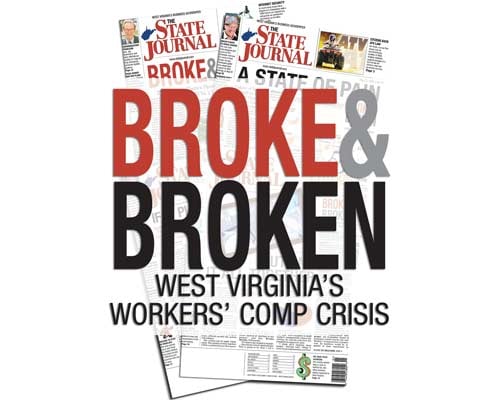
Privatization of workers, compensation continues throughout WV

A program set into motion by U.S. Sen. Joe Manchin, D-W.Va., continues to bring benefits to the state.

On Nov. 1 this year, the workers' compensation loss costs filed by the National Council on Compensation Insurance, or NCCI, over the summer became effective. The numbers reflected a massive overhaul that was nearly a decade in the making.

Then-governor of West Virginia, Manchin signed a law in 2005 fully privatizing the state's Workers' Compensation Commission and transforming it into a private insurance carrier — what became known as BrickStreet Insurance. Since the process completion in 2008, workers' compensation rates declined an average of 30 percent statewide, saving employers annual costs of $150 million in 2010. The number of protested claims is now hovering at about 4,000 a year — a dramatic difference from 2004 when it was about 24,000. In just the first two years, the number of outstanding, unfunded liabilities from the old state-run system dropped from $3.2 billion to $1.9 billion.

The current loss costs now reflect an overall reduction in cost levels for the voluntary workers' compensation insurance market of less than 8.8 percent.

From first filing the classification plan and loss costs on July 1, 2006, the state has enjoyed a continuous decrease in workers' compensation claim costs resulting in a cumulative loss cost level change of less than 46.5 percent.

Back in the early 2000s, West Virginia was experiencing one of the worst-managed...

[Click here to see the rest of this post]

Iowa justices: Illegal immigrant entitled to workers' comp

Today's post is shared from desmoinesregister.com .

The Iowa Supreme Court ruled Friday that a West Liberty woman, an immigrant from Mexico who stayed in the United States after her visa had expired, is entitled to receive workers compensation benefits for a work-related injury.
The case involves Pascuala Jiminez, who came to the United States in 1991 and had a visa for 10 years. She remained after it expired and continued to work. She had lived in West Liberty for 19 years.
Jiminez worked for the Chicago-based temporary employment agency Staff Management and was assigned to the Proctor & Gamble plant in Iowa City where she packaged shampoo and prepared boxes and pallets for shipping.
In September 2007 she was lifting a pallet and became injured with what doctors later identified as two abdominal hernias. She returned to work and was limited in her ability to lift until she had surgery in November 2007. She returned to work again in December. In mid-January 2008, she was fired. Managers told her it was because she did not have legal authorization to work in the U.S.
She sought and won benefits from the Iowa Workers Compensation Commissioner in October 2010. Staff Management appealed to Polk County District Court, which upheld the commissioners decision. The company further appealed to the Iowa Supreme Court.
The company argued that a worker living in the country without legal permission should not receive workers compensation benefits because Iowa does not include undocumented workers in its definition of an employee under...
[Click here to see the rest of this post]

CEO resigns from California state workers’ comp insurer

California's workers' compensation program in beginning to unwind with the resignation of the CEO of the State Fund. Waves of reform have deciminated the system in recent years resulting in the mass delay and denial of claims. Today's post is shared from the scabe.com .

Two top leaders resigned Friday from State Fund, a quasi-governmental agency that sells more than $1billion a year in workers’ compensation insurance, after overseeing a major restructuring of the organization’s bureaucracy.
Tom Rowe resigned as State Fund’s chief executive, and Dan Sevilla resigned as chief financial officer.
Fund spokeswoman Jennifer Vargen wouldn’t offer an explanation for their departures but said the resignations were voluntary.
The agency, formally known as the State Compensation Insurance Fund, isn’t well known but often plays a major role in California’s workers’ comp insurance market. It typically becomes the “insurer of last resort” when private carriers exit the state, as they did when costs soared and the market began imploding a decade ago. During that period, State Fund’s annual premiums zoomed from $1billion to $8billion, Vargen said.
After former Gov. Arnold Schwarzenegger signed a reform bill that reduced workers’ comp costs, the market turmoil subsided and private insurers moved back in. State Fund’s business began shrinking, and “we really had more staff than we needed,” Vargen said. Annual premiums have fallen back to around $1billion.
Since Rowe joined the organization in 2009, staffing has been reduced by 40percent, and some offices have been closed. The fund, based in San Francisco, employs 4,400 workers.
“The executive team has done an...
[Click here to see the rest of this post]

Saturday, November 16, 2013

Class I Recall: Medtronic's Worldwide Voluntary Field Action on Guidewires

Medtronic, Inc. (NYSE: MDT) announced today that the U.S. Food and Drug Administration (FDA) has classified the company's recently initiated voluntary field action related to certain guidewires as a Class I recall.
Based on an internal investigation following a limited number of complaints, including one patient injury, Medtronic began notifying hospitals and distributors worldwide the week of Oct. 21 that some models of its guidewires from recent lots have the potential for the coating on their surface to delaminate and detach. The notification requested that all potentially affected units be quarantined immediately and returned to the company as soon as possible for credit and replacement.
Medtronic has also taken the necessary steps to prevent future shipments of the recalled products and notified regulatory agencies around the world as appropriate.
The FDA defines a Class I recall as a situation in which there is a reasonable probability that use of, or exposure to, a violative product will cause serious adverse health consequences or death.
The guidewires covered by this recall are designed to facilitate percutaneous coronary interventions or the placement of left ventricular leads for cardiac rhythm devices. They include specific lots from the following eight product lines that were manufactured after mid-April 2013:
  • Cougar nitinol workhorse guidewire
  • Cougar steerable guidewire
  • Zinger stainless steel workhorse guidewire
  • Zinger steerable guidewire
  • Thunder extra-support guidewire
  • Thunder steerable guidewire
  • ProVia crossing guidewire
  • Attain Hybrid guide wire
Additional information about the recall, including the lot numbers of affected product, is accessible through the Medtronic website – specifically, http://www.medtronic.com/for-healthcare-professionals/index.htm.
Observations and consequences of the coating issue related to these guidewires should be reported to Medtronic in the United States by calling +1-877-526-7890 on weekdays from 8am to 5pm U.S. Central Time.
Adverse reactions or quality problems experienced with the use of these products may be reported to the FDA:
ABOUT MEDTRONIC
Medtronic, Inc. (www.medtronic.com), headquartered in Minneapolis, is the global leader in medical technology – alleviating pain, restoring health and extending life for millions of people around the world.
Any forward-looking statements are subject to risks and uncertainties such as those described in Medtronic's periodic reports on file with the Securities and Exchange Commission. Actual results may differ materially from anticipated results.
….
Jon L. Gelman of Wayne NJ is the author NJ Workers’ Compensation Law (West-Thompson) and co-author of the national treatise, Modern Workers’ Compensation Law (West-Thompson). For over 4 decades the Law Offices of Jon L Gelman  1.973.696.7900  jon@gelmans.com  have been representing injured workers and their families who have suffered occupational accidents and illnesses.

H.R. 982 is anti-victim, anti-veteran and anti-privacy

Today's post was shared by Take Justice Back and comes from thehill.com

My husband, Alan, was diagnosed with mesothelioma in 2003. We had never heard of the asbestos-caused cancer, mesothelioma, and shortly learned it was incurable.
Alan chose to have a radical surgery which removed a rib and his left lung, stripped off his pericardium from his lungs and surgically replaced his diaphragm – all in hopes of more time with us.
In 2005, the cancer came back on his remaining lung. Alan felt like he was breathing through a pinched straw, every breath, every minute, every day.  When his oxygen levels became critically low, he was tethered to supplemental oxygen. He fought a hard battle with chemotherapy for nearly a year.
In 2006, Alan took his last breaths with our then 13-year-old daughter and me by his side.  Alan paid the ultimate price for his job – his life. Our daughter was only ten years old when we began our arduous family battle to fight mesothelioma and work with Congress to ban asbestos.
Today I fight on behalf of Alan and those who have been exposed, are suffering, or have been silenced by asbestos.
I can tell you that the FACT Act (H.R. 982) is just another special interest bill.
Sick and dying patients suffering from mesothelioma and other asbestos-caused diseases and their family don't have the time and money to endure one more bureaucratic hurdle that delays compensation, denies justice and puts asbestos warriors privacy at risk.  This is just what H.R. 982 would do.
H.R. 982 is just the latest tactic in this...
[Click here to see the rest of this post]

Chris Christie's Failure Shows Just How Popular He Is

Today's post was shared by Mother Jones and comes from www.motherjones.com


Former New Jersey governor Tom Kean is apparently pretty annoyed with Chris Christie, partly for personal reasons and partly because Christie failed to help any other Republicans get elected to the state legislature.

The full failure of Christie's "coattails" campaign is only now being known. Christie had wanted to win the state senate, cutting ads and campaigning for key candidates. None of his challengers unseated any Democrats. The total Republican gain in the Assembly appears to be... one. That's better than 2011, when Democrats gained a seat, but even if you factor in the gerrymander that protects Democrats, Kean and other Republicans are amazed that Christie could win by 21 points and carry almost nobody along with him.
OK, but isn't there another way of looking at this? It shows just how popular Christie is personally even in a state that shows no sign whatsoever of warming up to Republicans in general. That's fairly remarkable.
I'll admit this a slatepitchy kind of argument to make, and I don't know if I really even believe it. Weigel is certainly right that this leaves Christie in the unenviable position of having to scrape and compromise with Democrats for the next few years, something that's unlikely to help his presidential ambitions much. If his compromises succeed, he's a sellout. If they fail, he's a guy who can't get anything done. That kind of sucks.
Still! His personal brand is obviously pretty sky high. That has to count for something.
[Click here to see the original post]

Workers at 9/11 site get workers’ compensation and disability extension

Today's post was from nysaflcio.org

Workers at 9/11 site get workers’ compensation and disability extension
The re-opener of workers’ compensation and disability retirement registry for workers at 9/11 Site (A7803A -Abbate / S5759A -Golden) has been signed into law and is Chapter 489 of the Laws of 2013.
This bill reopens the registry for workers’ compensation and disability pension for those who were at or near the ground zero after the 9/11 terrorist attack. The new open period will extend through September 11, 2014. If eligible, workers who are on the registry will be presumed to have contracted certain illnesses that manifest themselves later in life as a result of their work at or near the site during that time period. The bill also addresses a shortfall in the law that prohibited vested members of a retirement system who worked at the site during the time in question but who subsequently left service, from being eligible for the registry.
The NYS AFL-CIO will continue to work with affiliates to spread the word and encourage any members or other workers who may be eligible for to register to do so prior to the new expiration date of September 14, 2014.
[Click here to see the rest of this post]