Copyright

(c) 2010-2026 Jon L Gelman, All Rights Reserved.

Tuesday, August 12, 2014

Colgate Total Ingredient Linked to Hormones, Cancer Spotlights FDA Process

Today's post was shared by Steven Greenhouse and comes from www.bloomberg.com


Photographer: Daniel Acker/Bloomberg
The chemical triclosan has been linked to cancer-cell growth and disrupted development in animals. Regulators are reviewing whether it’s safe to put in soap, cutting boards and toys. Consumer companies are phasing it out. Minnesota voted in May to ban it in many products.
At the same time, millions of Americans are putting it in their mouths every day, by way of a top-selling toothpaste that uses the antibacterial chemical to head off gum disease -- Colgate-Palmolive Co.’s Total.
Total is safe, Colgate says, citing the rigorous Food and Drug Administration process that led to the toothpaste’s 1997 approval as an over-the-counter drug. A closer look at that application process, however, reveals that some of the scientific findings Colgate put forward to establish triclosan’s safety in toothpaste weren’t black and white -- and weren’t, until this year, available to the public.
Colgate’s Total application included 35 pages summarizing toxicology studies on triclosan, which the FDA withheld from view. The agency released the pages earlier this year in response to a lawsuit over a Freedom of Information Act request. Later, following inquiries from Bloomberg News, the FDA put the pages on its website.
The pages show how even with one of the U.S.’s most stringent regulatory processes -- FDA approval of a new drug -- the government relies on company-backed science to show products are safe and...
[Click here to see the rest of this post]

National Academy of Sciences agrees with EPA that formaldehyde causes cancer


For years, the chemical industry has been winning a political battle to keep formaldehyde from being declared a known carcinogen.
The industry’s chief lobby group, the American Chemistry Council, has persuaded members of Congress that the findings of both the Environmental Protection Agency and the Department of Health and Human Services were wrong and should be reviewed by the National Academy of Sciences.
In 2011, the academy did indeed criticize the EPA’s report on formaldehyde for being unclear. The chemical industry then used that critique to delay dozens of other ongoing evaluations of potentially toxic chemicals.
But on Friday, the academy issued a second report, which found in effect that government scientists were right all along when they concluded that formaldehyde can cause three rare forms of cancer.
“We are perplexed as to why today’s report differs so greatly from the 2011” report, Cal Dooley, president and chief executive officer of the American Chemistry Council, said in a statement titled “The Safety of Formaldehyde is Well-Studied and Supported by Robust Science.”
Part of the disparity is that in the 2011 report, Congress asked the academy only to critique the EPA’s draft assessment rather than evaluate the dangers of formaldehyde itself. The panel concluded that the EPA’s report was too long, repetitive and lacked explanation.
But after reviewing the scientific evidence itself, the academy concluded on...
[Click here to see the rest of this post]

Monday, August 11, 2014

1 month left for 9/11 responders to apply for workers’ comp

First responders and volunteers who helped with 9/11 recovery efforts have only a month left to register for future workers’ compensation benefits in case they fall ill.
More than 20,000 people could be eligible, but they must register before Sept. 12.
The registration effort is part of the New York State Workers’ Compensation Board’s “Tell Us You Were There” campaign, designed to protect those who helped after the World Trade Center attacks.
“Most people are eligible. You should file a WTC-12 form whether you were injured or not and whether you were employed or volunteered,” the board said. “This preserves your right to future benefits, should you ever need them.”
Previous legislation guaranteeing the workers’ comp expired Sept. 13, 2010. But last year, Gov. Cuomo signed legislation that extended the deadline and expanded the list of covered illnesses.
Now WTC workers or volunteers can get benefits if they develop psychological ailments or illnesses of the upper or lower respiratory or gastroesophageal tracts.
The WTC-12 registration form is available at www.wcb.ny.gov/WTC12. Anyone with questions can call (855) WTC-2014.
In addition to Ground Zero, qualified applicants can have worked at the Fresh Kills Landfill, on barges or piers or at morgue sites — as long as it was before Sept. 12, 2002.
So far, 40,737 people have filled out the form, said Joe Cavalcante, a compensation-board spokesman.
There have been 5,165...
[Click here to see the rest of this post]
….

Jon L. Gelman of Wayne NJ is the author of NJ Workers’ Compensation Law (West-Thompson-Reuters) and co-author of the national treatise, Modern Workers’ Compensation Law (West-Thompson-Reuters). For over 4 decades the Law Offices of Jon L Gelman  1.973.696.7900  jon@gelmans.com  have been representing injured workers and their families who have suffered occupational accidents and illnesses.

These Two Desks Could Help You Live Longer

These Two Desks Could Help You Live Longer
Today's post is shared from yahoo.com
Have you heard the latest bad news? Sitting is the new smoking.
According to one study, every workday you spend sitting costs you 2.5 hours off your lifespan. Sit six hours a day, and you’ll die 4.8 years sooner. It’s true even if you exercise regularly; this article explains why.
Sitting also makes you fat, reduces bone density, contributes to heart disease, and makes you less productive. Great.
These statistics are heaven-sent for the makers of standing desks — tall desks where you work standing — and sit/stand desks, which move up and down so you can split your time between sitting and standing. That’s supposed to be the healthiest arrangement of all.
Unfortunately, first-generation hand-cranked sit/stand desks are the modern equivalent of treadmills: health equipment you buy with the best of intentions but wind up not using (except to drape clothing on).
Ironically, the lazy person’s powered sit/stand desk, which goes up and down at the touch of a button, is much more likely to be used and therefore to yield better health results.
The Stir Kinetic Desk
Enter the Stir Kinetic Desk, the brainchild of JP Labrosse, a former Apple designer (he worked on the iPod Shuffle, among other projects). This baby fits right in with the Tesla sports car, Nest thermostat, and MacBook Air in a special circle of exquisitely designed, ultra-high-tech everyday goods that come at nosebleed prices. In the...
[Click here to see the rest of this post]

Addressing Caregivers’ Loss of Retirement Income

Today's post was shared by The New Old Age and comes from newoldage.blogs.nytimes.com
Earlier this month Representative Nita M. Lowey, Democrat of New York, introduced what she’s calling the Social Security Caregiver Credit Act, intended to increase retirement income for middle-class citizens who must reduce their work hours or leave the work force because of caregiving duties.
It’s hard to feel optimistic about its passage in this political environment. I’m braced, even here, for a chorus of “How can we possibly afford that?” But you can’t really argue with the problem it tries to address.
Representative Nita M. Lowey
Representative Nita M. LoweyCredit Pablo Martinez Monsivais/Associated Press

The toll that family caregiving can take isn’t only emotional and physical; it’s also financial, but not always in obvious ways.
The groceries you pick up on the way to see your mother, the utility bills you quietly pay for your aunt — you’re aware of those. If you cut back your hours, turn down promotions or leave your job, as some caregivers feel forced to, you’re keenly conscious of your lost income.
But I wonder how many people consider the ways that their own retirements, years down the road, may suffer. The pressures of caring for a disabled or dependent family member can reduce Social Security income for the rest of the caregiver’s life.
And not by peanuts.
A MetLife study in 2011, based on data from the national Health and Retirement Study, estimated that men who reduced work hours to...
[Click here to see the rest of this post]

Saturday, August 9, 2014

In Ambitious Bid, Walmart Seeks Foothold in Primary Care Services

Today's post was shared by The New York Times and comes from www.nytimes.com

Welcome to Walmart. The nurse will be right with you.

Walmart, the nation’s largest retailer, has spent years trying to turn some of its millions of customers into patients, offering a simple menu of medical services that consumers can buy along with everything from a bag of chips to a lawn mower. Now, the store is making an aggressive push to become a one-stop shopping destination for medical care.

The company has opened five primary care locations in South Carolina and Texas, and plans to open a sixth clinic in Palestine, Tex., on Friday and another six by the end of the year. The clinics, it says, can offer a broader range of services, like chronic disease management, than the 100 or so acute care clinics leased by hospital operators at Walmarts across the country. Unlike CVS or Walgreens, which also offer some similar services, or Costco, which offers eye care, Walmart is marketing itself as a primary medical provider.

Like its competitors, Walmart is looking to grab a bigger share of the billions of health care dollars being spent in the United States and benefit from the changes that have resulted from the Affordable Care Act.

With its vast rural footprint, Walmart is positioning its primary care clinics in areas where doctors are scarce, and where medical care, with or without insurance, can be prohibitively expensive. If they succeed, the company said, it is prepared to open even more.

“If they’re rolling it out across the rural stores primarily,...

[Click here to see the rest of this post]

National Academies fully supports Report on Carcinogens assessment - formaldehyde still causes cancer, despite industry arguments otherwise

The National Academies of Science (NAS) issued its assessment of the cancer risks from formaldehyde, a common and highly toxic chemical found in our furniture, home building materials, and clothing. The National Academies conducted a thorough and rigorous scientific review, and concluded that it posed a threat to humans for three types of cancer: nasopharyngeal cancer; sinonasal cancer; and myeloid leukemia.

And, in 2009 the World Health Organization also confirmed the science that formaldehyde causes cancer in people.

What makes this NAS review novel is not the cancer findings, because those had already been identified by various international and national government scientific assessments. No, this review was politically motivated, the result of a campaign by the chemical industry and its allies in Congress to protect formaldehyde and styrene, another common chemical linked to cancer. Part of that effort has been a vicious attack on government scientific assessments, to distort and discredit any evidence linking toxic chemicals to diseases, disabilities, or death. In a “kill the messenger” campaign, the Report on Carcinogens – the prestigious biennial government report that alerts the public to chemicals that may cause cancer in people – was compelled to undergo review by the National Academies after it listed formaldehyde and styrene as “known” and “reasonably anticipated” to cause cancer, respectively.

This NAS formaldehyde...

[Click here to see the rest of this post]

Thursday, August 7, 2014

KID’S CHANCE

Today's post was shared by Julius Young and comes from www.workerscompzone.com

July 18 2014

photo

Workerscompzone is at Disneyland for the California Coalition on Workers’ Compensation 12th annual conference.

One problem with these types of conferences is that there are so many interesting sessions that it’s hard to find time to sit down and do the blog. In coming days I’ll recap my impressions.

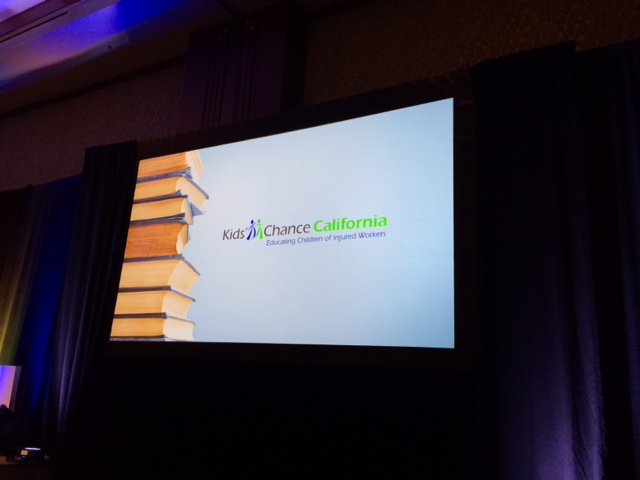
But I don’t want to miss the opportunity to put in a word for a great organization, Kid’s Chance California.

The organization has been around for some time in other states, but California’s group was organized last year.

Kid’s Chance raises money from stakeholders in California’s workers’ comp industry and uses the money to give college scholarship grants to children of injured workers.

Currently Kid’s Chance is sponsoring a group of students who had a parent who was either killed at work or suffered a disabling job injury.

My firm, Boxer & Gerson, is proud to be one of the strong supporters of this organization along with Pacific Gas & Electric, Sedgwick CMS Claims, Paradigm, Titan Claims management and a number of other prominent California insurers, employers, adjusting firms, law firms, unions etc.

At a donor thank you event at the CCWC conference, Kids Chance board member Maria Henderson (from PG&E) introduced two current scholarship recipients. Those kids made remarks about how important the funding has been in allowing them financing to stay in school.

Major kudos are due current...

[Click here to see the rest of this post]

How The 4-Day Workweek Could Revolutionize American Work Culture (WATCH)

Today's post was shared by Work Org and Stress and comes from www.huffingtonpost.com

As work-related stress levels are on the rise and burnout is increasingly taking a toll on employees, companies are searching for new and innovative ways to keep their teams feeling balanced, motivated and productive. While some employers allow workers to log in from home or enjoy shortened “summer Friday” hours, others are now turning to the four-day workweek model to help employees strike a better work-life balance.
DigitalRelevance’s director of digital media relations Ashley Sherman and Beholder’s chief operating officer Emilia Andrews joined HuffPost Live host Caroline Modarressy-Tehrani today to discuss this rethinking of traditional office hours and the benefits it offers both employees and employers.
“I’m less worried about all the things that I’m not doing in my personal life during those days,” said Sherman of the benefits of a four-day workweek. “I know that I have Friday to do that, so I can really focus and center in on what I need to get done for work those four days that I’m there.”
Andrews had a similarly positive experience in shifting to the condensed workweek model at her company.
“Communication went up exponentially," she said. “People were there with a focus, knew what needed to be done, and were able to get it done… I was smiling more. I was happier. I was excited to see the staff when we came back on Monday… We really were all just more excited and more...
[Click here to see the rest of this post]

ROTTEN IN DENMARK

Today's post was shared by Julius Young and comes from www.workerscompzone.com

July 29 2014
You might have thought that news of bad behavior in California’s workers’ comp system was hitting bottom.
After all, could it get worse? Allegations of legislators taking money to help charlatans who profited off of the backs of injured workers (literally). Scads of doctors alleged to have taken kickbacks for prescribing questionable compound medicines one of which allegedly killed a baby.
It appears that law enforcement authorities are now focusing on relationships between some applicant attorney firms and medical groups.
In Southern California the Riverside County DA has executed a search warrant against a workers’ comp firm, California Injury Lawyers (CIL). Apparently this is a result of a long investigation into suspected workers’ comp fraud,  targeting operations allegedly connected to an individual named Peyman Heidary who is said to have a financial interest in as many as nine medical clinics in the Los Angeles area.
The details of the alleged bad behavior or fraud is unclear, and it must be noted that any allegations are currently just that, allegations.
But this case has the potential to involve a number of  Southern California health care providers as well as some lawyers.
Meanwhile, last year’s workers’ comp bill AB 1309 seems to be the focus of new allegations in the federal case against State Senator Leland Yee. A grand jury indictment contains allegations that Yee suggested that in...
[Click here to see the rest of this post]

Alzheimer’s patients aren’t liable for injuries to home-care workers, California Supreme Court says

Today's blog is shared from the abajournal.com
The California Supreme Court has ruled that Alzheimer’s patients and their families are not liable to home health-care workers for injuries caused by the patients, if the employees were warned of the risks and the injuries were caused by symptoms of the disease.
The California Supreme Court ruled on Monday in a 5-2 decision (PDF), the Los Angeles Times reports. The court said the assumption of risk doctrine bars recovery.
“Because agitation and physical aggression are common late-stage symptoms of the disease, injuries to caregivers are not unusual,” the court said. “California and other jurisdictions have established the rule that Alzheimer‘s patients are not liable for injuries to caregivers in institutional settings. We conclude that the same rule applies to in-home caregivers.”
A contrary rule would create an incentive to institutionalize Alzheimer’s patients, the court said.
The court ruled in the case of a worker hired by Bernard Cott to care for his 85-year-old wife, Lorraine. Cott warned the worker that his wife would bite, kick, scratch and flail.
The worker, Carolyn Gregory, was injured in September 2008 when she was washing a large knife, Lorraine bumped into her and reached toward the sink. Gregory tried to restrain Lorraine, dropping the knife and cutting her wrist. Gregory lost feeling in several fingers and experiences recurring pain as a result.
Gregory worked for an agency and had received workers compensation....
[Click here to see the rest of this post]

Wilcox Farms Fatal Silo Collapse - Citations

Today's post comes from guest author Kit Case, from Causey Law Firm.
By Kit Case from Causey Law Firm
The Department of Labor & Industries (L&I) issued a press release on June 4th stating that it has cited Wilcox Farms Feedmill, Inc., of Roy for safety violations related to a fatal silo collapse last December. One worker died after he was engulfed in more than 400 tons of corn that spilled out of the silo.
Wilcox Farms issued a press release on February 12, 2014 describing the incident, the emergency response to it and how competitor farms came to the business's rescue to provide feed for the chickens in the days after the accident. 
“As an employer, especially a family business, it’s the worst thing you could ever imagine happening,” said Andy Wilcox. “The fact that we weren’t able to find Steve for two days was really tough.”
Wilcox has been cited for one “willful” and two “serious” safety violations with total penalties of $67,200. The state investigation found shortcomings in how the company maintained and managed the silo, and inadequate employee training.
A serious violation exists in a workplace if there is a substantial probability that worker death or serious physical harm could result from a hazardous condition. A willful violation can be issued when L&I has evidence of plain indifference, a substitution of judgment or an intentional disregard to a hazard or rule.
The day the 60-foot tall silo collapsed, two employees were working on feedmill operations, which included discharging corn using an auger in the silo. The unloading auger was not working that day, so they opened a side discharge door to allow corn to flow onto the outer portion of the auger. During that process, the silo collapsed and 400-500 tons of corn spilled out, engulfing one worker who was unable to escape.
Worker fatalities are tragic and preventable,” said Anne Soiza, assistant director of L&I’s Division of Occupational Safety and Health. “Our state requires all employers to provide safe and healthy workplaces. We fully expect Wilcox will correct the hazards and practices that haven’t been fixed already to ensure their employees are as safe as can be.”
Wilcox Farms has 15 working days to appeal the citation.
As part of the investigation, L&I hired an engineer to assess the structural integrity of the silo.
The investigation found four instances where Wilcox was not following proper silo operation and maintenance procedures that may have contributed to the collapse. For example, if corn is added or discharged improperly or the silo is overfilled, tons of grain could build up at an uneven rate and then suddenly shift and create instability. The four instances were:
  • A side discharge system was used to unload corn instead of the manufacturer’s standard procedure of withdrawing grain from the vertical center via the auger. The side discharge system was not installed, designed or supplied by an authorized dealer or contractor.
  • The silo was overfilled all the way to the roof and past the maximum fill level of one inch from the top of the vertical walls.
  • The silo had been previously repaired with a patch over a rupture of the wall due to corrosion. The repair was not made with corrugated material and was not done in a way to ensure structural stability. Also, it wasn’t assessed by a structural engineer or the silo manufacturer.
  • There were previous occasions during which the company had simultaneously filled the silo while it was being discharged.
L&I concluded that this was a willful violation with a proposed penalty of $56,000.
The investigation also found two serious violations with proposed penalties of $5,600 each:
  • Employees weren’t trained in specific procedures and safety practices for silo operations and maintenance.
  • The employer did not maintain the silos in accordance with the manufacturer’s maintenance and safety procedures.
Wilcox Farms has 15 working days to appeal the citation. For a copy of the citation, please contact L&I Public Affairs at 360-902-5673.
Penalty money paid as a result of a citation is placed in the workers’ compensation supplemental pension fund, helping workers and families of those who have died on the job.

The Alzheimer's Risk

Today's post is shared from David DePaolo at daviddepaolo.blogspot.com
As you likely are aware, Mom is in a memory care facility, so the California Supreme Court's ruling on whether a patient (or the family of a patient) may be liable for injuries to an Alzheimer's care worker caught my attention.
Mom is in a top quality memory care facility and I am fortunate enough to be able to visit her on average of twice a week, so I have become quite familiar with (and friends with) many of the residents and their families at the facility.
Dementia and Alzheimer's (a subset of dementia) are odd afflictions - some folks, like my mom, just don't remember much of anything, but they're pleasant. They smile, joke and are overall convivial.
Others though get the worst of the disease and can be aggressive, combative and sometimes a bit scary. These folks may be old, but can be very strong - mind over matter is not just a saying!
I've seen workers hit by patients, and I, myself have been the subject of aggressive behavior by an Alzheimer's patient.
Work injuries are a very real part of the Alzheimer's care worker's occupation.
And the Supreme Court has said that work comp the only remedy for such care workers.
The majority opinion in Gregory v. Cott expressly declared that because agitation and physical aggression are common late-stage symptoms of Alzheimer's, injuries to caregivers are not unusual.
As I noted, my experience would support this observation.
Mom doesn't bite.
The...
[Click here to see the rest of this post]

Wednesday, August 6, 2014

The Toxic Algae Are Not Done With Toledo. Not By a Long Stretch.

The potential for a mass catastrophic workers' compensation event arising out of a toxic algae is increasing. The run-off of fertilizers and other substances in addition to global warming may make containment difficult. Today's post was shared by Mother Jones and comes from www.motherjones.com


The algae bloom that swallowed parts of Lake Erie in 2011. Toledo sits near—and draws its water from—the lake's southwest region, where algae tends to accumulate. Image: MERIS/NASA, processed by NOAA/NOS/NCCOS
Last weekend, Toledo's 400,000 residents were sent scrambling for bottled water because the stuff from the tap had gone toxic—so toxic that city officials warned people against bathing their children or washing their dishes in it. The likely cause: a toxic blue-green algae bloom floated over the city's municipal water intake in Lake Erie. On Monday morning, the city called off the don't-drink-the-water warning, claiming that levels of the contaminant in the water had fallen back to safe levels. Is their nightmare over?
One expert said he could "almost guarantee" that the conditions that caused the crisis, i.e., a toxic bloom floating over the intake, would recur this summer.
I put the question to Jeffrey Reutter, director of the Stone Laboratory at Ohio State University and a researcher who monitors Lake Erie's annual algae blooms. He said he could "almost guarantee" that the conditions that caused the crisis, i.e., a toxic bloom floating over the intake, would recur this summer. But it's "pretty unlikely" that toxins will make it into the city's drinking water. That's because after the weekend's fiasco, a whole crew of public agencies, from the Ohio Environmental Protection Agency to the US Environmental Protection Agency...
[Click here to see the rest of this post]