Copyright

(c) 2010-2026 Jon L Gelman, All Rights Reserved.

Wednesday, December 4, 2013

Discovery Permitted Without Motion in Medical Provider Claims

Medical Provider Claims (MPC) are now subject to authorized discovery by way of Interrogatories in NJ workers’ compensation claims. The Director and Chief Judge of the NJ Division of Workers’ Compensation, Peter J. Calderone, in a Memorandum issued last week, authorized the procedure.


The interrogatories may not be overbroad and should be specific to the pending matter. Judicial intervention can be requested to resolve any discovery disputes that might arise. Additionally, responses are due 45 days after service.

NJ Counsel Fee Threshold Raised to $44,000

In a Memorandum issued last week, the Director of the NJ Division of Workers' Compensation announced that the threshold for counsel fees would be raised to $44,000 effective January 1, 2014. The counsel fee threshold criteria is linked to the increase the the maximum weekly benefit that will also be raised in 2014 by 2%.

Should the counsel be assessed by the Court in excess of the threshold, Compensation Judges are then required to include in the record an affidavit of services rendered by the petitioner's attorney.

Coal industry pays lawyers, doctors to lie and let workers to die penniless


Today's post is shared from workerscomphub.org
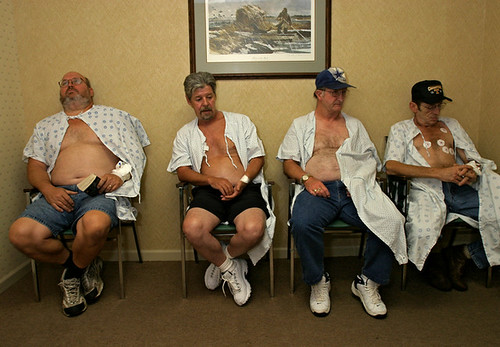
Photo by Earl DotterIn a devastating must-read set of reports, the Center for Public Integrity and ABC News describe how coal companies have fought a cutthroat campaign of secrecy, misinformation, false diagnoses, and defiance of court orders to stop workers from getting workers’ compensation for black lung disease. The coal industry’s tactics mirror those of Big Tobacco, the lead and soda industries, the NFL, and pulp and paper giant Georgia-Pacific, which is conducting secret research and selectively withholding information to cast doubt on more than 60,000 legal claims filed by construction workers and others who Georgia-Pacific exposed to asbestos in the 1960s and ‘70s and are developing mesothelioma, a cancer nearly always caused by asbestos, today.
Black lung, a disease caused by inhaling coal dust over time, scars and shrinks the lungs and can be highly debilitating and deadly. In its severe form, black lung is supposed to automatically qualify miners for workers’ compensation. Yet in a series of three in-depth reports, the Center for Public Integrity reveals how the coal industry and its lawyers have fought tooth and nail to hide information on workers’ health from doctors, courts, and patients themselves in order to maintain doubt about people's’ eligibility for compensation.
ABC News interviewed Dr. Paul Wheeler, head of The Johns Hopkins Hospital’s black...
[Click here to see the rest of this post]

NTSB kicks train union out of crash investigation


Railroad safety continues to be examined following the train crash in New York last week. This post is shared from cnn.com.
Repair efforts are under way Tuesday, December 3, at the site of a recent train derailment in the Bronx. At least four people were killed and more than 60 people were injured after a Metro-North...

The NTSB said it has booted the rail union from its investigation into the weekend's deadly train derailment for violating confidentiality rules.

The agency made the announcement late Tuesday night, hours after a union representative told CNN that the train engineer apparently "was nodding off and caught himself too late" before the accident.

The train derailment Sunday killed four people and injured 67 others in New York.

In its announcement, the NTSB specifically cited those comments as the violation.

Anthony Bottalico, the union representative, told CNN that engineer William Rockefeller Jr. recognizes his responsibility in the incident.

"I think most people are leaning towards human error," Bottalico said.

Rockefeller's lawyer, Jeffrey Chartier, characterized what happened as "highway hypnosis." He said his client had had a full night's sleep before the crash, and had no disciplinary record.

In a brief conversation with investigators, Rockefeller said that moments before the derailment of the Hudson Line train in the Bronx he was "going along and I'm in a daze. I don't know what happened," according to a law enforcement official familiar with that conversation.

Rockefeller spoke to Metropolitan Transportation Authority and New York Police detectives at the crash site before he was taken to the hospital Sunday.

According to NTSB representatives,...

[Click here to see the rest of this post]


Found on

Constitutional Challenges New and Old, From Florida to Oklahoma

Today's post highlights the slow and tedious battle a contitutional challenge is to a workers' compensation issue. It is shared from flojcc.blogspot.com.

There is a value to consistency and predictability in the law. Attorneys rely upon the decisions of courts to form opinions about their cases. Attorneys with a clear understanding of their state's statutes, and the interpretations which appellate courts will apply to them, are in an admirable position to provide their clients with predictions and advice regarding their specific case and its issues. In Florida, this can take time. Sometimes such specifics can take many years. In 1993, the Florida Legislature made significant changes to the Florida Workers' Compensation law. Among these was a marked reduction in the quantum of temporary total disability benefits available, from 260 weeks to to 104 weeks. A panel of the Florida First District Court of Appeal ("First DCA") concluded on February 28, 2013 that this statutory change was Unconstitutional. Westphal v. St. Petersburg. (1D12-3563)On September 23, 2013, the Court granted en banc review. This means that the entire First DCA reconsidered the case and issued a new opinion. In this second iteration, a majority of the Court concluded that the 104 week limitation on temporary total disability (TTD) did apply to the claimant, Mr. Westphal. The en banc decision did not find Constitutional infirmity in the statute, as the panel had months earlier....
[Click here to see the rest of this post]

OSHA proposes more than $460,000 in fines against Long Island, NY, contractor for repeat fall and scaffolding hazards

Painting & Decorating Inc., a Ronkonkoma painting and stucco contractor with a long history of fall protection and scaffold safety violations, now faces an additional $460,350 in fines from the U.S. Department of Labor's Occupational Safety and Health Administration following an inspection of a work site at 1900 Northern Blvd. in Manhasset.

"The sizable fines proposed reflect the ongoing failure and refusal by this employer to provide basic safeguards for its employees. Workers have repeatedly been exposed to deadly or disabling falls and crushing injuries," said Anthony Ciuffo, OSHA's Long Island area director. "In this case, workers were exposed to falls of more than 26 feet. Falls are the leading cause of death in construction work and can be prevented by adhering to basic, common sense and legally required safeguards."

OSHA's Long Island Area Office opened an inspection at the work site on March 31 under its local emphasis program aimed at preventing falls in the construction industry. The inspection identified numerous fall and scaffolding hazards, many of which were similar to those cited during previous OSHA inspections of five other Painting & Decorating work sites during the past several years.

The recurring hazards include not having the scaffold self-inspected for defects by a competent person during scaffold erection and before workers began to work on the scaffold. An inspection would have identified hazards such as missing cross bracing and planks; no safe means for workers to access the scaffold; lack of fall protection for the employees working on the scaffold; scaffold not restrained against tipping; lack of protective helmets; and no protection to prevent objects from falling onto workers from the scaffold.

These conditions resulted in the issuance of 10 repeat citations with $429,660 in fines. A repeat violation exists when an employer has been cited previously for the same or a similar violation of a standard, regulation, rule or order at any of its facilities in federal enforcement states within the last five years. Between 2008 and 2010, OSHA cited the company for similar hazards at work sites in Kings Point, Great Neck and Forest Hills.

OSHA's inspectors also identified new hazards, including a lack of fall protection for workers erecting the scaffolding; scaffold erected on unsound footing; workers climbing the scaffold's cross bracing during erection; and lack of eye protection. These hazards resulted in the issuance of five serious citations with $30,690 in fines. A serious violation occurs when there is substantial probability that death or serious physical harm could result from a hazard about which the employer knew or should have known.

The citations can be viewed at http://www.osha.gov/ooc/citations/PaintingDecorating909337_112713.pdf*.

"Employers can enhance safety in the workplace and prevent hazards from occurring by implementing an effective illness-and-injury prevention program where they work with employees to identify, address and eliminate hazards proactively," said Robert Kulick, OSHA's regional administrator in New York.

Due to the nature and severity of violations, Painting & Decorating Inc. has been placed in OSHA's Severe Violator Enforcement Program, which mandates targeted follow-up inspections to ensure compliance with the law. OSHA's SVEP focuses on recalcitrant employers that endanger workers by committing willful, repeat or failure-to-abate violations. Under the program, OSHA may inspect any of the employer's facilities if it has reasonable grounds to believe there are similar violations.

OSHA's fall prevention campaign provides employers and workers with lifesaving information and educational materials about working safely from ladders, scaffolds and roofs. It was developed in partnership with the National Institute of Occupational Safety and Health and NIOSH's National Occupational Research Agenda program. More information on fall protection standards is available in English and Spanish at http://www.osha.gov/stopfalls.

Painting & Decorating Inc. has 15 business days from receipt of its latest citations and proposed penalties to comply, request an informal conference with OSHA's area director, or contest the findings before the independent Occupational Safety and Health Review Commission.

To ask questions, obtain compliance assistance, file a complaint or report workplace hospitalizations, fatalities or situations posing imminent danger to workers, the public should call OSHA's toll-free hotline at 800-321-OSHA (6742) or the agency's Long Island Area Office at 516-334-3344.

Under the Occupational Safety and Health Act of 1970, employers are responsible for providing safe and healthful workplaces for their employees. OSHA's role is to ensure these conditions for America's working men and women by setting and enforcing standards, and providing training, education and assistance. For more information, visit http://www.osha.gov.

US Labor Department seeks public comment on agency standards to improve chemical safety

The U.S. Department of Labor's Occupational Safety and Health Administration today announced a request for information seeking public comment on potential revisions to its Process Safety Management standard and related standards, as well as other policy options to prevent major chemical incidents.

The RFI is in response to executive order 13650, which seeks to improve chemical facility safety and security, issued in the wake of the April 2013 West, Texas, tragedy that killed 15 in an ammonium nitrate explosion.

In addition to comments on its Process Safety Management standard, OSHA seeks input on potential updates to its Explosives and Blasting Agents, Flammable Liquids and Spray Finishing standards, as well as potential changes to PSM enforcement policies. The agency also asks for information and data on specific rulemaking and policy options, and the workplace hazards they address. OSHA will use the information received in response to this RFI to determine what actions, if any, it may take.

After publication of the RFI in the Federal Register, the public will have 90 days to submit written comments. Once the RFI is published in the Federal Register, interested parties may submit comments at www.regulations.gov, the Federal eRulemaking Portal. Comments may also be submitted by mail or facsimile. To view the RFI visit http://www.osha.gov/chemicalexecutiveorder/OSHA_PSM_RFI.pdf. For more information, visit www.osha.gov/chemicalexecutiveorder/index.html.

Rare Cancer Treatments, Cleared by F.D.A. but Not Subject to Scrutiny

Today's post was shared by The New York Times and comes from www.nytimes.com

When federal regulators permitted the sale of an unproved device that uses intense heat to combat cancer, they did so for a compelling reason, to give hope to some women desperately ill with cervical cancer.
Over the next two years, however, the few hospitals that purchased the $500,000 device did not take part in a study of patients that the manufacturer agreed to perform as a part of the machine’s approval. Cancer experts also said they were surprised that the Food and Drug Administration had approved the machine in the first place.
The reason: The group of woman for whom the F.D.A. approved the treatment — those with advanced cervical cancer who are too ill for chemotherapy — is so small. “I see, like, one patient like this a year,” said Dr. Junzo P. Chino, a cancer expert at Duke University.
A look at the F.D.A.’s decision to approve the device, which is called the BSD-2000, opens a window onto a little-known regulation known as the humanitarian device exemption.
The program, even its critics agree, is based on the best intentions. Because companies have little incentive to run costly trials for products used by small groups of patients, the exemption requires a producer only to show that a device is safe and has a “probable” benefit, rather than prove its effectiveness, the usual standard.
The rule, which is similar to one governing drugs for extremely rare diseases, also does not require the F.D.A., companies or...
[Click here to see the rest of this post]

Five Former N.F.L. Players Sue the Chiefs Over Head Injuries

Today's post was shared by The New York Times and comes from www.nytimes.com

Five former Kansas City Chiefs sued the team Tuesday for not warning them of the long-term dangers of concussions they say they received during their playing days.
The suit, filed in circuit court in Jackson County, Mo., is one of the first concussion-related cases against a specific N.F.L. team, and may lead to other suits.
The case against the Chiefs echoes the suits brought by thousands of N.F.L. retirees, who accused the league of negligence and fraud and sought actual and punitive damages.
In August, the N.F.L. agreed to pay $765 million to settle those cases and avoid what was sure to be a lengthy, costly and embarrassing trial. The league did not admit that it hid information on the long-term effects of head trauma from its players, as was claimed in the original complaint.
In settling the case before going to trial, the league left the door open for retirees to make other legal challenges.
The case by the five former Chiefs seeks to exploit a critical question unanswered in the suits against the N.F.L.: whether concussion-related cases should be heard by an arbitrator under the auspices of the league’s collective bargaining agreement.
Alexander Cooper, Leonard Griffin, Christopher Martin, Joseph Phillips and Kevin Porter, the plaintiffs, played all or parts of their careers from August 1987 to March 1993, when there was no collective bargaining agreement.
They also sued the Chiefs, and not the league, because under Missouri law, employees can sue...
[Click here to see the rest of this post]

Workers' Compensation Board hosts meetings to help improve services

New York state's Workers' Compensation Board has started a sweeping effort to examine the system, and look at how it could more effectively meet the needs of injured workers and employers. It's in the midst of holding sessions where injured workers can express their opinions.
The second of three sessions was held yesterday in Syracuse, and allowed injured workers to chime in on the discussion in central New York. Fidel, Alejandro Velacqueis Perez was among those telling stories.
His ankle was shattered on the job at a stone cutting company in Delaware County. While waiting four months for a Workers' Compensation hearing, he's basically homeless.
"I need help," Perez said. "I don't have any resources. I don't have money to buy food. I don't have money to get a phone and reach my family."
Interpreting for Perez is Rebecca Fuentes of the Workers Center of Central New York. She says immigrant voices especially need to be heard, but part of the problem is that many don't even know Workers' Compensation exists. An answer to that would be more outreach from the agency.
"People in this building need to get out," Fuentes said. "We want to see them out at events, tabling. We need to see them everywhere. Because workers are getting injured, and they're not having equal access to this right."
Fuentes says among other things, some immigrants lose their jobs after an injury because they apply for Workers' Compensation. She says it is a serious issue that the Workers' Compensation Board...
[Click here to see the rest of this post]

CDC releases new findings and prevention tools to improve food safety in restaurants

Increased awareness and implementation of proper food safety in restaurants and delis may help prevent many of the foodborne illness outbreaks reported each year in the United States, according to data from the Centers for Disease Control and Prevention. Researchers identified gaps in the education of restaurant workers as well as public health surveillance, two critical tools necessary in preventing a very common and costly public health problem.

The research identifies food preparation and handling practices, worker health policies, and hand-washing practices among the underlying environmental factors that often are not reported during foodborne outbreaks, even though more than half of all the foodborne outbreaks that are reported each year are associated with restaurants or delis. Forty-eight million people become ill and 3,000 die in the United States.

"Inspectors have not had a formal system to capture and report the underlying factors that likely contribute to foodborne outbreaks or a way to inform prevention strategies and implement routine corrective measures in restaurants, delis and schools to prevent future outbreaks," said Carol Selman, head of CDC's Environmental Health Specialists Network team at the National Center for Environmental Health.

Four articles published today in the Journal of Food Protection focus on actions steps to prevent foodborne illness outbreaks related to ground beef, chicken, and leafy vegetables like lettuce and spinach. The articles also focus on specific food safety practices, such as ill workers not working while they are sick, as a key prevention strategy.

Since 2000, CDC has worked with state and local health departments to develop new surveillance and training tools to advance the use of environmental health assessments as a part of foodborne outbreak investigations.
The National Voluntary Environmental Assessment Information System (NVEAIS) is a new surveillance system targeted to state, tribal and other localities that inspect and regulate restaurants and other food venues such as banquet facilities, schools, and other institutions. The system provides an avenue to capture underlying environmental assessment data that describes what happened and how events most likely lead to a foodborne outbreak. These data will help CDC and other public health professionals determine and understand more completely the primary and underlying causes of foodborne illness outbreaks.
A free interactive e-learning course has been developed to help state and local health departments investigate foodborne illness outbreaks in restaurants and other food service venues as a member of a larger outbreak response team, identify an outbreak's environmental causes, and recommend appropriate control measures. This e-learning course is also available to members of the food industry, academia and the public, anyone interested in understanding the causes of foodborne outbreaks.

"We are taking a key step forward in capturing critical data that will allow us to assemble a big picture view of the environmental causes of foodborne outbreaks," Selman said.

The data surveillance system and e-Learning course will debut in early 2014. With these tools, state, and local public health food safety programs will be able to report data from environmental assessments as a part of outbreak investigations and prevent future foodborne outbreaks in restaurants and other food service establishments.

CDC developed these products in collaboration with the U.S. Food and Drug Administration, U.S. Department of Agriculture, and state and local health departments.

For more information about the National Voluntary Environmental Assessment Information System: http://www.cdc.gov/nceh/ehs/EHSNet/resources/nveais.htm

For information about free e-Learning courses in Environmental Assessment of Foodborne Illness Outbreaks:http://www.cdc.gov/nceh/ehs/eLearn/EA_FIO/index.htm


….
Jon L. Gelman of Wayne NJ is the author NJ Workers’ Compensation Law (West-Thompson) and co-author of the national treatise, Modern Workers’ Compensation Law (West-Thompson). For over 4 decades the Law Offices of Jon L Gelman  1.973.696.7900  jon@gelmans.com  have been representing injured workers and their families who have suffered occupational accidents and illnesses.

Gas leak at Princeton University, 500 evacuated

Officials from Princeton University say a construction accident led to a gas leak Monday morning, prompting the evacuation of eleven buildings in the area.
It was shortly before 10:00 a.m. when a backhoe struck a gas line south of the University's McCosh Health Center.
About 500 people from 11 buildings in the immediate were evacuated as a precaution.
PSE&G workers arrived on the scene and managed to turn the gas line off.
Crews then checked gas levels in the evacuated buildings before giving the all clear and allowing people to reenter.
There are no reports of injuries.

[Click here to see the original post]

Formaldehyde Spill At Southern Ocean Medical Center; Three Treated For Inhalation

A formaldehyde spill at Southern Ocean Medical Center on Monday caused three hospital employees to be treated for inhalation of the known carcinogen.

At 10:14 a.m., Stafford Township Police responded to a report of a hazardous material spill at SOCH on Route 72 in Stafford Township.

Investigation revealed that a small quantity of formaldehyde was spilled in a utility closet located in the Labor and Delivery area of the hospital. The spill was contained to the utility closet and no evacuations were necessary, police said.

No patients were injured in this incident but three hospital employees were treated for minor inhalation injuries and released, police said.

Responding agencies included the Stafford Township and Barnegat Township Volunteer Fire Companies as well as Stafford Township EMS.

The Berkeley Township Haz-Mat Unit responded and neutralized and contained the spill which is being cleaned up by a private contractor engaged by Southern Ocean Medical Center.

Questions concerning this release may be directed to Capt. Thomas Dellane at 609-597-1189 ext. 8299.
[Click here to see the rest of this post]
….
Jon L. Gelman of Wayne NJ is the author NJ Workers’ Compensation Law (West-Thompson) and co-author of the national treatise, Modern Workers’ Compensation Law (West-Thompson). For over 4 decades the Law Offices of Jon L Gelman  1.973.696.7900  jon@gelmans.com  have been representing injured workers and their families who have suffered occupational accidents and illnesses.

The Minimum Wage in America Is Pretty Damn Low

Today's post was shared by Steven Greenhouse and comes from www.motherjones.com

Everyone's talking about the minimum wage today. I'm in favor of raising it, and I always have been, but a picture is worth a thousand words, so here's a picture for you. Courtesy of the OECD, it shows the minimum wage in various rich countries as a percentage of the average wage. The United States isn't quite the lowest, but we're pretty damn close.
[Click here to see the original post]

December 3rd is International Day of Persons with Disabilities

Around the world, people with disabilities face physical, social, economic and attitudinal barriers that exclude them from participating fully and effectively as equal members of society. December 3rd is International Day of Persons with Disabilities. This year's theme is "break barriers, open doors: for an inclusive society for all." The commemoration of this year's International Day of Persons with Disabilities provides an opportunity to further raise awareness of disability and accessibility as a cross cutting development issue. It will also further the global efforts to promote accessibility, remove all types of barriers, and to realize the full and equal participation of people with disabilities in society and shape the future of development for all.1

A CDC Initiative: Including People with Disabilities

At CDC, we operate on the principle that people with disabilities are best served by Public Health when they are included in mainstream public health activities. To that end, inclusion might require appropriate accommodations to reduce or eliminate barriers that limit the participation of people with disabilities in health activities. When children and adults with disabilities receive needed programs, services and health care across their lifespan, they can reach their full potential, have an improved quality of life, and experience independence.
In 2010, CDC Director Dr. Thomas Frieden established an initiative to serve the health needs of people with a disability in the United States. CDC's Disability and Health Work Group was established in 2010 for centers and offices within the agency. The disability inclusion initiative has increased awareness and fostered activities focused on integrating disability into CDC's mainstream public health activities.

Objectives

People with disabilities need public health programs and healthcare services for the same reasons anyone does—to be well, active, and a part of the community. CDC works to include people with disabilities by
  • improving health monitoring of people of all ages with disabilities to identify disparities in health between people with and without disabilities;
  • including disability status indicators in key CDC monitoring programs;
  • conducting public health research to understand the health risks experienced by people with disabilities;
  • encouraging participation of people with disabilities in program activities conducted or supported by CDC;
  • developing and disseminating accessible health communications and messages to people with sensory (e.g., blindness, deafness) or cognitive (e.g., intellectual disability) limitations.

Disability Resources at CDC

Being healthy means the same thing for all of us—staying well so we can lead full, active lives. Having the tools and information to make healthy choices and knowing how to prevent illness is key to being well, with or without a disability.
Visit these resources to learn more:
As we commemorate International Day of Persons with Disabilities, we ask you to join us in being a part of the global disability movement to change attitudes and approaches to disability to promote the equity and full inclusion of people with disabilities in society and across public health activities.

Resources

References

  1. International Day of Persons with Disabilities, 3 December 2013. United Nations Enable. Available at http://www.un.org/disabilities/default.asp?id=1607External Web Site Icon. Accessed October 21 2013