Copyright

(c) 2010-2026 Jon L Gelman, All Rights Reserved.

Monday, October 14, 2013

Hank Patterson Receives the 2013 Lifetime Achievement Award

This week, Henry “Hank” N. Patterson, Jr. was presented with the 2013 Lifetime Achievement Award at the annual dinner of the Workplace Injury and Advocacy Group (WILG),  in Palm Beach, Florida. For his entire career, Hank has zealously advanced the rights of workers. He has held leadership positions in national legal organizations, including the American Bar Association, and helped establish the College of Workers Compensation Lawyers.
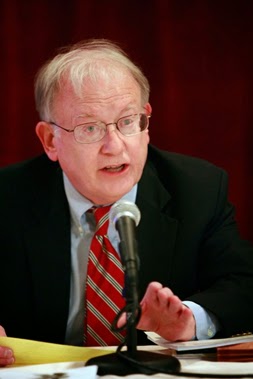

Hank graduated from the University of North Carolina in 1963 and from UNC Law School in 1966, where he was elected to the Order of the Coif. Before entering private practice, he served as law clerk to the Honorable J. Braxton Craven, Jr., of the U.S. Court of Appeals for the Fourth Circuit and worked as an attorney in Region 11 of the National Labor Relations Board.

He has served on legislative study commissions and as Chair of the Workers’ Rights Section of the North Carolina Academy of Trial Lawyers, Co-Chair of the North Carolina Bar Association’s Workers’ Compensation Committee, and member of the Advisory Council to the Chair of the North Carolina Industrial Commission. Hank is a Board Certified Specialist in Workers’ Compensation Law. His practice is limited to the areas of workers’ compensation, labor and employment, and disability entitlements.


National Survey: Working Longer—Older Americans’ Attitudes on Work and Retirement

The Associated Press-NORC Center for Public Affairs Research has released the results of a major new survey exploring the views of older Americans about their plans for work and retirement.  It provides in-depth information about a rapidly growing segment of the population that by choice or circumstance is working longer.  The Great Recession has had a marked impact on retirement plans.

“The survey illuminates an important shift in Americans’ attitudes toward work, aging, and retirement,” said Trevor Tompson, director of the AP-NORC Center.  “Retirement is not only coming later in life, it no longer represents a complete exit from the workforce.  The data in this survey reveal strikingly different views of retirement among older workers today than those held by the prior generation.”

With funding provided by the Alfred P. Sloan Foundation, the Associated Press-NORC Center for Public Affairs Research conducted a national survey of 1,024 adults ages 50 and over.  It is a segment of the population that is not only growing rapidly in numbers, but is also becoming substantially healthier.  Projections show that the U.S. population age 65 and over will increase to 19 percent of the population by 2030, up from 13 percent in 2010, an estimated 72 million people. At the same time, people age 55 and over comprise the fastest growing segment of the workforce. By 2020, approximately one fourth of American workers will be...
[Click here to see the rest of this post]

In Washington State, Home of Highest Minimum Wage, a City Aims Higher

Wages have a direct effect on workers' compensation benefits as they usually determine the rate of the benefit paid for temporary and permanent disability. Today's post was shared by Steven Greenhouse and comes from www.nytimes.com


Washington already has the highest state minimum wage in the country, at $9.19 an hour. Soon, voters in this tiny city south of Seattle will decide whether to push the local minimum even higher.
If a majority of the voters here say yes to a referendum known as Proposition 1 when their mail-in ballots start arriving this week, a minimum wage of $15 an hour would be required for many businesses in SeaTac, more than twice the federal minimum of $7.25.

The measure would lift wages for thousands of workers at one of the nation’s busiest airports, Seattle-Tacoma International, which is within city limits. But business and labor leaders say the economic and political implications, with local democracy going where state and federal legislators mostly fear to tread, could be equally profound.

Foxconn admits labour violation at China factory

Today's post was shared by WCBlog and comes from www.bbc.co.uk


Foxconn, the world's biggest contract electronics maker, has admitted student interns worked shifts at a factory in China that were in violation of its company policies.
Foxconn

The firm, which makes products for some the world's biggest brands, has been under scrutiny for labour practices.
It had admitted to hiring underage interns at the same unit last year.

Foxconn said actions had been taken to bring the factory "into full compliance with our code and policies".

"There have been a few instances where our policies pertaining to overtime and night shift work were not enforced," the company said in a statement.

The manufacturing giant is owned by Taiwanese group Hon Hai Precision and employs about 800,000 workers around the globe.

Foxconn, while not a household name in itself for many consumers, is used by most of the big technology giants around the world, including Apple, Sony, Microsoft, HP, and Nokia.
It first came under scrutiny for its labour practices when 13 employees committed suicide at its Chinese plants in 2010.
The incidents raised concerns over working conditions at its units in China and drew attention to growing labour strikes.
For its part, Foxconn responded by raising wages, shortening working hours and employing counsellors on site.
It also installed suicide nets to factory living-quarters at its Shenzhen factory.

Also in 2010, Foxconn temporarily shut down a unit in India after 250 workers fell sick.

And in May 2011, two people were killed after...
[Click here to see the rest of this post]

U.S. asbestos imports condemned by health experts, activists

Today's post was shared by Linda Reinstein and comes from www.publicintegrity.org


More than 50 countries have banned asbestos, a toxic mineral used in building materials, insulation, automobile brakes and other products.

The United States isn’t one of them. Last year, according to the U.S. Geological Survey, 1,060 metric tons — more than 2.3 million pounds — came into the country, all of it from Brazil. “Based on current trends,” the USGS says, “U.S. asbestos consumption is likely to remain near the 1,000-ton level …”

Public health experts and anti-asbestos activists find this distressing.
Linda Reinstein, who lost her husband to mesothelioma, an especially virulent form of cancer tied to asbestos exposure, said she’s “appalled and disgusted that the United States still allows the importation of asbestos to meet so-called manufacturing needs.

When your symptoms don't tell the whole story

Today's post was shared by RWJF PublicHealth and comes from www.marketplace.org


Instead of asking you to talk about the pain in your foot, or the ache in your chest, health care workers are starting to ask you about...your story.

There’s an emerging idea in health care that social and psychological conditions -- like poverty and chronic stress -- change how your body and brain work, and that can have damaging long-term effects on your health.

Doctors and nurses from northern California to Camden, N.J., are beginning to see that the first step in treating these patients is often treating the part of the illness that’s not on the surface. Patients like 30-year-old Elizabeth Philkill.

Asbestos Can Take Your Breath Away, Forever

Today's post was shared by Linda Reinstein and comes from blog.saferchemicals.org

The time is now for the Senate to unanimously support the passage of the Safe Chemicals Act (S.847). We need to do more to protect our children from BPAs, fire retardants and other dangerous toxins in our world.

What many don’t realize is that asbestos is still legal and lethal in theUnited States, tragically impacting families. I know because it happened to us.


I remember the day when my husband AlanAlan Was diagnosed with malignant pleural mesothelioma as if it were yesterday.  We had never heard of mesothelioma, and we were devastated when we learned that there is no cure.  Our daughter was only ten years old when we began our arduous family battle to fight mesothelioma and work with Congress To ban asbestos.

Asbestos victims speak out

Today's post was shared by Linda Reinstein and comes from blog.saferchemicals.org

By Linda Reinstein, Asbestos Disease Awareness Organization

"Out of the hottest fire comes the strongest steel." Chinese Proverb

ADAO
The Asbestos Disease Awareness Organization (ADAO), the largest independent asbestos victims’ organization in the U.S., is pleased to join other NGOs in the SaferChemicals, Healthy Family coalition’s mission to reform the Toxic SubstancesControl Act (TSCA), the principal federal law governing the use and safety of the thousands of chemicals we are exposed to in our everyday lives.

TSCA was passed more than 30years ago and is grossly out of date. ADAO has been a stakeholder in discussions with Congressional leadership since 2004. You can read my personal journey, and how I came to advocate for this issue here.

As I Remind Congress,“History is a great teacher to those who listen.” 

Science And technology have made exponential advancements. As a mother and mesothelioma widow, I know the Safer Chemicals, Healthy FamilyFamily Coalition’s efforts will improve lives if Congress can draft and pass legislation to protect public health and our environment. I see hope on the horizon, but we have stalled. Bipartisan support is essential in getting a bill to the President’s desk, but we face a hurdle with the Chemical Safety Improvement Act (CSIA).

ADAO opposes the current language of CSIA, due to deep concerns that the bill as currently written does not deliver meaningful reform to TSCA and does not adequately protect Americans from the worst...
[Click here to see the rest of this post]

What we know about football and repetitive brain trauma

Today's post was shared by Mother Jones and comes from www.motherjones.com


CTE brain scans
Brain tissue images, with tau protein in brown. The brain on the left is from a normal subject, the brain in the middle is from a former football player, and the brain on the right is from a former boxer.Courtesy of the Boston University Center for the Study of Traumatic Encephalopathy.
League of Denial, a PBS Frontline documentary about the NFL's response (or lack thereof) to concussions and long-term brain injuries among its players, airs tonight. The investigation attempts to hash out what the league really knew about player safety while it downplayed the ill effects the sport has on its athletes. But what exactly are those effects, and what about them made thousands of former players sue the NFL over their injuries?
While the symptoms of a concussion—dizziness, vomiting, memory loss—can be felt immediately, the long-term impacts of repeated brain trauma have been harder to study. Research points to chronic traumatic encephalopathy, or CTE, as one of the major outcomes. CTE is caused by a buildup of tau, a protein that strangles brain cells and degenerates brain tissue, which is caused by repetitive brain trauma like the hits football players endure. This leads to depression, increased aggression, lack of impulse control, and eventually dementia, which may not manifest until years or even decades after the brain injuries took place. While CTE can only be definitively identified after a patient dies, a pilot study at the University of...
[Click here to see the rest of this post]

Lawsuit claims chemical spill at Armstrong caused worker's neurological disorder

Today's post is sahred from  inpews.com

Sandra Cooper remembers the exact date her life started to turn upside down: Sept. 25, 2003.
She'd gotten home from her job as an art teacher at Garden Spot High School around 4 p.m. that day. Her husband, Gene, who was on shift work at Armstrong World Industries floor plant, arrived home a short time later.

She heard him coming.

"I could hear the coughing even before he came up the sidewalk," Sandra Cooper said. "I've never heard anybody cough like that."

His eyes were watering, he had a blinding headache and he was screaming in between hacks. There'd been a spill at work, he told his wife. Chemicals. He had to help clean it up.

Sunday, October 13, 2013

Social Security raise to be among lowest in years

Social Security payments are tightly kinked to workers' compensation disability payments. When there are increases in benefits, some "reverse offset" states are liberal in passing along the adjustments to injured workers'. The State of New Jersey does NOT pass along the benefit increase and the workers' compensation insurance company does NOT increase the disability award payment to the injured workers. Today's post is shared from the dallasnews.org.

For the second straight year, millions of Social Security recipients, disabled veterans and federal retirees can expect historically small increases in their benefits come January.

Preliminary figures suggest a benefit increase of roughly 1.5 percent, which would be among the smallest since automatic increases were adopted in 1975, according to an analysis by The Associated Press.


Next year's raise will be small because consumer prices, as measured by the government, haven't gone up much in the past year.

The exact size of the cost-of-living adjustment, or COLA, won't be known until the Labor Department releases the inflation report for September. That was supposed to happen Wednesday, but the report was delayed indefinitely because of the partial government shutdown.

The COLA is usually announced in October to give Social Security and other benefit programs time to adjust January payments. The Social Security Administration has given no indication that raises would be delayed because of the shutdown, but advocates for...
[Click here to see the rest of this post]

The Soaring Cost of a Simple Breath

Cost in the US for pharmaceutical medications are a stressor for all including workers' compensation carriers. The blame is targeted to injured workers for causing the problem. In actuality it appears that big pharma maybe the problem. Perhaps Federal legislation should  allow cheaper rates for workers' compensation programs. Today's post is shared from nytimes.com.
The kitchen counter in the home of the Hayes family is scattered with the inhalers, sprays and bottles of pills that have allowed Hannah, 13, and her sister, Abby, 10, to excel at dance and gymnastics despite a horrific pollen season that has set off asthma attacks, leaving the girls struggling to breathe.
Asthma — the most common chronic disease that affects Americans of all ages, about 40 million people — can usually be well controlled with drugs. But being able to afford prescription medications in the United States often requires top-notch insurance or plenty of disposable income, and time to hunt for deals and bargains.
The arsenal of medicines in the Hayeses’ kitchen helps explain why. Pulmicort, a steroid inhaler, generally retails for over $175 in the United States, while pharmacists in Britain buy the identical product for about $20 and dispense it free of charge to asthma patients. Albuterol, one of the oldest asthma medicines, typically costs $50 to $100 per inhaler in the United States, but it was less than $15 a decade ago, before it was repatented.
“The one that...
[Click here to see the rest of this post]

Saturday, October 12, 2013

Where's the New Jersey Conference?

Today's post was shared by WorkCompCentral and comes from daviddepaolo.blogspot.com


There's going to be lots of press surrounding the latest CompScope Benchmarks Study
released by the Workers' Compensation Research Institute, as there always is, and should be. After all, the WCRI is one of the top research groups in our industry and the leadership and staff there work hard to provide as complete and unbiased data as possible.

What is unique about the latest study of 16 states is one common theme - controlling costs has more to do with instituting price schedules for medical services than any other single factor.
The premier example is Illinois, which, after reducing medical fees by 30% across the board on Sept. 1, 2011, saw all medical payments for claims with seven days of lost time declined by 5% for injuries arising in 2011 and evaluated as of 2012. Prices paid for non-hospital services dropped by 24% between 2010 and 2012.

And Texas' claim costs, which ranked the highest in the nation prior to a set of reforms passed in 2005, are now typical of the states studied, according to WCRI , with medical costs per claim 17% lower than the 16-state median for 2009 claims evaluated in 2012. The Institute expects costs to decline further in Texas with the prescription drug formulary that became effective 9/1/2011.
The state's claim cost growth rate is also slowing. Claims costs in Texas grew by between 3% and 6% per year between 2006 and 2011. Costs per claim for the 2010/2012 study period were $5,829 – slightly higher than the $5,354 median.

The flip side is...
[Click here to see the rest of this post]

Scientific improprieties in the asbestos industry funded research of McGill professor

Asbestos research, and its validity, is a much debated quesstion. Today's post is shared from Kathleen Ruff, RightOnCanada.ca
Here is a powerful, detailed and damning scientific analysis of  improprieties in the research of Prof. J.C. McDonald on Quebec asbestos miners – The Past is Prologue, Universities in Service to Corporations: The McGill-QAMA Asbestos Example.
This analysis was presented by Prof. David Egilman at the McGill asbestos conference on October 1, 2013. It is clearly presented and well worth reading. At the conference, no response was provided to the damning information that Prof. Egilman put forward.
Prof. McDonald’s research was financed with one million dollars by the Quebec Asbestos Mining Association (QAMA). Prof. McDonald used his research to promote the use of chrysotile asbestos around the world. His research continues today to be used by the global asbestos industry to promote the sale and use of chrysotile asbestos. It was used, for example, by the global asbestos lobby at the May 2013 Rotterdam Convention conference to help defeat the listing of chrysotile asbestos as a hazardous substance.
McGill continues to state that Prof. McDonald’s research was conducted “according to the rigorous scientific standards for which McGill is known”. McGill has not however addressed the detailed and damning evidence that Prof. Egilman has put forward.
Prof. Egilman and other scientists have called on McGill to carry out an...
[Click here to see the rest of this post]

The startling rise of disability in America

The increase in disability claims in the US is reported in today's post shared from npr.org

In the past three decades, the number of Americans who are on disability has skyrocketed. The rise has come even as medical advances have allowed many more people to remain on the job, and new laws have banned workplace discrimination against the disabled. Every month, 14 million people now get a disability check from the government.

The federal government spends more money each year on cash payments for disabled former workers than it spends on food stamps and welfare combined. Yet people relying on disability payments are often overlooked in discussions of the social safety net. The vast majority of people on federal disability do not work.

Yet because they are not technically part of the labor force, they are not counted among the unemployed.

In other words, people on disability don't show up in any of the places we usually look to see how the economy is doing. But the story of these programs -- who goes on them, and why, and what happens after that -- is, to a large extent, the story of the U.S. economy. It's the story not only of an aging workforce, but also of a hidden, increasingly expensive safety net.

For the past six months, I've been reporting on the growth of federal disability programs. I've been trying to understand what disability means for American workers, and, more broadly, what it means for poor people in America nearly 20 years...
[Click here to see the rest of this post]

Friday, October 11, 2013

Think asbestos is banned in the US?

Today's post was shared by Linda Reinstein and comes from blog.saferchemicals.org


Asbestos warning
Asbestos warning

If there’s one reason we know our federal law governing chemicals doesn’t work, it’s asbestos. Despite popular belief, asbestos, one of the most harmful substances known, still isn’t banned in the United States.

This week marks the 37th birthday of our primary federal law governing toxic chemicals, the Toxic Substances Control Act (TSCA). While most birthdays are a joyous occasion, we’re taking this opportunity to educate the public on just how flawed our federal chemical law is.

Take for example asbestos. It’s one of the few substances that has a disease directly named after it (mesothelioma) and is widely regarded as a silent killer for many families.
Top five asbestos facts:
  1. Asbestos is a known human carcinogen and there is no safe level of asbestos exposure. Learn more here.
  2. Asbestos is legal in the U.S., and is still imported.
  3. Thirty Americans die everyday from asbestos-related diseases.
  4. Only 55 countries have banned asbestos. The United States and Canada are the only two industrial western nations not to have banned asbestos.
  5. More than 10,000 people die in the U.S. each year from asbestos-related diseases
(Adapted with permission from our partners at the Asbestos Disease Awareness Organization) When TSCA was passed into law 37 years ago, it’s intent was to regulate toxic substances, but the bill was so...
[Click here to see the rest of this post]

Safety Agency Cites Owners in Texas Plant in Explosion

Todays's post shared from the NYTimes.com

The federal Occupational Safety and Health Administration has cited the owners of a fertilizer plant in West, Tex., that blew up in April, killing 15 people, with 24 “serious violations,” Senator Barbara Boxer, of California, said on Thursday. But the agency has not announced the action because its public affairs staff has been furloughed by the government shutdown, Ms. Boxer said.

Democrat
The violations included unsafe handling and storage of explosive and flammable chemicals, missing labels on storage tanks, failing to pressure-test hoses, bad or missing valves, and failing to have an emergency response plan. The agency also said that some workers were not trained for their jobs.

OSHA, which also proposed a fine of $118,300, decided to issue the citations now, during the government shutdown, to avoid a statute of limitations problem, Ms. Boxer said. She said that while the fine was disproportionately small, considering the deaths, injuries and widespread damage, other federal agencies were also investigating the explosion. Some of those investigations have been delayed by the shutdown, however.

Ms. Boxer is chairwoman of the Senate’s Environment and Public Works Committee, which does not oversee OSHA but does oversee another agency with jurisdiction at the Texas plant, the Environmental Protection Agency.

Ms. Boxer said that despite the shutdown, news of the enforcement action should be disseminated to...
[Click here to see the rest of this post]

AIG Facing Lawsuit for Fraud

Today's post is shared from Courthousenews.com.
American International Group for nearly 40 years has been underreporting workers' compensation premiums, causing insured employers to pay improperly inflated state insurance surcharges, three federal classes claim.
     The coordinated suits were filed this week in San FranciscoManhattan and Newarkagainst AIG and its subsidiaries and affiliates. AIG is accused of unfair business practices, fraud, unjust enrichment and violations of federal anti-racketeering law.
     The California complaint, filed by Franjo Inc. and DMS Facility Services Inc., says it all began in the 1970s when AIG "devised, implemented, participated in, and carried out nationwide schemes - later characterized by AIG's own general counsel as 'permeated with illegality' - to miscategorize, falsely report, and falsely book the AIG companies' [workers' compensation] premium as other premium (for example, as 'general liability' premium), in order to reduce defendants' expenses, inflate their profits, and unjustly enrich themselves at the expense of plaintiffs and the class." (Parentheses in original.)
     AIG allegedly falsified certified annual financial reports that underreported workers' compensation (WC) figures to evade its equitable shares of financial responsibility for state-levied taxes and assessments. It caused state insurance regulators, through no fault of their own, to assess artificially inflated fees on insured employers, according to the complaint.
Click here to read the entire article.


Raising the mandatory judicial retirement age to 80

Today's post was shared by Legal Newsline and comes from legalnewsline.com

The New York City Bar Association says it supports a proposal on the state’s Nov. 5 ballot to amend the New York Constitution to raise the mandatory retirement age to 80 for state Court of Appeals judges and Supreme Court justices.
The state constitution currently requires all state judges to retire at age 70.
However, judges of the state’s highest court, the Court of Appeals, and justices of the state’s main trial court, the Supreme Court, may serve for up to six years after retirement so long as court administrators certify every two years that the judge’s services are necessary to expedite the business of the court, and he or she is mentally and physically able and competent to perform the full duties of the office.
“The City Bar supports Proposal 6, consistent with our longstanding position that the mandatory judicial retirement age, which was enacted in 1869, is outdated,” the bar association said in a statement Monday.
“Many individuals who reach the age of 70 have a substantial number of productive years ahead of them. Many states and the federal judiciary permit judges to serve past the age of 70, and New York should as well.”
The association argues that raising the retirement age would ease a strained court system — in particular, permit the transfer of Supreme Court justices to the state’s overburdened family courts.
In Pennsylvania, three groups of judges sued over...
[Click here to see the rest of this post]